Hot springs in Iceland in winter
The water is warm all year. What changes is the road to it — so this page carries the live status of the roads to the highland springs, not a seasonal rule of thumb.
Winter does not close Iceland’s hot springs — it closes the roads to some of them. Every municipal geothermal pool in the country runs all year, and so do the ticketed lagoons. The wild springs split: the low-lying ones near the coast stay reachable on ploughed roads, while the highland ones sit behind F-roads that are shut from autumn until early summer. The cheapest way into hot water in the dark half of the year is still a town pool — Skagaströnd at 900 ISK, 16.7× less than Blue Lagoon.
Ring Road (R1) slippery in placesHighlands: 56 of 64 monitored roads closed or impassableVegagerðin, updated just now
Can you reach the highland springs right now?
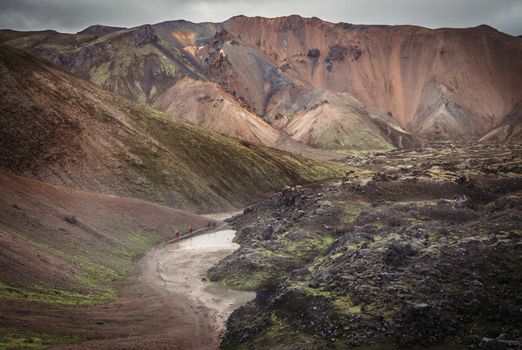
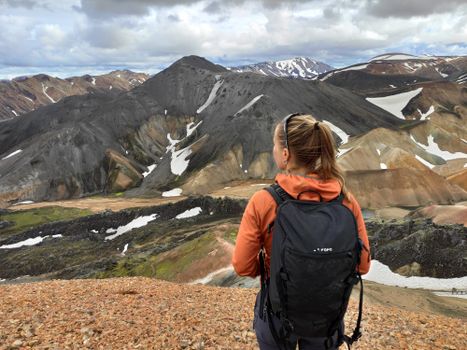
Hveravellir, Kerlingarfjöll, Landmannalaugar, Strútslaug and Laugarvallalaug are all behind the highland road network. Rather than repeat the usual line about roads opening in mid-June, here is what those specific roads are reporting to Vegagerðin at the moment this page was last refreshed.
| Road | Leads to | Status now | The feed’s own wording |
|---|---|---|---|
| F210 Fjallabaksleið syðri | The Strútslaug side of Fjallabak | Impassable | Ófært |
| F208 Fjallabaksleið nyrðri | Landmannalaugar, from the north | Not reported | Óþekkt |
| F224 Landmannalaugavegur | Landmannalaugar, the final approach | Not reported | Óþekkt |
| F347 Kerlingafjallavegur | Kerlingarfjöll and its bathing pool | Not reported | Óþekkt |
| F910 Austurleið | The eastern highlands and Laugarvallalaug | Not reported | Óþekkt |
1 of the 5 roads above is closed right now. This is the live Vegagerðin feed, not a seasonal rule of thumb — which is the whole point. Every competing page tells you the highland roads open around mid-June; none of them tells you what they are doing today. Driving past a closure sign on an F-road is illegal, and in winter it is also how rescue teams get a callout.
What is open all winter, and what it costs
The built options do not have a season. Municipal pools — sundlaugar — are open through the winter in nearly every town in Iceland, heated from the ground, with hot pots and steam rooms attached and an indoor changing room at the end of it. They are where Icelanders actually go in January, and they cost a fraction of the marketed lagoons.
| Lagoon | Adult from | Operator status | Notes |
|---|---|---|---|
| Secret Lagoon | 4,500 ISK | Open | — |
| Geosea | 7,490 ISK | Open | — |
| Forest Lagoon | 7,490 ISK | Open | Towels are not included in the 7,490 "Warm" tier — rental is 1,400 ISK. "Calm" (10,150) and "Delight" (11,210) include one. |
| Vök Baths | 7,690 ISK | Open | Walk-ins are not accepted in high summer — book a slot. |
| Krauma | 7,900 ISK | Open | — |
| Blue Lagoon | 14,990 ISK | Open | Priced dynamically by date and time slot — this is the cheapest package in the Tourdesk catalogue, not a fixed gate price. |
| Guðlaug Baths | — | Not stated | Municipal tidal bath at Langisandur, Akranes — no admission desk and no published rate. |
| Húsafell Canyon Baths | — | Not stated | Guided-visit only, sold as part of a Húsafell package rather than gate admission. |
| Hvammsvík Hot Springs | — | Open | Rate sits behind their booking system, not on the public site. |
| Laugarvatn Fontana | — | Closed | Baths shut for reconstruction since 1 October 2025; the operator says an expanded Fontana opens in August 2026. The geothermal bakery tour still runs daily. |
| Mývatn Nature Baths | — | Not stated | Rebranded: myvatnnaturebaths.is now 301-redirects to earthlagoon.is, and our own tour catalogue sells it as "Earth Lagoon". No rate readable from the new site. |
| Skógarböðin | — | Not stated | Confirmed duplicate of Forest Lagoon, not a separate venue: OpenStreetMap holds ONE object for it (node 9769774769, "Skógarböðin", Veigastaðir) and that is the exact coordinate this record carries. Pending a data-lane merge + 301, so no separate rate. |
| Sky Lagoon | — | Open | No rate published in readable form on skylagoon.com, and resellers quote three different figures — we would rather print nothing than pick one. |
| The Beer Spa | — | Open | bjorbodin.is refuses automated reads (HTTP 401), so no rate is quoted here — book on their site. |
Read that status column narrowly: it is what the operator states, on the day we read it, and a blank means we have not been able to confirm anything — never that a place is shut. Rates are published walk-up prices read off each operator’s own page on 2026-07-25, not live prices, so confirm before you book. Worth knowing before you plan around Laugarvatn Fontana: it is currently closed, and several travel sites still list it as open. The full priced comparison lives on the alternatives page.
For the cheap end, the 98 municipal pools we map are the answer, and the winter one in particular: warm water, a roof over the changing room, and no booking.
Wild springs that stay reachable
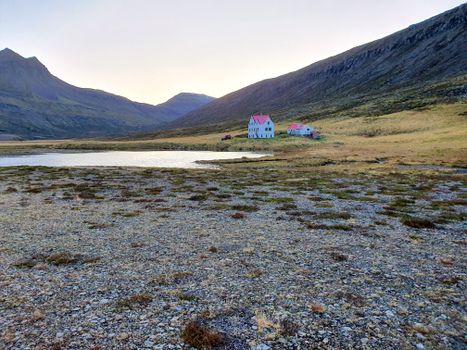
These sit low, near the coast, on roads that get ploughed. They have no opening hours and no staff, which cuts both ways in December — nobody is stopping you, and nobody is checking on you either.
| Spring | Region | Winter catch |
|---|---|---|
| Hellulaug | westfjords | No changing room, no lighting — bring a torch and a second towel |
| Pollurinn | westfjords | No changing room, no lighting — bring a torch and a second towel |
| Drangsnes Hot Pots | westfjords | No changing room, no lighting — bring a torch and a second towel |
| Landbrotalaug | west iceland | No changing room, no lighting — bring a torch and a second towel |
| Hrunalaug | south coast | No changing room, no lighting — bring a torch and a second towel |
| Djúpavogskörin | east iceland | No changing room, no lighting — bring a torch and a second towel |
| Krosslaug | west iceland | No changing room, no lighting — bring a torch and a second towel |
| Nauthólsvík | reykjavik | No changing room, no lighting — bring a torch and a second towel |
And the ones that are not reachable
These are the highland springs behind the roads in the live table above. They are worth the trip in July and they are not an option in January: Hveravellir Pool, Baðlaug Kerlingarfjöll Hot Spring, Strútslaug, Laugarvallalaug. See when the F-roads open for the reopening pattern.
How much daylight you actually get
The practical constraint on a winter soak is not cold, it is light — particularly for anything involving a walk in or a gravel road out. These are computed sunrise and sunset times for Reykjavík across the coming winter, not a stored table.
| Date | Sunrise | Sunset | Daylight |
|---|---|---|---|
| Mid-November | 09:54 | 16:31 | 6 h 37 m |
| Winter solstice | 11:22 | 15:29 | 4 h 08 m |
| Mid-January | 10:57 | 16:16 | 5 h 19 m |
| Mid-February | 09:27 | 17:57 | 8 h 31 m |
At the bottom of the year you get 4 h 08 m — sunrise after breakfast and sunset in the early afternoon. Twilight adds usable light at both ends, but not enough to change the plan: treat a winter soak as a middle-of-the-day activity unless you are deliberately going after dark for the sky. The full seasonal picture, and the driving side of it, is on the winter driving guide.
Northern lights from the water
Aurora tonight: Maybe — worth trying. The planetary Kp index is currently 2.3, and the clearest sky right now is over Eastfjords at 42% cloud. Tonight has about 14.2 hours of real darkness to work with. A lit lagoon is the worst place to watch from — the darker municipal pools and the wild springs are where you will actually see it.
The combination people come for is real, and it needs three things at once: darkness, a gap in the cloud, and enough geomagnetic activity. Sitting in warm water is the most comfortable way ever devised to wait for all three to line up. Choose somewhere unlit — a town pool at closing time, or a wild spring with the car headlights off — because the marketed lagoons floodlight their own grounds and you will see less from the expensive one than the free one.
What winter actually demands
The water is the easy part. Everything that goes wrong at a wild spring in winter happens in the ninety seconds after you get out, and it is all preventable:
- A head torch. Not a phone. You will be walking back in the dark whether or not you planned to, and one hand needs to be free.
- Two towels. The first one is wet and stiff by the time you need the second.
- A hat, immediately. Wet hair below freezing is the fastest way to get properly cold, and it is the one people forget.
- Shoes you can get on wet. Laces and frozen fingers do not cooperate.
- A bag for wet things, or they freeze to the boot of the car.
- The road checked before you leave, not when you arrive. A spring you reached easily in September may be behind a road nobody has cleared this week — live conditions here.
And the rule that does not change with the season: test unfamiliar water with a hand before any other part of you. A wild spring’s temperature can shift without anything visible changing on the surface, and a geothermal area in the dark is a genuinely bad place to be wandering off the path.
Frequently
asked
questions
Can you visit hot springs in Iceland in winter?
Which hot springs are open in winter?
Is Reykjadalur open in winter?
Can you see the northern lights from a hot spring?
How cold is it getting out of the water?
Do I need a 4x4 to reach hot springs in winter?
What about the highland springs — Hveravellir, Landmannalaugar, Strútslaug?
What should I take to a wild hot spring in winter?
Cars & campers
 KEF airport pickup 24/74.8
 Transmission
 Fuel
Fuel Seats
Seats Drive
Drive

 Sleeps
Tours near Iceland's winter hot springs
 Small groups
 Duration
 Highlights
 Type
Type