Winter Driving in Iceland
How to drive Iceland safely from October to April — wind, ice, short daylight and closures, plus the live checks that keep you off a road you shouldn't be on.
You can drive Iceland in winter, but the risks are wind, ice and short daylight — not deep snow. Rent a 4WD with winter tyres, check the live road status before every leg, plan drives to finish before dark, and turn back if a road shows red. The highland F-roads are closed.
How much daylight does Iceland have today?
Reykjavík gets 9 h 51 m of daylight on 16 October 2026 — sunrise 08:18, sunset 18:09.
Data verified 16 October 2026, 07:34 · source: computed from NOAA solar equations at Reykjavík's coordinates · recomputed on every page refresh
Ring Road (R1) slippery in placesHighlands: 56 of 64 monitored roads closed or impassableVegagerðin, updated just now
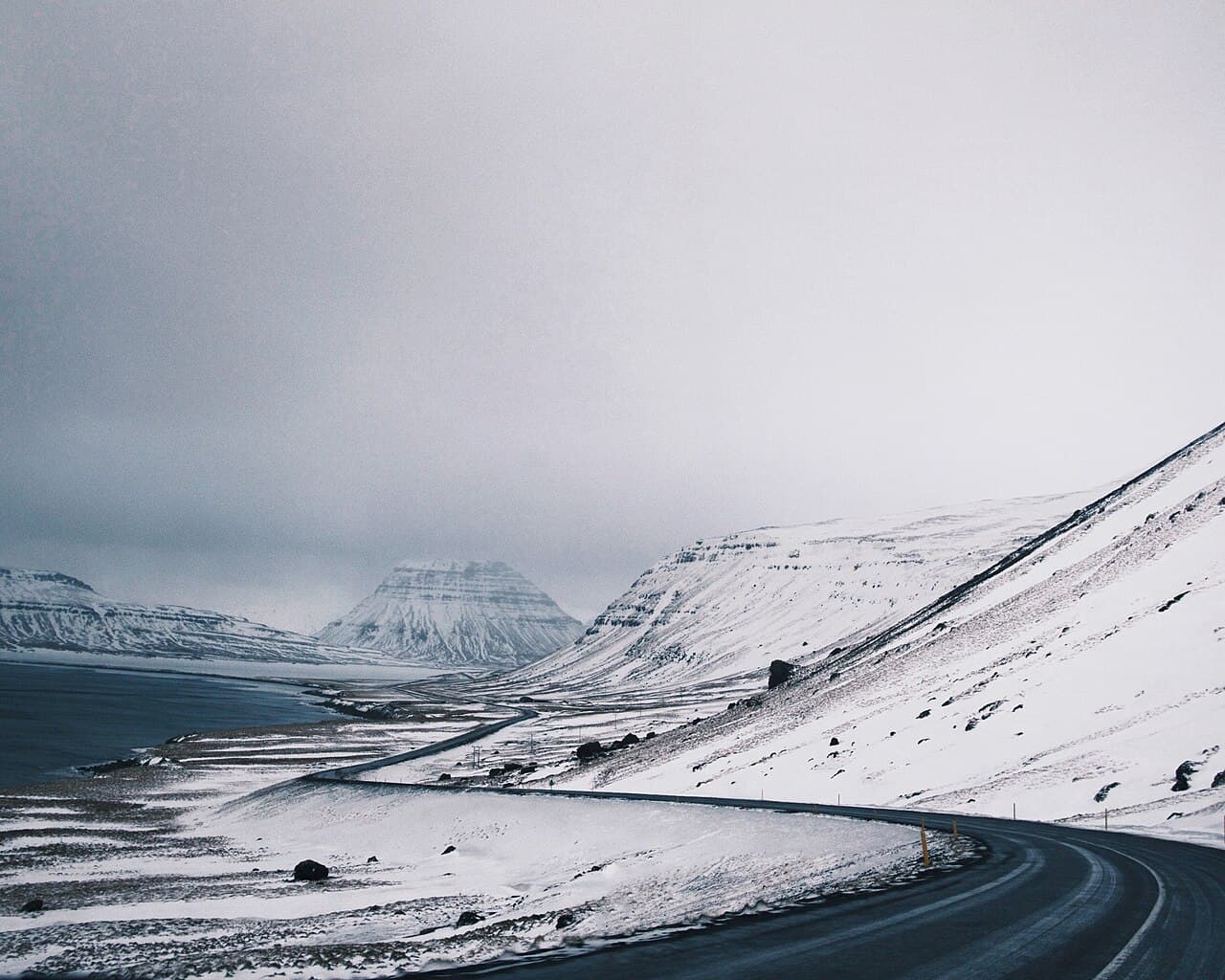
Driving Iceland in winter — roughly October to April — is not the same trip as summer, and treating it like one is what gets visitors into trouble. The country stays open: the paved Ring Road is ploughed and most people drive it through the dark months without incident. But the margin for error is thinner. Weather changes within the hour, the sun is up for only a few hours a day, and the hazards that hurt people — wind and ice — arrive with little warning.
This guide is the safety version of driving Iceland. If you want the summer road-trip picture instead, read summer driving in Iceland. Here the job is different: understand the winter hazards, set up the car and the plan for them, and — above all — check the live conditions before you commit to a road. Everything below is built to help you do that.
One loop, many microclimates
Route 1 loops the coast and stays ploughed; the interior F-roads are closed by snow. Weather differs wildly between regions. Open the map to see roads and live conditions overlaid.
| Winter date | Sunrise | Sunset | Daylight |
|---|---|---|---|
| Mid-October | 08:15 | 18:12 | 9 h 57 m |
| Mid-November | 09:54 | 16:31 | 6 h 37 m |
| Winter solstice (shortest day) | 11:22 | 15:29 | 4 h 08 m |
| Mid-January | 10:57 | 16:16 | 5 h 19 m |
| Mid-February | 09:27 | 17:57 | 8 h 31 m |
| Mid-March | 07:50 | 19:25 | 11 h 35 m |
These are astronomical sunrise and sunset times for Reykjavík, computed with the standard sunrise equation (Iceland stays on UTC year-round, so no daylight-saving shift applies). Around the December solstice the capital gets only about four hours of usable light, and the north gets less. The practical rule: plan every driving leg to finish before dark, because unlit rural roads with ice and free-roaming sheep are a different, harder drive after sunset. If you are out at night for the northern lights, treat the drive to and from your viewing spot as the serious part.
The real winter hazards: wind and ice, not snow
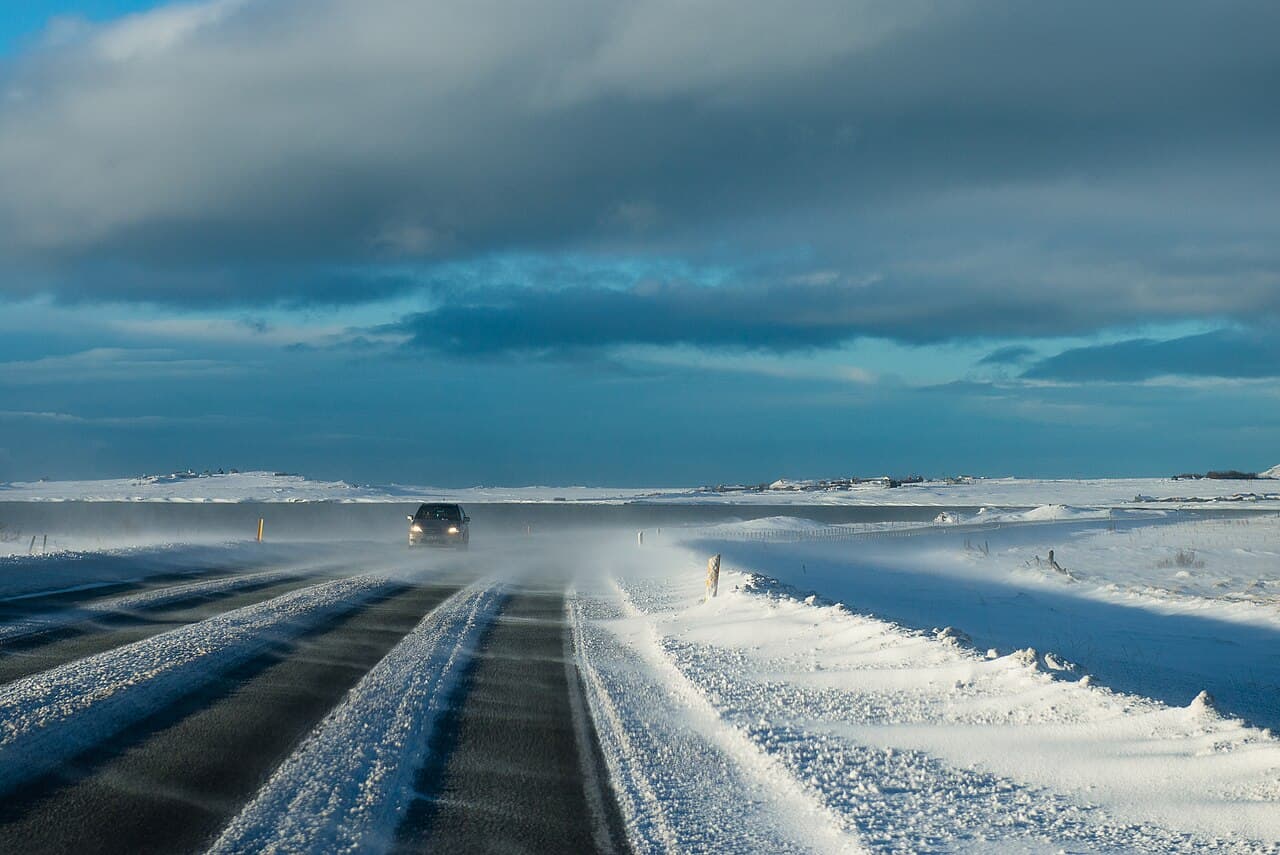
Most visitors picture deep snow. The hazards that actually cause winter accidents in Iceland are wind and ice, and both are easy to underestimate.
Icelandic winter temperatures hover around freezing rather than plunging far below it — the moderating ocean keeps the lowlands close to 0 °C for much of the season (Icelandic Met Office climate data, vedur.is). That is exactly the range that produces black ice: meltwater and rain freeze on the road surface as a clear, near-invisible glaze, most often on bridges, in shadowed cuttings, and in the early morning. You often cannot see it. The only defence is to slow down well below the posted limit, brake gently and early, and leave a long gap to the car ahead.
Wind is the hazard that catches people out most. Iceland has some of the strongest sustained winds in Europe, and on exposed coast and highland roads gusts regularly reach storm force. As a practical guide (SafeTravel.is), from around 15 m/s a gust can rip an open car door out of your hand and bend it back — a common, expensive, often-uncovered rental claim, so open doors on the sheltered side and hold them. From roughly 20 m/s, high-sided vehicles and campers get pushed across lanes, and open gravel or sand plains throw up grit that strips paint and destroys visibility.
There is no honest single “live wind tile” to show you here, so check the wind forecast properly on the alerts page before any exposed stretch, and take a wind warning as a reason to wait. Wind does not care that the road looks clear.
The passes, right now
Live frames from the mountain passes that gate the main winter corridors. A pass under blowing snow is a straight answer — the road beyond it is worse than any forecast. If none load, the feed is down; treat that as a reason to check the alerts page, not as an all-clear.
 Live
Live Live
Live Live
Live Live
LiveA status colour is a summary; a camera is the truth. Pair these with the live status line at the top of the page and the webcams page for the wider picture before you commit to a leg. A clear sky over Reykjavík tells you nothing about a whiteout waiting on the far side of a fjord.
Tyres, and the car you want
You do not need to source winter tyres yourself: rental cars in Iceland are fitted with winter tyres for the winter season, so a car booked for a winter trip comes with the right rubber. Studded tyres (nagladekk) give the most grip on ice, and they are legally permitted only within a set window — roughly November to mid-April. The exact end date is set by the authorities and can move in a hard winter, so if it matters to your booking, confirm the current window with Samgöngustofa (island.is).
A 4WD or AWD car is not legally required on paved roads, but it is strongly recommended for winter — the extra grip and weight hold the road better in snow, slush and crosswinds. A steady mid-size 4WD like the Hyundai Tucson or Suzuki Vitara is a sensible winter choice; the cheapest 2WD city cars are legal with winter tyres but give you less margin. For how the drivetrain decision really works, read do you need 4WD in Iceland. Whatever you rent, check what its insurance covers before you set off — wind-blown doors and sandblasting are common winter claims.
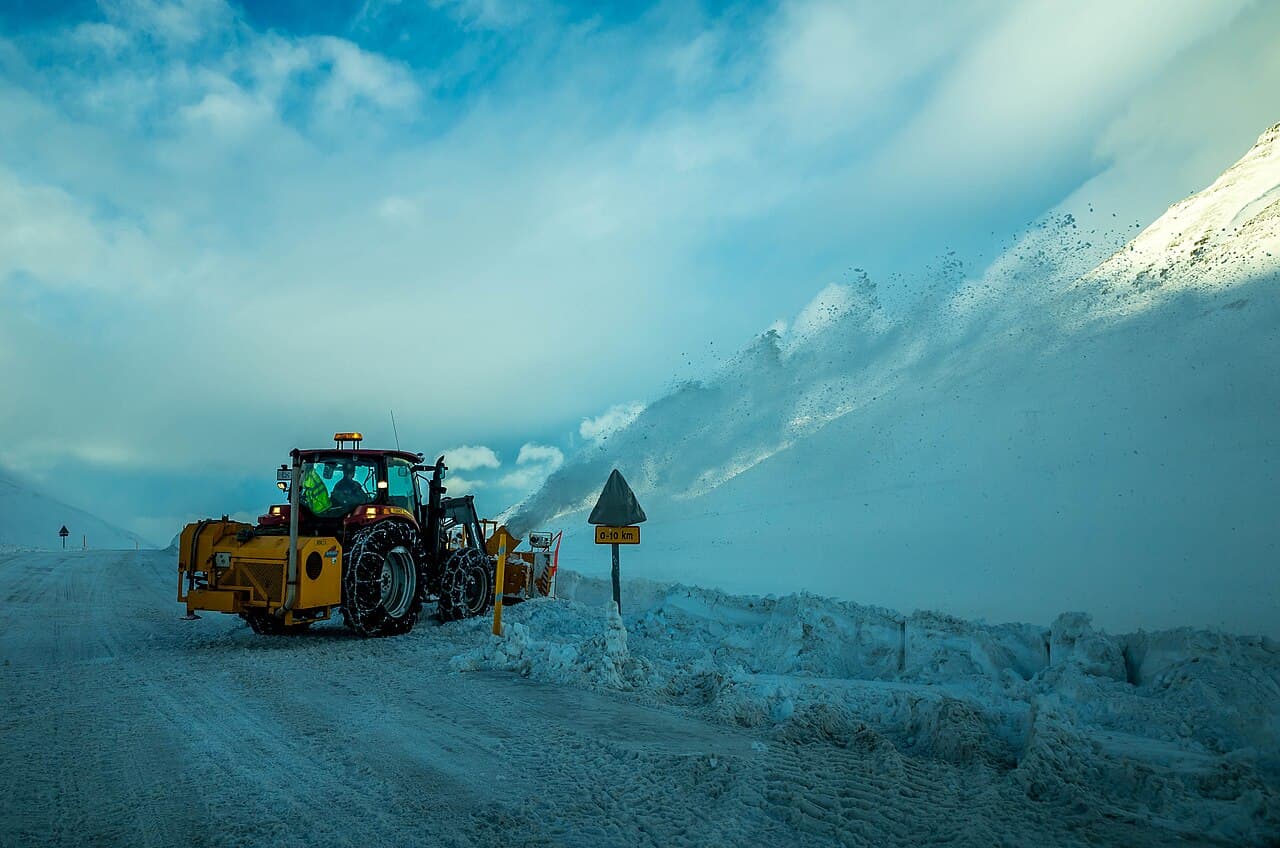
Roads close in winter, and the closures move with the weather — not the calendar. The road authority (Vegagerðin) closes sections during storms and reopens them when it is safe, so there is no fixed date on which a given road “closes for winter”. A pass that was open at breakfast can be shut by lunch.
This is why you re-check before every leg, not once a day. Read the live status on the alerts page, get a straight yes/no for your exact route with the can-I-drive tool, and learn to read the official conditions map with our guide to checking Iceland road conditions. If a road shows red, it is closed because the alternative has cost lives — that is not a suggestion.
The highland F-roads are a separate matter: they are closed by snow all winter and do not reopen until the highlands thaw in early summer. Do not attempt a closed F-road in winter. What are F-roads explains why they shut, and the best F-roads is a summer read for when they open again.
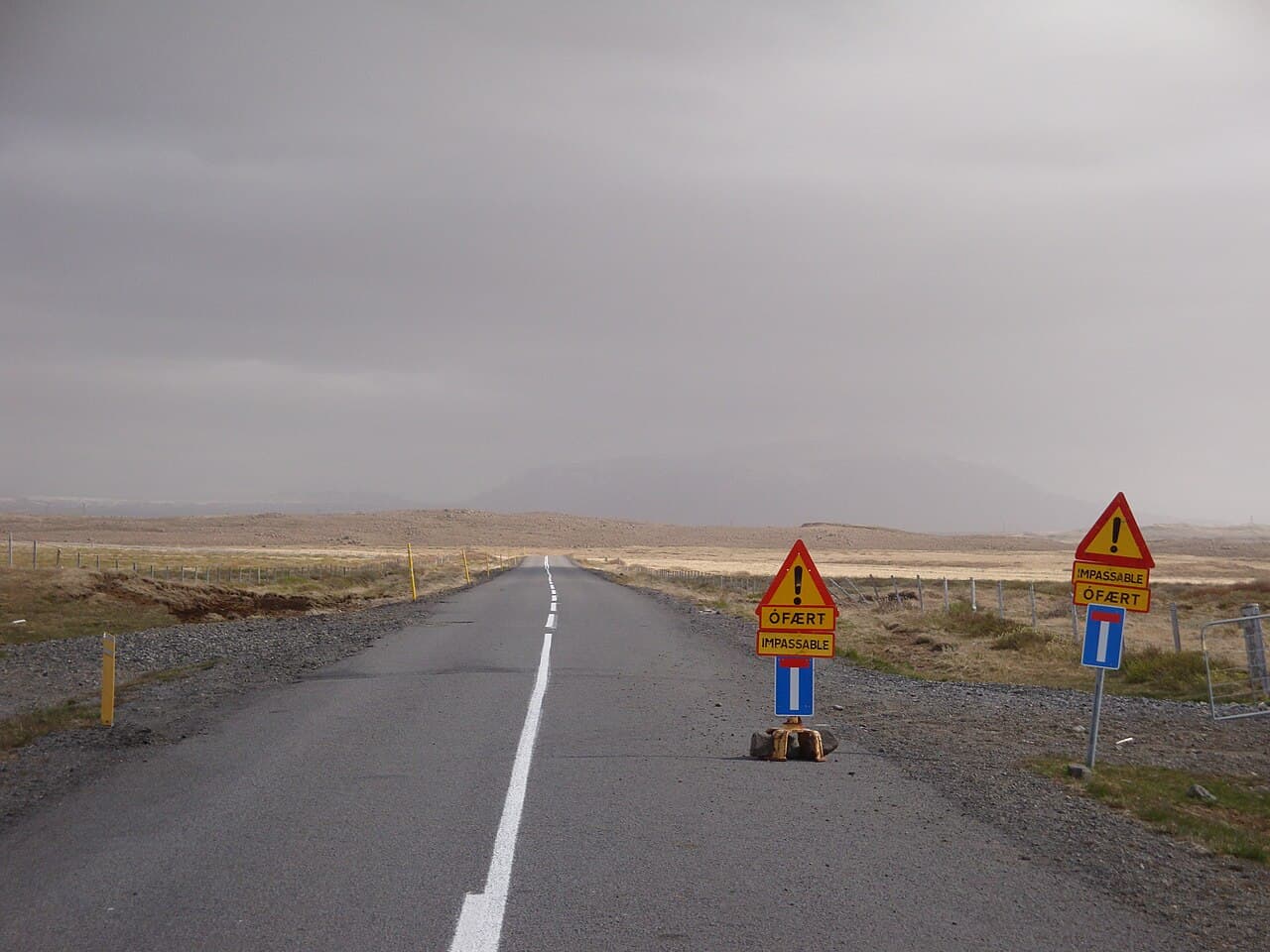
Should I drive today? A winter go/no-go read
Work down the list. The first “yes” is your answer.
Does the live road status show your route red, or is a weather/travel warning in force?
Do not driveA red road is closed because the alternative has cost lives. A warning means the same. Do not drive it — wait it out and check again later.
Do the mountain-pass cameras show blowing snow, a whiteout, or the road under snow?
Do not driveA camera is ground truth. If the pass is white or you cannot see the road, the drive beyond it is worse than the forecast said. Postpone.
Is high wind forecast, or would your leg finish after dark on an unlit rural road?
Drive only with careBoth are avoidable risks. Re-plan to drive the exposed or unlit stretch in daylight and lower wind, or shorten the leg. Only go if you can.
All of the above “no”?
Good to driveGreen status, clear cameras, daylight and manageable wind: you are good to drive — but keep the tank above half, slow down for ice, and re-check before the next leg.
What to check before you set off
The locals' edge in winter is not skill — it is that they check before they commit, every time, using live feeds. Run these before each driving day. They take a few minutes, and they are the whole point of this page.
#1.Read the live road status for your route
status: green / amber / redsource: live Vegagerðin feed
Start with the whole-country picture in the status line at the top of this page, then scope it to your exact drive with the can-I-drive tool. Green means open and clear, amber means care, red means do not. A green country does not mean a green road under you — always check the specific route.
#2.Check the wind and weather forecast
threshold: ~15 m/s: doors at riskthreshold: 20 m/s+: high-sided danger
Wind is the winter hazard that hurts the most visitors. Read the forecast on the alerts page and treat a wind warning as a reason to delay or re-route, especially before exposed coast, open plains and high passes. If a storm is forecast, do not start the leg.
#3.Look at the mountain-pass cameras
element: live pass camerascadence: refresh ~10 min
The camera strip above shows live frames from the passes that gate the main corridors. If a pass looks white or you can see snow blowing across the road, the drive beyond it is worse than the forecast — postpone. The webcams page adds streams from further afield.
#4.Plan the leg to finish in daylight, with fuel to spare
daylight: ~4 h light near solsticefuel: keep the tank above half
Use the daylight strip above to time your drive so it ends before dark. Outside the southwest, petrol stations thin out and some close early, so keep the tank above half and check the live fuel prices and station locations before a long leg — running low in a winter storm is a serious problem.
#5.Register your plan and carry the 112 app
emergency: emergency number 112register: travel plan on safetravel.is
Before a longer winter drive, leave a travel plan on safetravel.is and install the 112 Iceland app, which can send your location to rescue teams. Iceland's single emergency number is 112. These cost nothing and make you far easier to find if something goes wrong.
If you are caught out
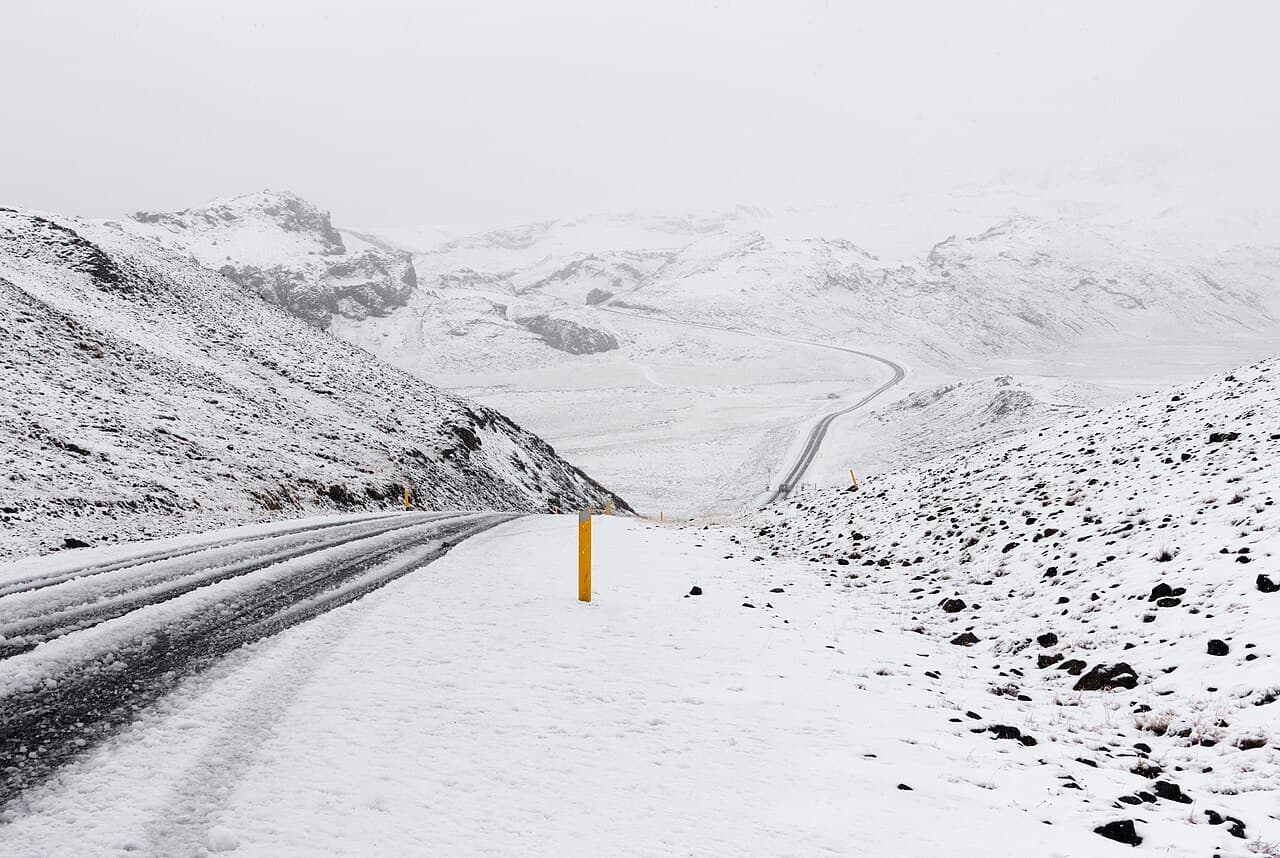
If a storm or whiteout closes in while you are driving, slow down and, if you genuinely cannot see the road, do not stop in the traffic lane where you could be hit. Pull fully off the road, put your hazard lights on, and wait for the worst of the squall to pass. Keep your distance from other vehicles doing the same.
If you become stranded, stay with your vehicle. It is shelter, it is warmer than outside, and it is far easier for rescue teams to find than a person on foot. Run the engine only intermittently for heat and keep the exhaust clear of snow. Call 112, and if you registered a travel plan on safetravel.is, rescuers already have a head start on where to look.
None of this means don't drive Iceland in winter. It means check first, keep the tank above half, slow down for ice and wind, and be willing to turn back. The drivers who get into trouble are almost always the ones who assumed instead of checking. For the full pre-drive routine locals run, read the live checks before driving Iceland.
Frequently
asked questions
Can you drive in Iceland in winter?
Do you need a 4x4 for winter driving in Iceland?
Are winter tyres or studded tyres required in Iceland?
How many hours of daylight does Iceland get in winter?
What is the biggest danger when driving Iceland in winter?
What do you do if you are caught in a storm or whiteout?
Are the F-roads open in winter?
Is the Ring Road open in winter?
Cars & campers
 KEF airport pickup 24/74.8
 Transmission
 Fuel
Fuel Seats
Seats Drive
Drive

 Sleeps
Tours near Iceland in winter
 Small groups
 Duration
 Highlights
 Type
Type