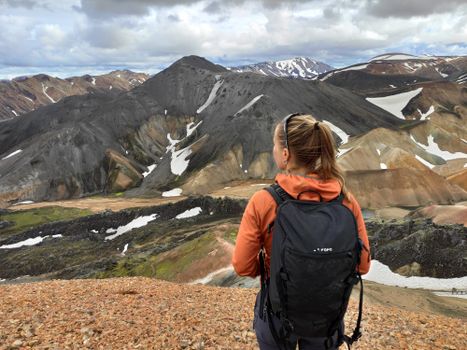
Summer Driving in Iceland
What driving Iceland in summer is actually like — 20+ hours of daylight, F-roads opening for the highlands, and the fatigue rule nobody tells you.
Summer is the easiest time to drive Iceland: the paved Ring Road is open the whole way round and the highland F-roads open through June–July. Near the solstice you get roughly 20–21 hours of daylight, so you can drive any hour — but it never gets dark, so tired driving is the real risk.
How much daylight does Iceland have today?
Reykjavík gets 9 h 51 m of daylight on 16 October 2026 — sunrise 08:18, sunset 18:09.
Data verified 16 October 2026, 06:58 · source: computed from NOAA solar equations at Reykjavík's coordinates · recomputed on every page refresh
Ring Road (R1) slippery in placesHighlands: 56 of 64 monitored roads closed or impassableVegagerðin, updated just now
What summer opens up
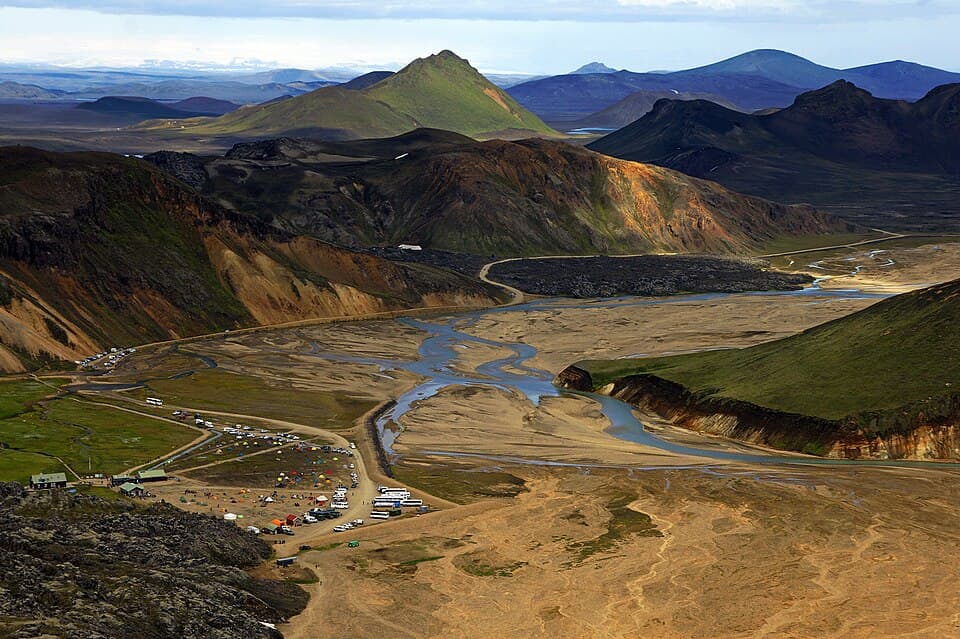
For most of the year the interior is closed by snow. In summer the F-roads clear and the highlands become drivable in a 4WD. Open the map to plan a route across them.
What summer driving in Iceland is like
Summer, roughly June to August, is the season the whole country is open for driving. The Ring Road (Route 1) is snow-free and paved the full loop, the weather is milder, and the days are so long that time of day almost stops mattering. It is also the busiest and most expensive season, so book your rental car early.
The single biggest difference from the rest of the year is light. Near the summer solstice, Iceland gets close to 20–21 hours of astronomical daylight in the south, and even more in the north — and around midnight the sun only dips to twilight rather than real darkness. That is the “midnight sun”. It gives you enormous flexibility: you can start a drive at 9pm in full daylight, catch a waterfall with no crowds at 1am, or cross a highland pass in low golden light that lasts for hours. Try the exact figures for your travel dates in the calculator below.
Midnight-sun daylight calculator
Sunrise, sunset and total daylight for Reykjavík / south Iceland — the north gets even more. Pick a date or a preset.
These are astronomical sunrise/sunset times (the sun's upper edge at the horizon), computed with the standard sunrise equation for Reykjavík (64.15°N). Twilight adds more usable light on top — near the summer solstice the sun barely dips below the horizon, so the sky stays bright all night (“white nights”). North Iceland gets even longer days. Iceland stays on UTC year-round, so no daylight-saving shift applies.

The paved routes are easy — the highlands are the reason to plan
For a first summer trip on paved roads, the driving itself is straightforward. Route 1, the Golden Circle and the paved South Coast stops are all fine in a 2WD car — no snow, no ice, long light. If that is your trip, the main jobs are booking early and pacing your days so you are not driving tired (more on that below).
Summer is also the only window for the interior. The F-roads — the mountain tracks marked with an “F” prefix — are closed by snow most of the year and open one by one as the highlands thaw, typically across June and July. Landmannalaugar, Þórsmörk and the Sprengisandur crossing all sit on this network. They require a 4WD by law, and the hardest routes with river crossings need a proper Highlands truck. If your summer plan includes any of them, read our full do-I-need-4WD guide first.
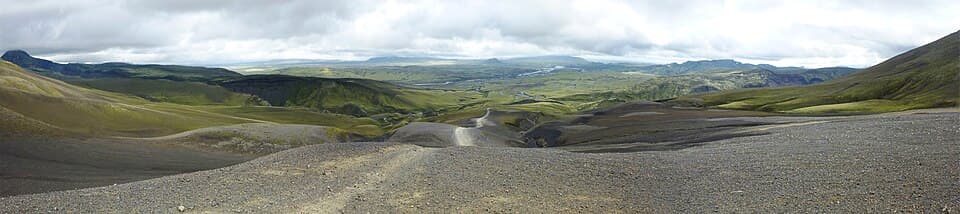
F-road opening dates change every year and are set road by road. They track the snowmelt, not the calendar, so “it is July” does not mean a given F-road is open. A road cleared last summer by mid-June might not open until well into July after a heavy winter.
Do not plan an interior route around a date you read anywhere. Check the live status on our F-roads hub and the alerts page before you commit, and again on the morning you set off.
The catch: it never gets dark, so you drive tired
The endless daylight is the best and the most dangerous thing about summer driving. Your body uses darkness as a cue to stop; with no darkness, that cue never arrives. People routinely drive far longer than they should, chasing “just one more stop” in light that never fades — and fatigue builds without any obvious signal.
Tired driving is dangerous, and Iceland's roads are unforgiving of it: single-lane bridges, blind summits, loose gravel edges and long featureless stretches where attention drifts. Fatigue does not care that the sun is up.
Sleep on a schedule, not by the light. Take a break every couple of hours, swap drivers, and stop the moment you notice drifting or heavy eyes. Bring an eye mask or use blackout curtains at your campsite or guesthouse so you actually sleep through the bright night. If you are unsure whether to keep going, don't.
Photography and timing: use the low light, not the clock
For photos, summer flips the usual rules. Golden hour is not a narrow window at dawn and dusk — near the solstice the sun sits low for hours around midnight, so the warm, long-shadow light that photographers chase is available late into the night with almost nobody around. It is the best time to shoot a waterfall or a hot spring without crowds.
The trade-off is that there is no true blue hour or night sky — no aurora in summer, because the sky never goes dark. If you came for the northern lights, that is an autumn and winter trip. Summer is for the long, low light and the open highlands. A camper is the classic way to do it: sleep where you park, wake to whatever light the hour gives you, and move on your own schedule.
The passes, right now
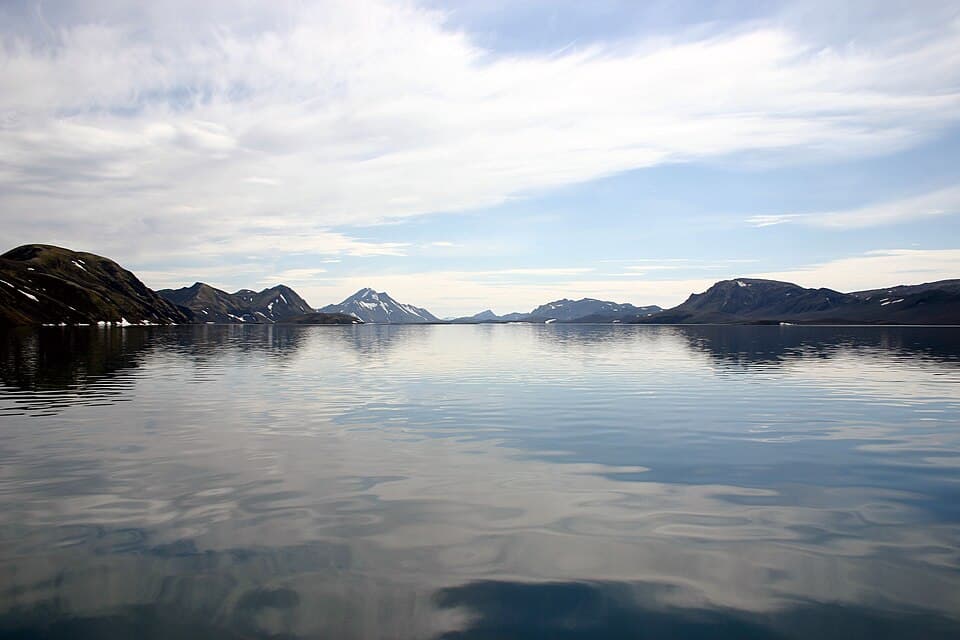
Live frames from the mountain passes and highland-edge crossings on the main summer routes. Even in summer a pass can carry weather — a clear frame is a good sign, a white one is a straight answer.
 Live
Live Live
Live Live
Live Live
LivePair these with the live status line up top and the F-roads hub before committing to a highland day. A clear paved pass does not guarantee the gravel F-road behind it is open — but a snowed-in one tells you plenty.
Frequently
asked questions
Does it get dark in Iceland in summer?
How many hours of daylight does Iceland have in July?
Can you drive at night in Iceland in summer?
When do F-roads open in Iceland?
Is summer the best time to drive the Ring Road?
Do I need a 4WD for summer driving in Iceland?
Is driving tired a real risk with the midnight sun?
Cars & campers
 KEF airport pickup 24/74.8
 Transmission
 Fuel
Fuel Seats
Seats Drive
Drive

 Sleeps
Tours near Iceland in summer
 Small groups
 Duration
 Highlights
 Type
Type