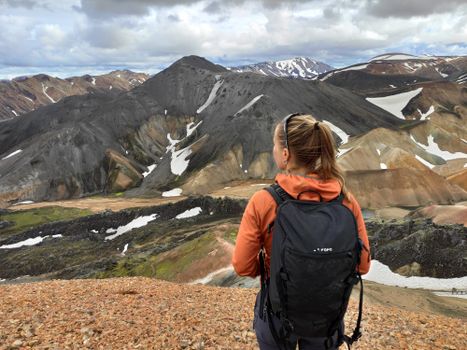
Iceland Road Types Explained
Route 1, three-digit gravel roads and F-roads — how to read the numbers and signs, and what you can legally drive on each.
Iceland numbers its roads by class. Route 1 and two-digit numbers are primary paved roads. Three-digit numbers are secondary roads, often gravel but drivable in a 2WD. An F prefix marks a Highland mountain road that requires 4WD by law. Off-road driving is illegal everywhere.
Ring Road (R1) slippery in placesHighlands: 56 of 64 monitored roads closed or impassableVegagerðin, updated just now
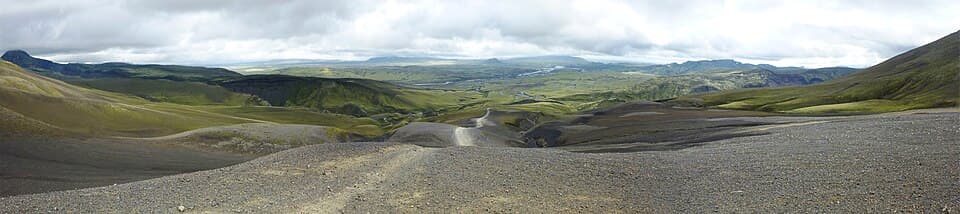
Where the road classes change
Around the edge of the interior, paved primary roads give way to gravel and then to F-roads. Open the map to see which routes stay tarmac and which turn to mountain track.
How Iceland numbers its roads
Every public road in Iceland carries a number, and the number tells you roughly what surface and what vehicle to expect. Learn the three tiers and you can read any signpost in the country at a glance.
- Route 1 and two-digit numbers — primary roads. Route 1 is the Ring Road that loops the whole country. Single and two-digit numbers are the main arteries, almost all paved. A normal 2WD car handles them fine in summer.
- Three-digit numbers — secondary roads. These branch off the primary network to reach smaller towns, farms and sights. Many are gravel and rough, but they have no F prefix, so a 2WD is allowed. Drive them slowly.
- F-prefixed numbers — mountain roads. The F stands for fjall (mountain). F35, F208, F26 and the rest cross the interior Highlands. They require 4WD by law, open only in summer, and often include unbridged river crossings.
So the pattern is simple: the more digits, the rougher the surface tends to be — and an F in front means a mountain road with a legal 4WD requirement, not just a suggestion. For the full picture of which vehicle matches which route, see do I need 4WD in Iceland.
| Road type | How to recognise it | What you can drive | Season & notes |
|---|---|---|---|
| Primary paved (Route 1 / two-digit) | One or two-digit number; black-on-white sign; tarmac surface | 2WD is fine | Open year-round; winter tyres required Nov 1–Apr 14 |
| Gravel numbered (three-digit) | Three-digit number, no F prefix; unsealed gravel surface | 2WD allowed — drive slowly; gravel damage often not covered | Mostly summer-friendly; some close or roughen in winter |
| F-road (mountain) | Number with an F prefix (F35, F208…); yellow "F" route sign | 4WD required by law | Summer only, once cleared — check the live /f-roads/ hub for openings |
| Off-road (anywhere off a marked road) | No road or track at all — sand, moss, riverbed, snow | Illegal for everyone, every vehicle | Banned nationwide under the Nature Conservation Act |
The table's legal lines are the ones that matter. A three-digit gravel road is a judgment call about comfort; an F-road and the off-road ban are not. For live status on the mountain roads — which F-roads are open right now — go straight to the F-roads hub rather than trusting a fixed date.
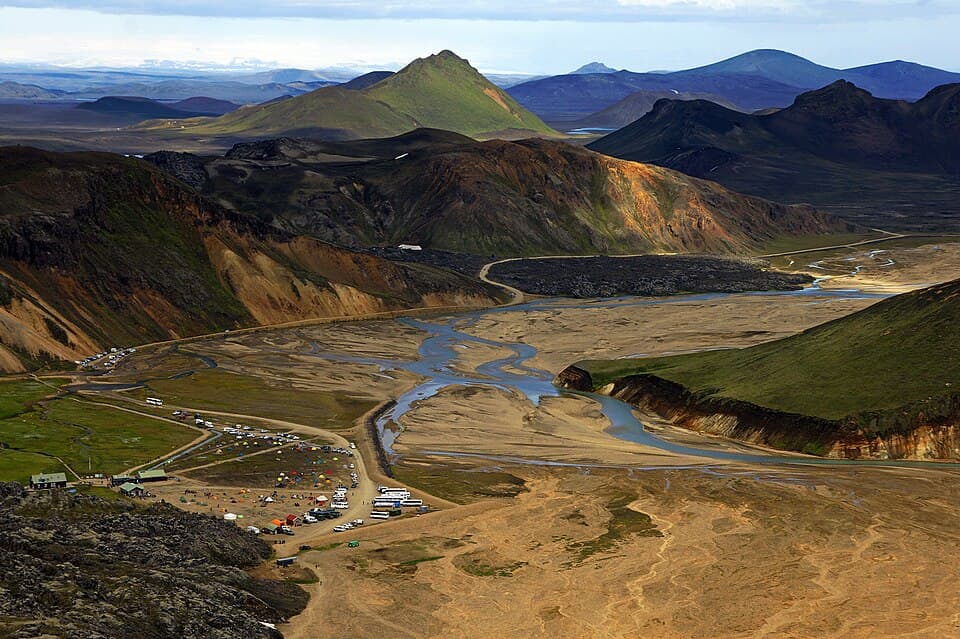
Driving off marked roads is illegal everywhere in Iceland. The ban covers sand, moss, riverbeds and snow, and it holds under the Nature Conservation Act for every vehicle, including 4WDs. The moss and vegetation take decades to recover from a single set of tyre tracks, so there is no such thing as a harmless shortcut across the open ground.
Getting caught off-road carries significant fines plus personal liability for the environmental damage you cause. Stay on the marked road or track — always, without exception.
F-roads are closed to 2WD cars by law. They are mountain roads marked with the F prefix, and they require a 4WD vehicle. Driving one in a 2WD voids your rental insurance and leaves you personally liable for any damage. If your route includes any F-road, rent a 4WD from the start — see do I need 4WD in Iceland.
Reading the surface before you commit
The road number gives you the general rule, but surfaces change with the weather and the season. Before you drive an unfamiliar road, do two quick checks. First, the live road status line at the top of this page reflects the national umferðin feed. Second, the road cameras below show the actual surface at the passes right now — a camera looking at wet gravel or a white heath tells you more than any map.
Fill up before you leave the primary network, too: there are no gas stations once you're on the interior F-roads. And for anything with a cracked-windscreen risk on gravel, confirm your rental cover includes gravel protection before you set off.
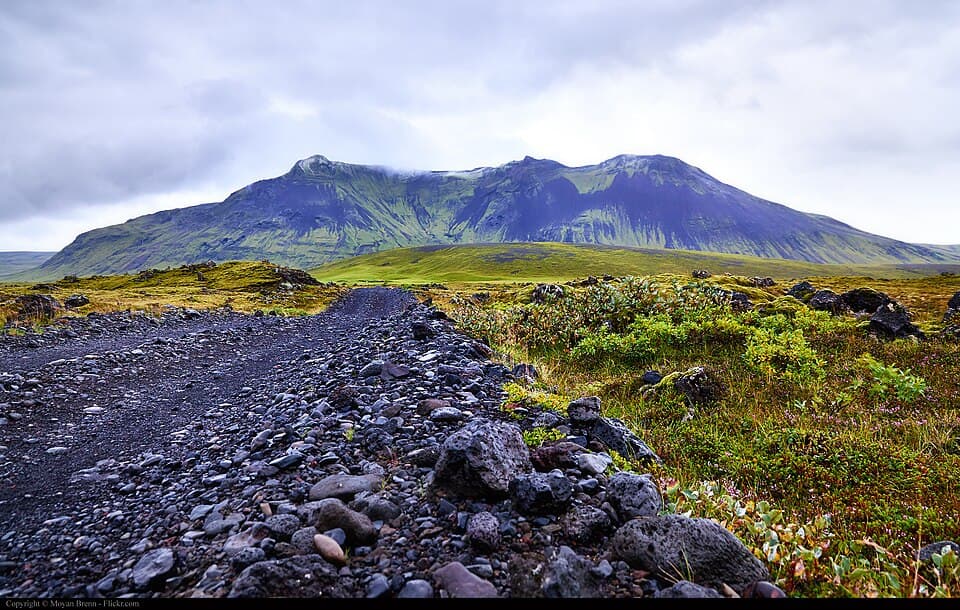
Real road surfaces, right now
Live frames from the mountain passes. Paved passes like Hellisheiði show tarmac; the Westfjords crossings show where the surface turns to gravel. If a pass looks white, the roads beyond it usually are too.
 Live
Live Live
Live Live
Live Live
LivePair these frames with the live status line at the top and the alerts page before committing to a route. A clear pass doesn't guarantee an open F-road behind it, but a snowed-in one is a straight answer.
Which car for which class
The road classes map neatly onto what you should rent. Paved primary roads and the Golden Circle need nothing more than a 2WD. For long three-digit gravel routes — the Westfjords, Snæfellsnes — a compact 4WD like the Suzuki Vitara or Dacia Duster is more comfortable and less exposed to gravel damage. For the F-road network and river crossings, step up to a Toyota Land Cruiser, the only class rated to ford. New per-kilometre charges also apply to some vehicles now — see the Iceland kilometre fee 2026 guide before you book.
Frequently
asked questions
What does the F in F-road mean?
What's the difference between a gravel road and an F-road?
Can I drive a numbered gravel road in a 2WD?
Is off-road driving really illegal in Iceland?
How do I know if a road number is paved or gravel before I set off?
What do the road numbers on Icelandic signs mean?
How do I know if an F-road is open?
Cars & campers
 KEF airport pickup 24/74.8
 Transmission
 Fuel
Fuel Seats
Seats Drive
Drive

 Sleeps
Tours near Iceland's road network
 Small groups
 Duration
 Highlights
 Type
Type