Reykjadalur Hot Spring Hike
The hot river above Hveragerði — a short hike from a warm valley to a river you can bathe in. About 45 minutes from Reykjavík, and no 4WD needed.
Reykjadalur is a geothermal valley above Hveragerði where you hike about 3 km — roughly 300 m of climbing, 45 to 90 minutes each way — to a river warm enough to bathe in. It is free, a 2WD car reaches the trailhead, and it is around 45 minutes from Reykjavík. The water scalds where it enters upstream, so stay in the marked bathing stretch.
Ring Road (R1) slippery in placesHighlands: 56 of 64 monitored roads closed or impassableVegagerðin, updated just now
Where the trail starts
The car park sits about 2 km north of Hveragerði. From there the path climbs north up the valley to the bathing river. Open the map to place it against the drive from Reykjavík.
The hike at a glance
Reykjadalur is a walk, not a scramble, but it is not flat either. Here are the numbers that decide whether it fits your day. Trail and river conditions change — check the live alerts and read the signage at the car park before you set off.
#1.Reykjadalur trail — Hveragerði to the hot river
distance: ≈3 km each wayascent: ≈300 m ascentwalking time: 45–90 min each waydifficulty: moderate
About 3 km each way, so roughly 6 km round trip, with somewhere around 300 m of ascent. The climb is front-loaded into the first stretch out of the car park; after that the valley opens out and the path levels off toward the river. Most people take 45 to 90 minutes each way at a normal pace — quicker if you push, slower with photo stops and mud. Difficulty is moderate: no technical sections, but a real climb and a surface that turns slippery when wet.
Add time for the part you actually came for. Budget 3 to 4 hours for the whole outing if you want an unhurried soak, and a bit more in winter, when ice and short daylight slow everything down.
What Reykjadalur actually is
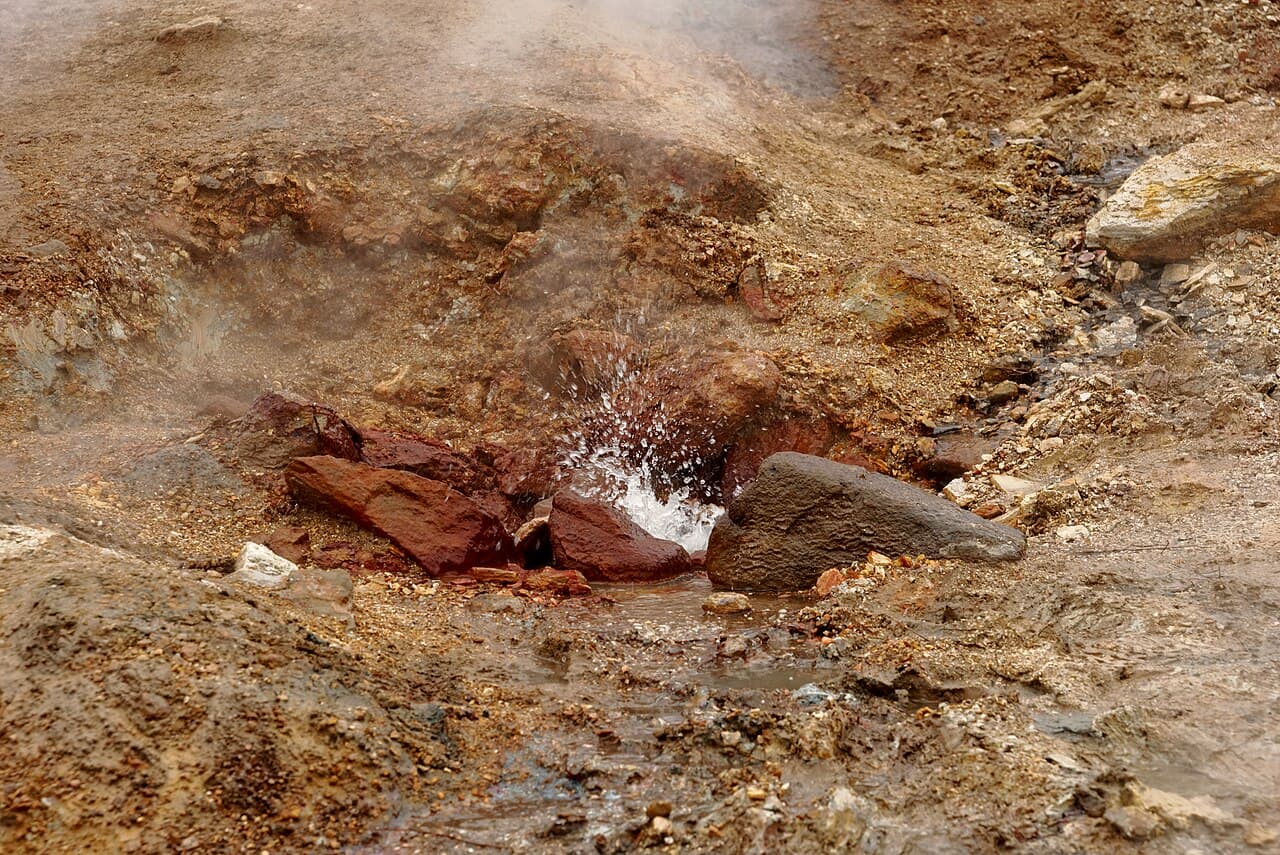
Reykjadalur means “smoke valley,” and the name is literal: the ground here vents steam, hot springs bubble along the slopes, and one of the streams runs warm enough to sit in. It is one of the most-searched free hot springs in Iceland for a simple reason — you bathe in a real river in the open landscape, not a built pool, and it costs nothing but the walk in.
The valley sits above Hveragerði, a small town on the geothermal belt southeast of Reykjavík. The whole area is riddled with hot ground, which is exactly why the town grows tomatoes in greenhouses and why the river upstream carries genuinely dangerous heat. The bathing stretch, lower down, is where a hot source and a cold one have already mixed to something comfortable.
The drive from Reykjavík
Reykjadalur is one of the easiest hot-spring day trips from the capital. From Reykjavík you take Route 1 east over the Hellisheiði pass and drop down to Hveragerði — about 45 minutes, all on paved road. In town, follow the signs north to the Reykjadalur car park at the end of the road, roughly 2 km past the centre. That car park is the trailhead.
You do not need a 4WD for any of this. A cheap 2WD like the Hyundai i10 reaches the car park without trouble in summer. If you are weighing up whether to pay for a bigger car for the rest of your trip, our 4WD guide has the honest answer by route — and for Reykjadalur, it is no. The one thing to watch is the Hellisheiði pass itself in bad weather, which is why there is a live camera on it further down this page.
Trying to fit Reykjadalur into a bigger day? It pairs naturally with a Golden Circle or South Coast run, since you pass Hveragerði on the way east. If you would rather not drive at all, there are rental options and guided trips below.
The hike, section by section
From the car park, cross the footbridge and start climbing. The first 20 to 30 minutes are the steepest part of the whole walk — a steady gravel path up the hillside, with a steaming, sulphur-smelling hot spring off to one side that most people stop to photograph. This is where the ascent is spent; get through it and the hard part is behind you.
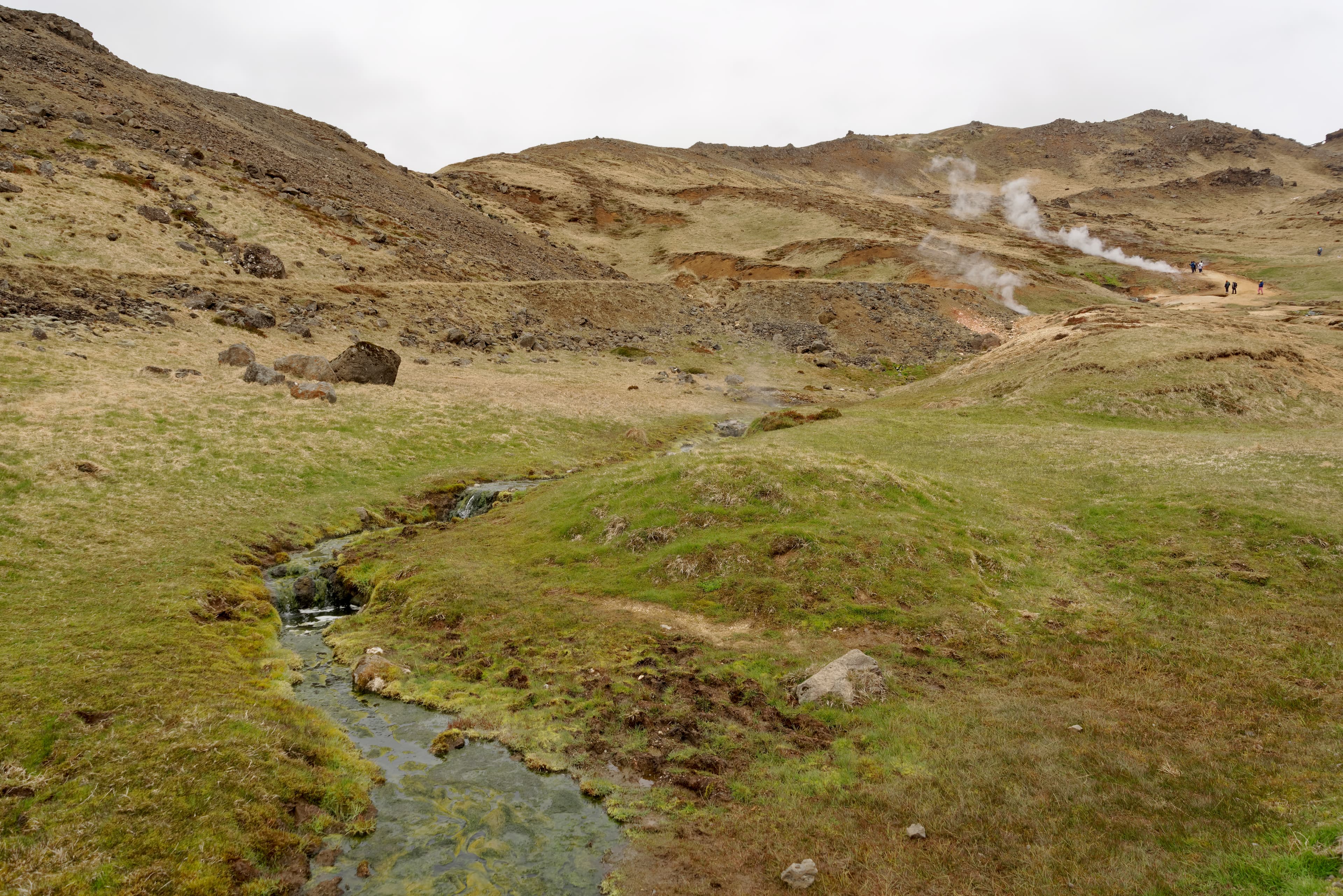
After the climb the path crosses into the upper valley and the going eases. You follow the stream, passing more vents and mud pots, with the ground roped off in places to keep you on safe footing. Keep to the marked path here — the crust beside boiling ground is thinner than it looks. The last stretch is a gentle walk to the bathing area, where a wooden boardwalk and low changing shelters mark the spot.
The surface is honest gravel and earth, and it gets muddy fast after rain, so proper shoes beat trainers. In winter the same path ices over and needs microspikes and a headlamp for the short daylight — check live conditions before a cold-season attempt.
Getting in the river — and the boardwalk etiquette
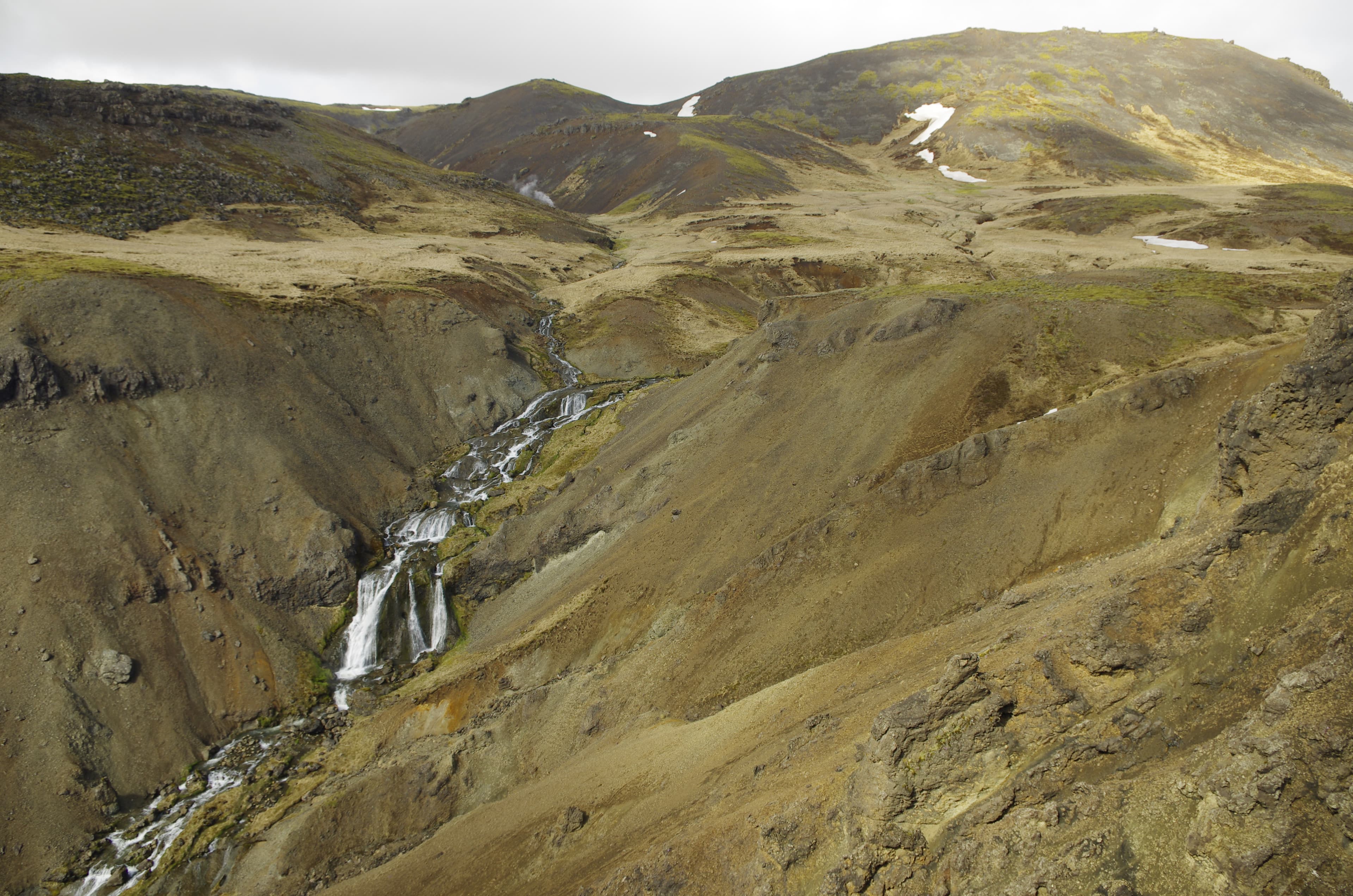
The bathing area is a run of river beside a wooden boardwalk, with a few basic wind shelters for changing. There is no attendant, no pool edge, no lockers — you pick a spot on the bank and get in. The clever part is that the water temperature changes as you move: it is warmer upstream and cooler downstream, so you shuffle along the riverbed until you find the mix that suits you. Waist-deep is about as good as it gets.
A few unwritten rules keep it pleasant for everyone. Change in the shelters or discreetly, not on the boardwalk itself. Stay in the water within the marked bathing section rather than wandering upstream. Take every scrap of rubbish back out with you — there are no bins. And leave the delicate ground and vegetation alone; this is a wild spot that stays good only because people tread lightly. Mornings and weekdays are quieter if you want the river closer to yourself.
What to bring
Pack for a hike and a swim at once: sturdy footwear for the climb, a swimsuit worn under your clothes, and a towel. Bring water and a snack, because there are no facilities at all up the valley — no café, no toilets, no taps. Waterproofs and a warm layer matter even in summer, since the weather turns quickly and you will be wet when you come out of the river. Sandals or flip-flops for walking to the water over sharp stones are a small luxury worth the space. If you would rather rinse off in a proper pool afterwards, Hveragerði and the wider region have plenty of geothermal swimming pools.
The water upstream can scald. Reykjadalur is fed by genuinely hot geothermal sources, and only the lower bathing stretch has cooled to a safe temperature. Do not walk up the river looking for a hotter spot — the closer you get to where the hot water enters, the more dangerous it becomes, and people have been burned here.
Test the water with your hand before you get in, and keep to the marked bathing section. Stay on the path near the boiling ground and mud pots: the surface crust beside them is thin, and stepping off it can cause serious burns. Watch children closely the entire time.
Conditions on the trail and the river change with weather and season. Check the alerts page and the signage at the trailhead before you go, and turn back if the path is dangerously icy — the river will still be there another day.
The pass on the drive, right now
A live frame from Hellisheiði, the Route 1 pass between Reykjavík and Hveragerði. If it looks clear, the drive to the trailhead is straightforward; if it is white, give the road extra time.
 Live
LiveA clear pass on camera is a good sign, but pair it with the live status line at the top of this page and the can-I-drive verdicts before you commit to the drive in marginal weather.
Frequently
asked questions
Is the Reykjadalur hot spring hike free?
Do I need a 4WD to reach Reykjadalur?
How long is the Reykjadalur hike?
Can children do the Reykjadalur hike?
Is the water in Reykjadalur safe to bathe in?
Where do I park for the Reykjadalur hike?
Can I do Reykjadalur in winter?
Where do I change into my swimsuit?
Cars & campers
 KEF airport pickup 24/74.8
 Transmission
 Fuel
Fuel Seats
Seats Drive
Drive

 Sleeps
Tours near Reykjadalur
 Small groups
 Duration
 Highlights
 Type
Type