Driving in Iceland in August
The month with the most of Iceland open to you: highlands, Westfjords, everything. It is also the month the day quietly gets three hours shorter. Here is what that changes behind the wheel.
Driving Iceland in August means the widest access of the year: the F-roads are open, the Ring Road is dry, and a 2WD handles every paved route. The catch is light — daylight drops from 18 h to under 15 h across the month. Book ahead, expect rain on about 12 days, and check conditions before highland legs.
Ring Road (R1) slippery in placesHighlands: 56 of 64 monitored roads closed or impassableVegagerðin, updated just now

August is the month the middle opens
The interior at the centre of this map is only drivable for a few weeks a year, and August is the reliable end of that window. Everything else — Ring Road, coasts, Westfjords — is open too.
Your daylight driving window
August is where the endless summer light quietly ends. On the 1st Reykjavík gets 18 h 05 m (04:32 to 22:37); by the 31st it is 14 h 48 m (06:05 to 20:52) — the month costs you 3 h 17 m, about six and a half minutes a day. That is why an itinerary that worked for a friend in early August can run out of light in late August. For the middle of the month:
Sunrise about 05:16 · sunset about 21:49 · 16 h 33 m of daylight. Computed for Reykjavík on 15 August 2026 (astronomical sunrise/sunset; twilight adds usable light at each end, and the north and interior run shorter).
| Month | Daylight (15th) | Typical daytime high | Crowds | F-roads |
|---|---|---|---|---|
| July | 19 h 51 m | 13.3 °C | Peak | Open |
| August | 16 h 33 m | 13 °C | High | Open |
| September | 13 h 11 m | 10.1 °C | Easing | Open, closing |
Daylight is computed for the 15th of each month (astronomical sunrise to sunset, Reykjavík). Typical daytime high is the Icelandic Met Office (Veðurstofa Íslands) Reykjavík 1961–1990 climate normal — see the full table in Iceland weather by month. Crowd level is qualitative guidance; F-road status is factual and closes with no fixed date, so check the live highland status for exact conditions.
What August actually changes
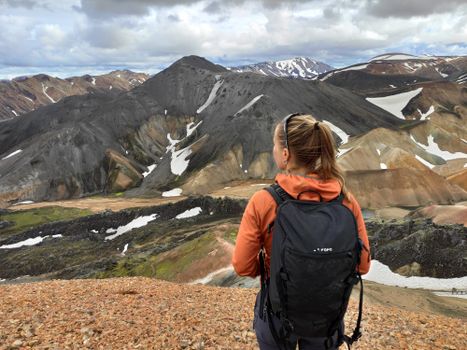
August is the month with the most of Iceland available to you. The highland F-roads have had all summer to dry out and are at their most reliably open; the Westfjords gravel is in its best state of the year; the Ring Road is clear. If your trip depends on getting into the interior — Landmannalaugar, Askja, Þórsmörk — August is the safest month to bet on it, safer than June and safer than late September.
What changes from July is not access, it is light and water. The day shortens fast, and the Reykjavík rain normal steps up from 51.8 mm to 61.8 mm. Neither stops anything. Both change how far you should plan to drive in a day.
The light goes faster than anyone tells you
Most August guides quote "16 to 18 hours of daylight" and leave it there. That is the beginning of the month. The honest number is a range: 18 h 05 m on 1 August, 14 h 48 m on the 31st — computed for Reykjavík, and shown for mid-month in the block above. Mid-August already has 3 h 18 m less daylight than mid-July.
For driving this matters in one specific way: the summer habit of leaving a long transfer until after dinner stops working somewhere around the third week. Early August you can still drive at 22:00 in full light. Late August you are on dipped headlights on unlit gravel by then, with single-lane bridges and free-ranging sheep that are much harder to see. Plan long legs for the morning from mid-month on.
The first weekend is the busiest road weekend of the year
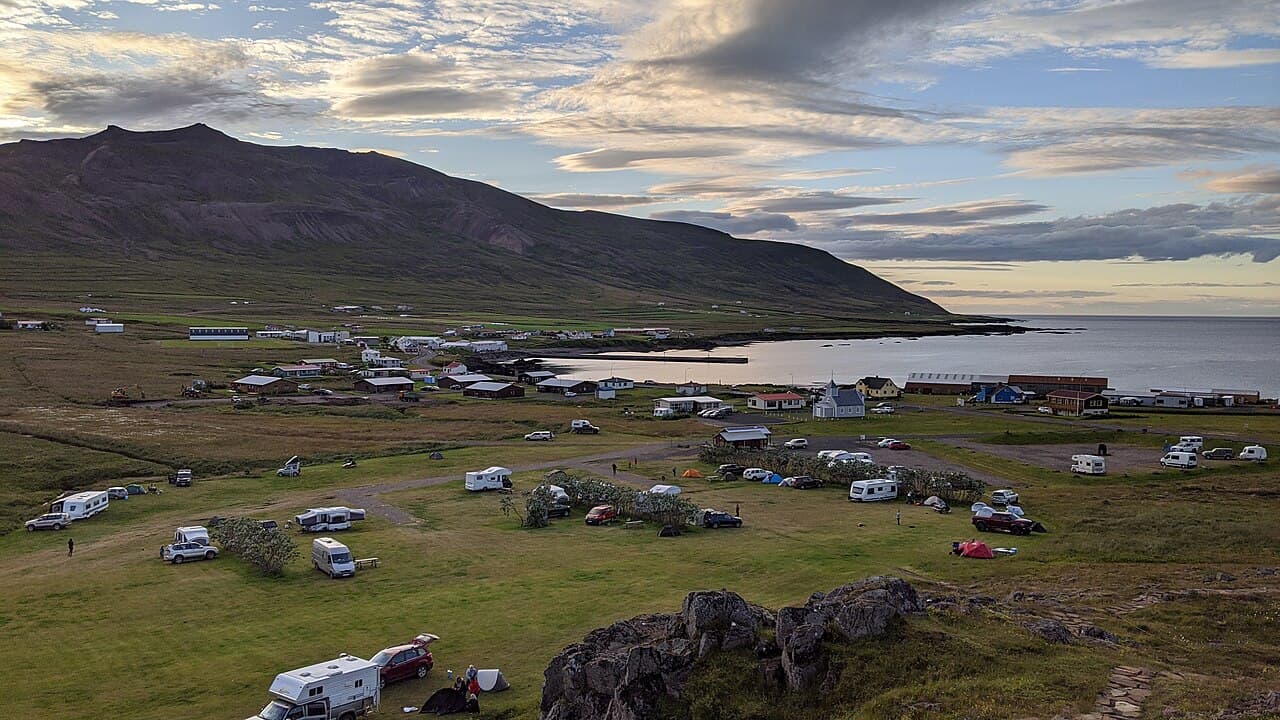
Verslunarmannahelgi — Saturday 1 to Monday 3 August 2026 — is the single biggest domestic travel weekend in Iceland. The first Monday of August is a public holiday, and the country empties out of Reykjavík into campsites and festivals. Roads out of the capital are genuinely busy by Icelandic standards, campsites on the popular routes fill up, and the ferry to the Westman Islands is booked solid for Þjóðhátíð.
It is not a reason to avoid Iceland — most visitors never notice they are in it. But if you are driving that weekend: book your campsite or room before you arrive rather than turning up, expect the Golden Circle and South Coast car parks to be full, and remember that police run visible speed and drink-driving enforcement across the holiday. Monday 3 August is a holiday, so some rural services keep reduced hours.
Warm as July, wetter than July
On the Reykjavík 1961–1990 normals August averages a 13.0 °C high and 7.9 °C low — within a third of a degree of July, so it is effectively as warm as the year gets. Rain is where the two months part: 61.8 mm across about 11.7 wet days in August against 51.8 mm and 10.0 days in July, roughly a fifth more water. Those are Reykjavík figures; the north and east are usually drier and the south coast wetter.
Wet does not mean dangerous here — Icelandic roads drain well and there is no ice to worry about in August. It means greasier gravel, worse visibility behind other cars on unpaved sections, and rivers running higher after a wet spell, which is the part that matters if your route includes fords. Wind is the hazard that outranks rain in every month: read wind and storm driving before you take a high-sided camper anywhere exposed.
The highlands are open — with no fixed closing date
Every F-road legally requires a 4WD, in August as in every other month. Driving one in a 2WD is illegal and voids your rental insurance completely, and river-crossing damage is excluded from every policy sold in Iceland, including the full-coverage ones. None of that relaxes because the weather is good.
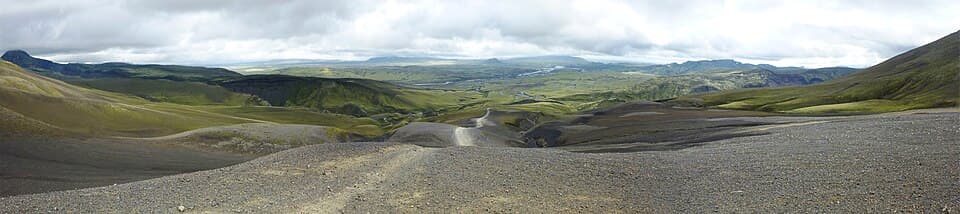
The August-specific point is timing. Vegagerðin closes each highland road when autumn weather makes it impassable, and there is no fixed date — an early storm can shut a road in late August that was open the week before. Check the live status on the day you drive rather than the week you book, keep a paved alternative, and never drive around a closure onto open ground: that is off-road driving, illegal under the Nature Conservation Act, and enforced.
If your route has fords, cross early in the day. Glacial rivers rise through the afternoon as the ice melts in the sun, so the same crossing is usually lower at 9am than at 5pm. Read river-crossing safety before your first one.
What to rent in August
For a paved August trip — Ring Road, Golden Circle, South Coast, Snæfellsnes — a 2WD is genuinely fine, and August is the month where that is least arguable. There is no ice, no snow and no mandatory studded-tyre window (that starts around November). Put the saved money into more days.
You need a 4WD for one reason: F-roads, where it is the law. If your itinerary names Landmannalaugar, Þórsmörk, Askja or Kerlingarfjöll, book the 4WD from the start rather than hoping to upgrade on arrival — August is peak season and the 4WD fleet books out. Whatever you drive, add gravel protection if your route touches unpaved roads; standard cover excludes stone chips (the detail is in rental insurance explained).
Sheep, fuel and the aurora coming back
Three smaller August facts worth knowing behind the wheel. Sheep are still loose on unfenced roads all month — they graze free until the September round-up, they are unpredictable, and a lamb on the far verge usually means a ewe about to cross in front of you. Slow down rather than swerve.
Fuel and services are on full summer hours, so long legs in the east and north are easy to plan; even so, stations are far apart once you leave the southwest, so keep the tank above half and check live fuel prices for what is open and cheapest on your route. And by the last week of August the nights are dark enough for the northern lights to be possible again — the first time since April. If you go out chasing them, treat it as a proper night drive: known road, full tank, and somewhere to pull off that is not the carriageway.
The passes, right now
Live frames from the mountain passes that gate the main routes. In August these are usually clear — which is useful in the other direction: if one of them looks wet or fogged in, that is your visibility on the day, not a seasonal guess.
 Live
Live Live
Live Live
Live Live
LiveDriving August: what changes, in order
#1.Move long legs to the morning from mid-month
daylight across the month: 18 h 05 m → 14 h 48 mrate: ≈6.5 min less per day
The late-evening driving that works on 1 August does not work on 31 August. Front-load distance and keep the end of the day for short hops.
#2.Book around the first weekend
holiday weekend: 1–3 August 2026impact: campsites full
Verslunarmannahelgi is the biggest domestic travel weekend of the year. Book beds and campsites ahead, expect full car parks, and expect enforcement on the roads.
#3.Treat the highlands as live, not seasonal
status: F-roads openvehicle: required by law
August is the most reliable highland month, but closures have no fixed date and fords rise through the afternoon. Check live highland status the day you drive, cross rivers early, keep a paved plan B.
Frequently
asked questions
Can you drive the Ring Road in Iceland in August?
Are F-roads open in Iceland in August?
How many hours of daylight does Iceland have in August?
Do I need a 4WD to drive Iceland in August?
What is Verslunarmannahelgi and does it affect driving?
Is August or September better for driving in Iceland?
Cars & campers
 KEF airport pickup 24/74.8
 Transmission
 Fuel
Fuel Seats
Seats Drive
Drive

 Sleeps
Tours near Iceland in August
 Small groups
 Duration
 Highlights
 Type
Type