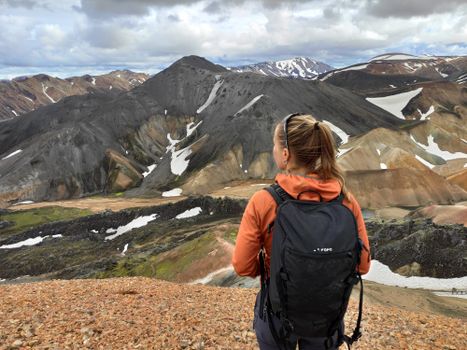
River Crossings in Iceland
Unbridged rivers are the most expensive mistake available to a visiting driver. Here is how to decide — and when the answer is simply no.
Only cross if you know your vehicle's rated wading depth, you have walked the crossing first, and the road is open. No rental insurance covers river damage — not the collision waiver, not the top tier. The water changes hourly. If you are unsure, turn around or take the bus.
How many F-roads are open in Iceland right now?
2 of 40 F-roads tracked by umferdin.is are open right now and 7 are closed (31 not currently reporting). Per-road status is in the table below — always check conditions on the day you drive.
Data verified 16 October 2026, 07:29 · source: umferdin.is (Vegagerðin, the Icelandic Road Administration) · refreshes every 10 minutes
Ring Road (R1) slippery in placesHighlands: 56 of 64 monitored roads closed or impassableVegagerðin, updated just now
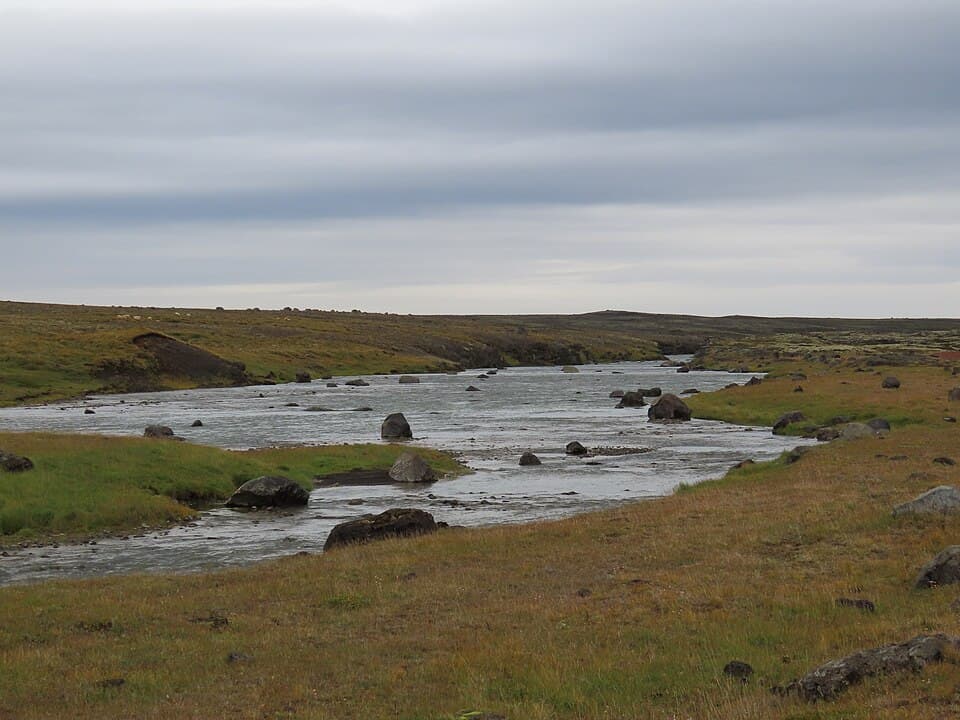
Where the rivers are
Every unbridged crossing in Iceland is in here. On the paved network — the Ring Road, the Golden Circle, the South Coast — every river has a bridge, and none of this applies.
Should you cross this river?
Work down the list. The first “yes” is your answer.
Is the road closed, or not currently reported open by Vegagerðin?
Turn aroundDo not drive it. A closed highland road is closed to you too, and driving round the barrier is a separate offence from anything the river does to your car.
Are you in a rental, assuming your insurance has your back if this goes wrong?
Do not crossIt does not. SafeTravel (ICE-SAR) states plainly that no insurance covers damage to a vehicle while crossing a river — not the collision waiver, not the top tier, not gravel protection. A drowned engine is paid out of your own pocket.
Do you not know your vehicle's rated wading depth — or is the water deeper than it?
Do not crossThen this is not your crossing. Rated depth is a number from the manufacturer, not a feeling about ground clearance. If you cannot state it, you cannot judge the river against it.
Have you not walked the crossing on foot first, and seen where the track leaves the far bank?
Walk it firstWalk it before you drive it. You are checking depth, the strength of the current, and the boulders you cannot see from the driver’s seat. If it is too strong or too cold to wade, it is too strong to drive.
Is it a warm afternoon on a glacial river, or is the water higher than when you arrived?
WaitWait. Meltwater rivers run on the weather, and our own road notes for the interior say the same thing every time: cross early, or wait for evening. A river that is rising is not a river to negotiate with.
Are you alone, with no second vehicle in sight and no phone signal?
WaitWait for other travellers — that is SafeTravel's own advice for an uncertain crossing. A stalled car in a river you cannot leave is a rescue call you may not be able to make.
After all that, are you still unsure?
Turn aroundThen do not do it. That is not our caution talking — it is the rule ICE-SAR publishes: if you are unsure of crossing a river, turn around, or wait for other travellers.
All of the above “no”?
Cross with careRoad open, vehicle rated and known, crossing walked, water low and steady, another vehicle nearby — then cross once, slowly, in the lowest gear, angled downstream, without changing gear in the water. The risk is still entirely yours, and it still is not insured.
A ford is not an edge case — it is the definition
Vegagerðin, the Icelandic Road and Coastal Administration, defines a mountain road partly by its rivers. In its own words, a road is classified as an F-road if it is “exceptionally uneven, rough and steep, and/or there is one or more unbridged river crossing which travellers must ford.”
That is worth sitting with. The rivers are not a hazard the highlands happen to have; they are part of what makes a highland road a highland road. When you turn off the tarmac onto an F-road, you have not found a shortcut with a complication — you have entered a road category that authorities define by the fact that you will drive into water.
The inverse is the reassuring half: on Iceland's paved network, every river is bridged. The Ring Road, the Golden Circle and the paved South Coast have no fords at all. If your trip stays on tarmac, you can stop reading here — and if you are still deciding what to rent, our 4WD guide answers that by route.
The insurance answer, first, because it ends most conversations
People plan river crossings on the assumption that the worst case is an expensive excess. It is not. SafeTravel — the travel-safety service run by ICE-SAR, the Icelandic Association for Search and Rescue — puts it in one line on its highland driving page: “Know that no insurance covers any damage of a vehicle while crossing a river.”
Not the collision damage waiver. Not the upgraded super waiver. Not gravel protection, which covers stone chips and has nothing to say about water. There is no tier you can buy at the rental desk that changes this answer, and no product that makes a drowned engine somebody else's problem. ICE-SAR is direct about where that leaves you: the risk is yours, and damage can cost thousands of euros or dollars.
We are not going to put a number on it, because the honest number depends on the car, the water and how far the recovery has to come — and every specific figure we could find traced back to a rental blog rather than anyone who pays these bills. What our insurance guide covers is what your policy actually does include. Water is not on that list.
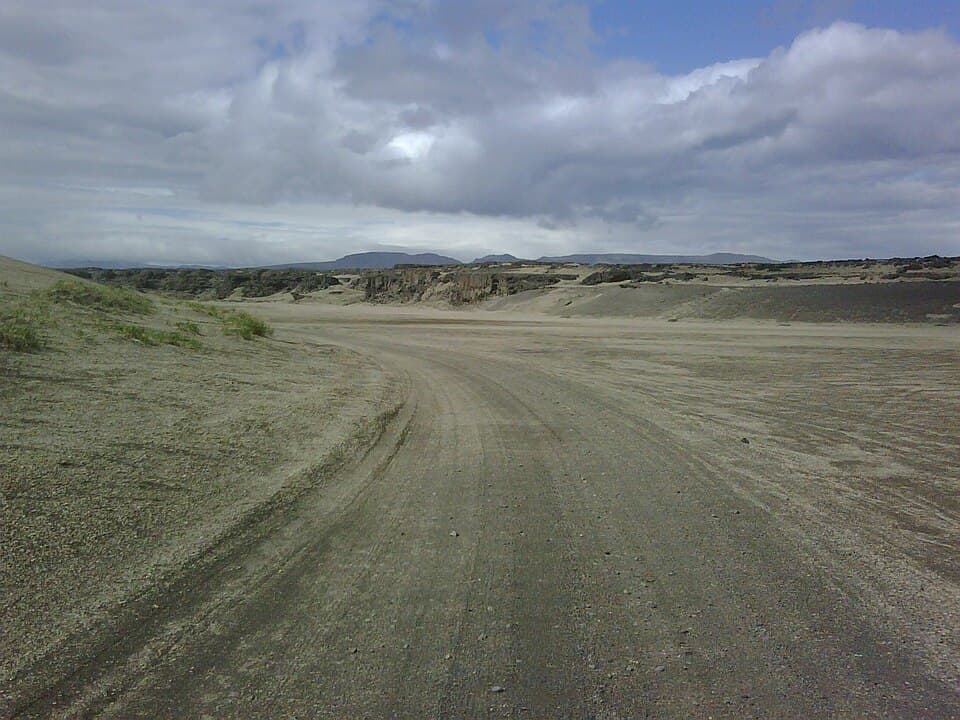
The roads with fords
Not every F-road has a river, and the ones that do are not equally serious. The table below is our own dataset: difficulty and minimum vehicle are as we record them for each road, and the ford note is our own, condensed from the road's page. These are our assessments rather than an authority's ruling, so each row links to the road itself, where the note lives and you can judge the source.
| Road | Difficulty | Minimum vehicle | The water |
|---|---|---|---|
| F249 Þórsmerkurvegur | extreme | super jeep only | Krossá, plus several before it. Our entry says take the bus. |
| F578 Arnarvatnsvegur | hard | large 4x4 | Norðlingafljót — wide, boulder-strewn, turns most people back. |
| F210 Fjallabaksleið syðri | hard | large 4x4 | Hólmsá and others. Our note: it changes by the hour. |
| F26 Sprengisandsleið | hard | large 4x4 | Several across 200 km of interior, with no help between them. |
| F88 Öskjuleið | medium-hard | medium 4x4 | Lindaá — the one people argue about. F910 avoids it entirely. |
| F208 Fjallabaksleið nyrðri | varies | any 4x4 north / medium 4x4 south | Two before Landmannalaugar. North half is dry; the south half is not. |
| F224 Landmannalaugavegur | medium | medium 4x4 | Two rivers guard the campsite — you can park before them and walk. |
| F261 Emstruleið | medium | medium 4x4 | One crossing. Our note rates it far milder than Krossá. |
| F207 Lakagígavegur | medium | medium 4x4 | One crossing our note flags as tricky. |
| F35 Kjalvegur (Kjölur) | easy | any 4x4 | None worth the name — the reason Kjölur is the beginner highland route. |
The ford roads, right now
Live status from Vegagerðin for the roads above. A road the authority is not currently reporting is simply absent from this table — never shown as open. Open does not mean the river is low, only that the road is not closed; that judgement is still yours to make at the water's edge.
9 ford roads reported · 3 closed or closed in places · 5 not reported · Vegagerðin, updated 2 min ago
| F-road | Status now | Vegagerðin's wording |
|---|---|---|
| F26 Sprengisandsleið | Impassable | Ófært |
| F88 Öskjuleið | Impassable | Ófært |
| F210 Fjallabaksleið syðri | Impassable | Ófært |
| F207 Lakagígavegur | Not reported | Óþekkt |
| F208 Fjallabaksleið nyrðri | Not reported | Óþekkt |
| F224 Landmannalaugavegur | Not reported | Óþekkt |
| F261 Emstruleið | Not reported | Óþekkt |
| F578 Arnarvatnsvegur | Not reported | Óþekkt |
| F249 Þórsmerkurvegur | Open to 4x4s | Fært fjallabílum |
Staying on the marked line is not etiquette, it is the law. The instinct at a bad crossing is to drive up or down the bank looking for a better entry. In Iceland that is off-road driving, and it is illegal. The Environment Agency states it plainly: driving off roads or tracks is against the law except when the ground is frozen and snow-covered.
Vegagerðin spells out the consequence: unauthorised off-road driving in the highlands carries prosecution, substantial fines, or even imprisonment under the Nature Conservation Act #60/2013. The marked ford is where the road crosses the river. If the marked ford is not passable today, then the road is not passable today — improvising your own crossing forty metres upstream is a different and worse decision, not a solution.
If you are crossing, cross like this
Everything below is either published by ICE-SAR on SafeTravel or drawn from our own notes on the roads themselves. None of it makes a bad crossing safe. It makes a defensible crossing slightly less likely to go wrong.
#1.Check the road is open before you leave
source: Vegagerðinfreshness: live
A closed highland road is closed to you as well, and no river technique matters if you should not be on the road. Use the live table above, the alerts page, and the opening record — the highlands open late and unevenly, and a road that was open last week may not be.
#2.Walk it before you drive it
what to read: depth + currentgoal: find the exit
You are reading three things: how deep it is, how hard it is pushing, and what is on the bottom. ICE-SAR advises planning the route through the water before you enter it, looking for where the track reappears on the far bank, and watching for large rocks hidden under the surface. Our own note on F208 puts the wading test bluntly: water above your knees means wait. If the river is too strong or too cold to walk, it is not a river to drive.
#3.Go early — meltwater rivers run on the weather
mechanism: melt = more waterbest window: morning
Glacial rivers are fed by melt, so they rise through a warm day and fall overnight. Our road notes say the same thing everywhere it matters: cross Sprengisandur's rivers before mid-morning when the water is lowest; on F210, the Hólmsá changes by the hour, so cross before noon or wait for the evening. Rain does the same thing faster. If the water is higher than when you arrived, it is still rising.
#4.Angle downstream, never against the current
direction: with the flowrisk: engine water
ICE-SAR is specific here: always try to go downstream, because fighting the current both increases the risk of water reaching your engine and makes you more likely to get stuck. You are working with the river, not across it. The line you walked is the line you drive — not the one that looks shorter from inside the car.
#5.Lowest gear, low range, steady — and no gear changes in the water
gearing: lowest gearthrottle: steady
SafeTravel's wording is “drive very slowly in lowest gear, low drive and steady – do not switch gears while in the water.” Steady is the operative word: constant momentum, no acceleration, no stopping, no shifting. Changing gear mid-river is how a crossing that was working stops working.
#6.Do not be the only vehicle there
advice: wait for othersreality: often no signal
ICE-SAR's advice for an uncertain crossing is to turn around or wait for other travellers. A second vehicle is a recovery, a witness and a lift out. Much of the interior has no phone signal, so the vehicle behind you may be the entire emergency plan. Our note on F249 goes further: if you must drive it, follow a super jeep and copy its exact line.
#7.If you have never done this, practise on something small
source: Vegagerðinorder: small first
Vegagerðin encourages travellers with no or limited river-crossing experience to consult river-crossing guides and to practise on smaller rivers before attempting larger ones. The corollary is the part people skip: your first-ever ford should not be a famous one. Emstruleið and Landmannalaugavegur are a different proposition to the southern Fjallabak route.
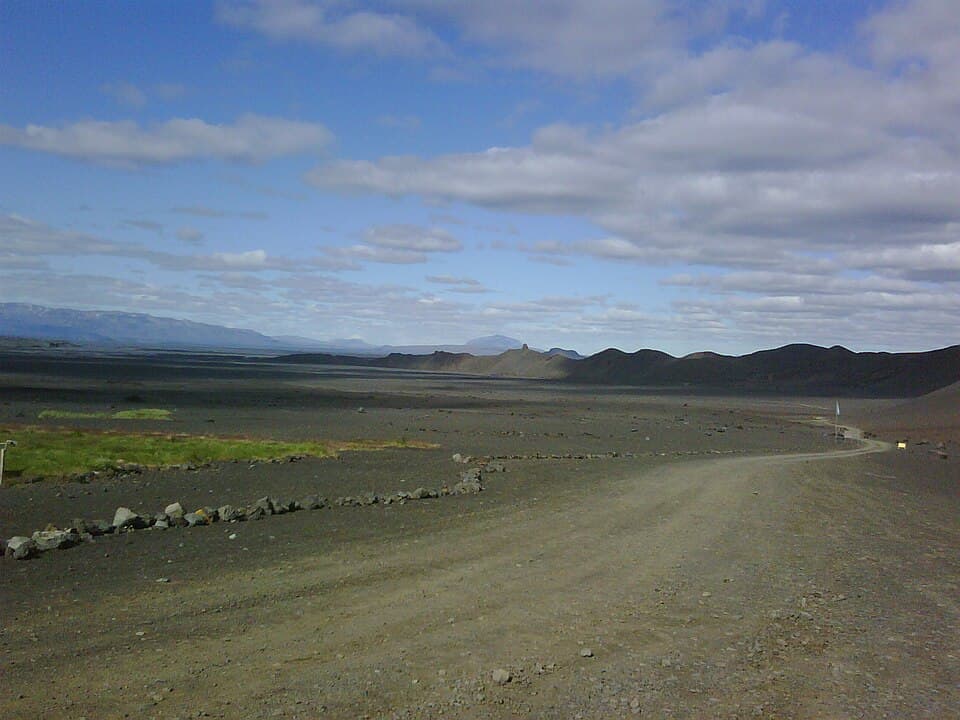
Glacial rivers, right now
Vegagerðin has no cameras on the interior fords — none exist. These are its cameras on bridged glacial rivers out on the paved network. They will not show you your crossing, but they are a live read on how much melt is coming off the glaciers today.
 Live
Live Live
Live Live
LiveUse them as weather, not as a verdict. A river running high and brown under a bridge on Route 1 is fed by the same melt as the unbridged one you are planning to drive into, forty kilometres inland and hours from help. Pair them with the alerts page before you commit to an interior route.
Krossá, and knowing when the answer is no
Þórsmerkurvegur (F249) is the road that ends this debate for most people. Our own dataset rates it extreme, super jeep only — the only road in our F-road data to carry that rating — and the crossing at Krossá is why. Multiple rivers precede it, and its bed moves. Our note on the road is one line long: take the bus.
We are deliberately not going to tell you how many cars Krossá takes each year. That figure gets quoted constantly and we could not trace a single version of it to ICE-SAR, Vegagerðin or anyone else who would actually know. It does not need a number. A road our own data rates super-jeep-only, a river that rebuilds its own bed, and an insurance policy that explicitly does not apply is a complete argument on its own.
The alternatives are not consolation prizes — they are how most people who reach these places get there. Scheduled highland buses and guided super-jeep trips run precisely because the vehicle and the experience are specialist. You can park before the water and walk: our note on F224 says exactly that about the two rivers guarding the Landmannalaugar campsite, and walking in is a real plan, not a failure. And if you want the highlands without the water at all, Kjölur (F35) is rated easy in our data with no significant ford on it — the reason it is the route people start on. The rest of the network is still there.
Turning around is the cheapest decision available at a river. It costs a day. Every other option at a crossing you are unsure about costs more than that — which is exactly why ICE-SAR's own rule is the one to end on: if you are unsure of crossing a river, don't do it. Turn around, or wait for other travellers.
Frequently
asked questions
Does my rental insurance cover river crossing damage in Iceland?
How deep can I drive through a river in Iceland?
What time of day should I cross a glacial river in Iceland?
Can I drive to Þórsmörk in a rental car?
Which way should I drive across an Icelandic ford?
Can I drive along the riverbank to find a better crossing point?
Are there rivers to cross on the Ring Road or the Golden Circle?
What if I am not confident crossing rivers at all?
Cars & campers
 KEF airport pickup 24/74.8
 Transmission
 Fuel
Fuel Seats
Seats Drive
Drive

 Sleeps
Tours near Iceland's highlands
 Small groups
 Duration
 Highlights
 Type
Type