
Shadow arrives at Latrabjarg
NOW — totality
Loading simulator
17:48:30Totalityat Latrabjarg · sun 28° up
16:47 · 1st17:48 · Totality18:47 · 4th
August 12, 2026

Total Solar
Eclipse in Iceland

The first total eclipse visible from Reykjavik since 1433. Two minutes of darkness. Four planets visible. Once in a lifetime.

---
Days
--
Hours
--
Minutes
--
Seconds
Date
Aug 12
2026 at 17:48 UTC
Max Duration
2m 18s
Near Latrabjarg, Westfjords
Path Width
294 km
183 miles across Iceland
Magnitude
1.039
Saros cycle 126 (48 of 72)

On August 12, 2026, the moon's shadow will race across Iceland at 3,400 km/h, turning day into twilight for up to two minutes and eighteen seconds. The path of totality sweeps across the Westfjords, Snaefellsnes peninsula, greater Reykjavik, and the Reykjanes peninsula before heading south to Spain.

This is the first total solar eclipse visible anywhere in Iceland since June 30, 1954 — and the first from Reykjavik since June 17, 1433. The next one won't come until 2196. If you're in Iceland in August 2026, you need to see this.

Best Viewing Locations

Westfjords

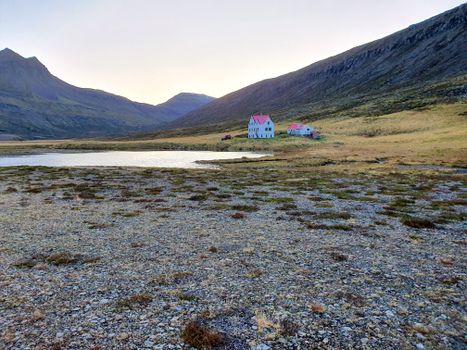
Latrabjarg

2m 13s
65.50°N, 24.50°W

Longest totality on mainland Iceland. Remote bird cliff — dramatic setting.

Snaefellsnes

Hellissandur & Rif

2m 07s
64.92°N, 23.88°W

Near Snaefellsjokull glacier. 3 hours from Reykjavik.

Snaefellsnes

Svodufoss Waterfall

2m 06s
64.85°N, 23.78°W

Photogenic waterfall — eclipse + waterfall in one frame.

Snaefellsnes

Olafsvik

2m 05s
64.89°N, 23.71°W

Charming fishing village on Snaefellsnes.

Snaefellsnes

Grundarfjordur

1m 50s
64.93°N, 23.25°W

Kirkjufell mountain — Iceland's most photographed peak.

Reykjanes

Reykjaneseta Lighthouse

1m 47s
63.80°N, 22.70°W

Last point of totality on mainland. Dramatic coastal cliffs.

Reykjanes

Gardur & Sandgerdi

1m 40s
64.08°N, 22.69°W

Easy access from Keflavik airport. Open coastal views.

Reykjanes

Keflavik Airport Area

1m 38s
64.00°N, 22.56°W

Convenient for travelers arriving the same day.

Reykjanes

Blue Lagoon

1m 36s
63.88°N, 22.45°W

Eclipse from a geothermal spa. Special event planned.

Westfjords

Isafjordur

1m 31s
66.07°N, 23.13°W

Capital of the Westfjords. Deep fjord setting.

Westfjords

Straumnes Lighthouse

1m 26s
66.43°N, 22.93°W

First landfall of the moon's shadow at 17:43:28 UTC.

Snaefellsnes

Stykkisholmur

1m 23s
65.08°N, 22.73°W

Colorful harbor town. Baldur ferry terminal.

Reykjavik

Reykjavik (Grotta)

1m 06s
64.16°N, 22.02°W

Westernmost point of Reykjavik. Best duration in the city.

Reykjavik

Reykjavik (Downtown)

~1m 00s
64.15°N, 21.94°W

Central viewing. Watch west — no tall buildings blocking.

Eclipse Timeline

Reykjavik
Sun altitude 24.5 degrees — look west-northwest
16:47
Partial begins
17:48:16
Totality begins
17:48:47
Maximum eclipse
17:49:17
Totality ends
18:47
Partial ends

Weather & Viewing Conditions

~25%
Clear sky probability
Twenty years of Icelandic Met Office data shows roughly 25% chance of clear or partly clear skies at 18:00 UTC in August, from a fixed location.
~50%
With a rental car
Being mobile doubles your odds. Wind piles cloud on one side of a peninsula and clears the other. Drive to the leeward side and you may find blue sky.
8-15°C
August temperatures
Cool but pleasant. Highs in the mid-teens, lows in single digits. Warm trends occasionally push into the mid-20s. Dress in layers, bring rain gear.

Events & Festivals

August 11 - 15, 2026

Iceland Eclipse Festival

Five-day gathering on the Snaefellsnes Peninsula — music, art, science, and exploration. Lineup includes international artists and speakers. The peninsula offers the longest totality in Iceland at over 2 minutes.

Music & Art
August 12, 2026

Blue Lagoon Eclipse Event

Watch totality from the mineral-rich waters of Iceland's most famous geothermal spa. Located in the path of totality on the Reykjanes peninsula with 1 minute 36 seconds of darkness.

Luxury Experience
August 12, 2026

Perlan Museum Viewing

Reykjavik's iconic dome-shaped museum offers panoramic 360-degree views of the city and surrounding mountains — an ideal elevated spot for eclipse viewing in the capital.

Reykjavik
August 12, 2026

Snaefellsjokull National Park

Watch from beneath the glacier that inspired Jules Verne. The park sits near the center of the totality path on Snaefellsnes, with views of Arnarstapi, Hellnar, and the glacier summit.

Nature

Eye Safety — Read This

  • You must wear ISO 12312-2 certified eclipse glasses during all partial phases — looking at the uneclipsed sun without protection causes permanent eye damage
  • During totality only (when the sun is completely covered), remove your glasses — this is the only way to see the corona, planets, and stars
  • Put glasses back on immediately when totality ends and the first sliver of sunlight reappears
  • Camera lenses, telescopes, and binoculars need dedicated solar filters on the front element — regular eclipse glasses are not sufficient for optical instruments
  • Regular sunglasses, exposed film, or smoked glass are not safe — only certified solar filters work
  • Buy glasses from a reputable vendor well in advance — they will sell out

What You'll See During Totality

The Solar Corona
The sun's outer atmosphere, normally invisible, becomes a glowing halo of white light streaming outward. This is the main spectacle — visible only during totality.
Planets & Stars
Venus will shine brightly to the southwest. Jupiter and Mercury appear to the west. Mars may be visible northwest. Regulus in Leo and the Big Dipper overhead.
360-Degree Sunset
The horizon glows orange-pink in every direction as the moon's shadow creates an artificial twilight. The temperature drops noticeably. Birds go quiet. The world feels different.

Eclipse History in Iceland

1433
Last total eclipse visible from Reykjavik — June 17. Nearly 600 years ago.
1954
Last total eclipse in Iceland — June 30. Visible in the north, not Reykjavik.
2026
August 12 — path crosses Westfjords, Snaefellsnes, Reykjavik, Reykjanes. You are here.
2196
Next total eclipse touching Iceland. 170 years from now — June 26.
2245
Next total eclipse visible from Reykjavik. 219 years away — May 26.

Drive to Totality

A rental car is your best weather insurance. Cloud building on one side? Drive 30 minutes to the other. The path of totality is accessible from every major road in west Iceland.

Akureyri: 4hHusavik: 5hHusafell: 45minReykholt: 30minHotel Ranga: 1h 30min
Get 15% off with mapoficeland

Frequently
asked questions

When exactly is the eclipse?
August 12, 2026. In Reykjavik, partial eclipse begins at 16:47 UTC, totality starts at 17:48:16 UTC (about 1 minute), and the partial phase ends at 18:47 UTC. Iceland is on UTC year-round, so these are local times.
Where is the best place to watch?
For the longest totality (2m 13s), head to Latrabjarg in the Westfjords. The Snaefellsnes peninsula offers 2+ minutes and is easier to reach (3 hours from Reykjavik). Even downtown Reykjavik gets about 1 minute of totality.
Will I see it from Reykjavik?
Yes! Downtown Reykjavik is inside the path of totality — roughly 1 minute of total eclipse. Look west-northwest. Make sure tall buildings don't block the sun at 24.5 degrees altitude.
What if it's cloudy?
Iceland averages about 25% chance of clear skies in August. Having a rental car roughly doubles your odds to 50% — clouds often pile up on the windward side of peninsulas and clear on the leeward side. Monitor the Icelandic Met Office forecast and be ready to drive.
Do I need special glasses?
Yes — ISO 12312-2 certified eclipse glasses are mandatory for all partial phases. During totality only, you remove them to see the corona with naked eyes. Put them back on immediately when the first sliver of sunlight returns. Regular sunglasses are not safe.
Can I photograph the eclipse?
Yes, but you need a dedicated solar filter on your camera lens for partial phases. During totality, remove the filter. For phones, a clip-on solar filter works. Honestly though — for your first total eclipse, just watch. No photo captures what your eyes will see.
Will I see the northern lights during the eclipse?
Very unlikely. The sky during totality isn't dark enough for aurora, and August has too much daylight in Iceland. It would require a very strong geomagnetic storm to be visible.
How early should I book accommodation?
Now. Iceland is already one of Europe's most popular summer destinations, and the eclipse will cause a massive demand spike. Hotels in the Snaefellsnes area and Reykjavik will sell out far in advance.
Can I see it from east or north Iceland?
You'll see a deep partial eclipse (96-98% coverage) but not totality. The difference between 99% partial and 100% total is enormous — totality is a completely different experience. If you can, drive west.
What will the temperature be like?
August temperatures in Iceland typically range from 8-15°C (46-59°F). During totality, expect a noticeable temperature drop of a few degrees. Dress in layers and bring a windproof jacket.

Outside the Path of Totality

North

Akureyri

97.9% obscured

Nearly total — the sun becomes a tiny crescent. Temperature drops, light becomes eerie. Worth watching even without totality.

East

Hofn

96% obscured

Deep partial eclipse. Use eclipse glasses throughout — even 4% of the sun is too bright for direct viewing.

Highlands

Kerlingarfjoll

98.8% obscured

Almost total from the Highland Base. Note: 6.5 hour drive to reach the actual path of totality from here.