
Driving in Iceland in December
The darkest driving of the year: about four hours of usable light near the solstice, ice and storms, and holiday-weather closures. Here is what changes behind the wheel.
December gives Iceland barely four hours of usable daylight around the solstice, icy paved roads and frequent storms. All highland roads are closed. Drive only the paved network in daylight, expect closures around Christmas and New Year weather, and check live road status before every short leg.
Ring Road (R1) slippery in placesHighlands: 16 of 66 monitored roads closed or impassableVegagerðin, updated just now
What drives in December
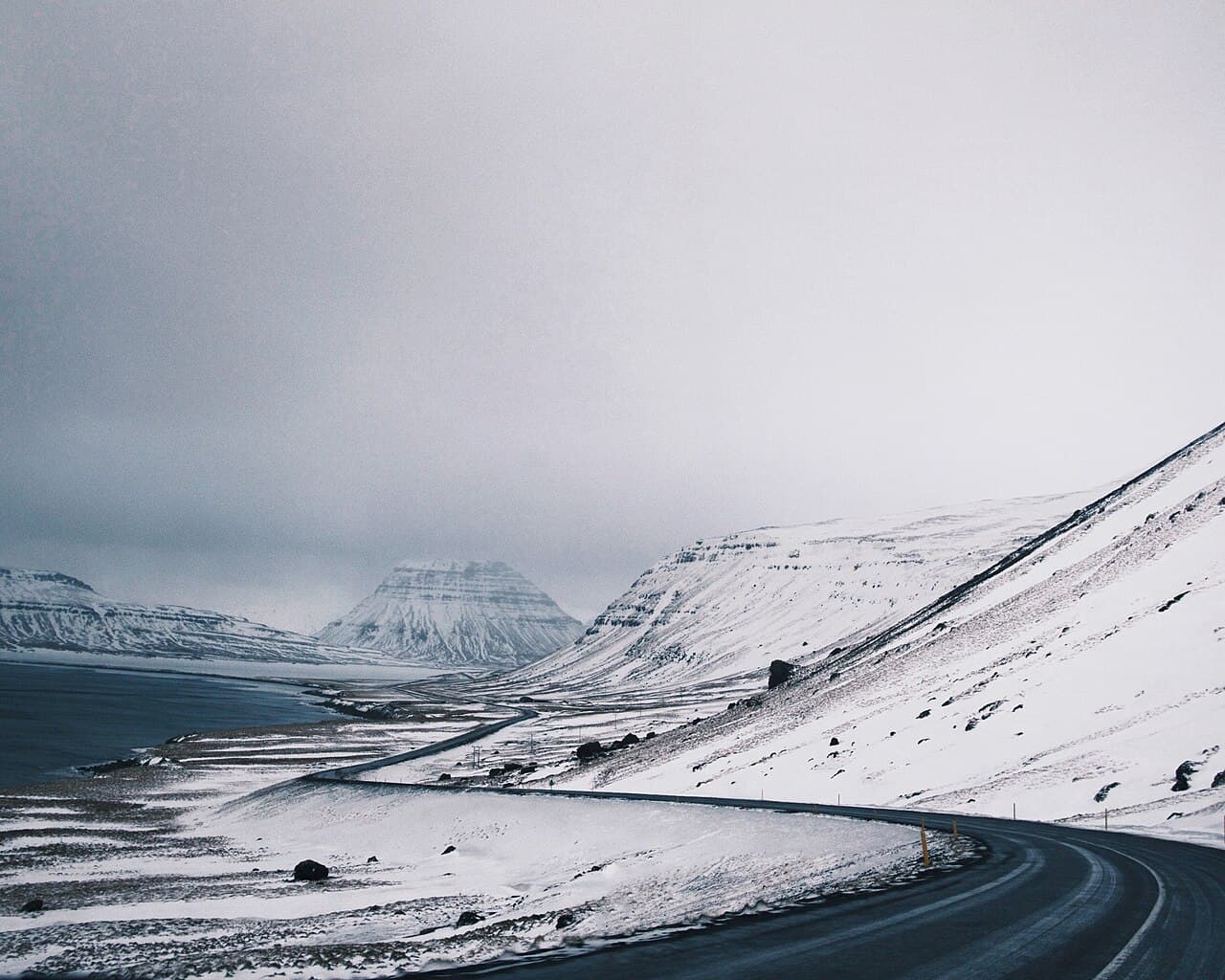
Only the paved network, and only when the weather allows — December storms close roads at short notice. The highlands are entirely shut. Check live status before every short leg.
Your daylight driving window
December has the shortest days of the year — only about four hours of usable light near the solstice, and even that is low, flat winter sun. For the middle of the month in Reykjavík:
Sunrise about 11:15 · sunset about 15:30 · 4 h 15 m of daylight. Computed for Reykjavík on 15 December 2026 (astronomical sunrise/sunset; twilight adds usable light at each end, and the north and interior run shorter).
| Month | Daylight (15th) | Typical daytime high | Crowds | F-roads |
|---|---|---|---|---|
| November | 6 h 37 m | 3.4 °C | Low | Closed |
| December | 4 h 15 m | 2.2 °C | Low (holiday bump) | Closed |
| January | 5 h 19 m | 1.9 °C | Low | Closed |
Daylight is computed for the 15th of each month (astronomical sunrise to sunset, Reykjavík). Typical daytime high is the Icelandic Met Office (Veðurstofa Íslands) Reykjavík 1961–1990 climate normal — see the full table in Iceland weather by month. Crowd level is qualitative guidance; F-road status is factual and closes with no fixed date, so check the live highland status for exact conditions.
What December actually changes
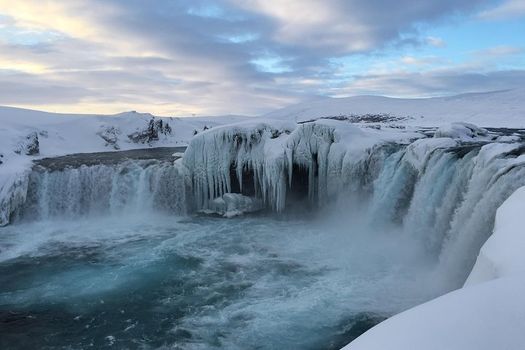
December is the hardest month to drive in Iceland, and the most atmospheric. Around the winter solstice Reykjavík gets only about four hours of usable daylight, the roads are icy, and Atlantic storms roll through in quick succession — often right across Christmas and New Year, when you least want a closure. Every highland road is shut. Against that, December has the aurora, ice caves, Christmas markets and near-empty sights. It is a rewarding trip if you drive it on winter’s terms.
The difference from November is mainly the light: four hours instead of seven changes everything about how far you can go in a day. You are not touring the country in December; you are basing yourself somewhere and making short, daylight, paved drives out and back — with the flexibility to cancel any of them for weather.
Four hours of light — plan around it
Four hours of usable daylight is the defining constraint of a December trip. Even that light is low and flat, with a long dawn and dusk that are beautiful but dim for driving. Realistically you get one short drive out and one back within the light, so a Reykjavík base with day trips to the South Coast or Golden Circle works far better than a full Ring Road loop, which becomes a night-driving marathon in December and is not worth the risk.
Do not drive rural roads in the dark unless you have to. If you are chasing the aurora, that is a deliberate night outing — a known road, a full tank, and a clear-sky window — not an accident of a late itinerary. Everything else happens inside the four hours.
Ice, storms and holiday closures
December storms close roads, sometimes for a day at a time, and they do not pause for the calendar — a Christmas or New Year storm can shut a route exactly when you have a booking at the other end. Ice is constant: with mean lows below freezing on the Reykjavík normals and near-freezing days, black ice forms on bridges, in shade and on the passes, and snow squalls can drop visibility to nothing in minutes. Rental cars are fitted with winter tyres for the season, which is the floor, not the whole answer.
Drive it the winter way: slow speeds, long gaps, gentle inputs, headlights on, and total respect for the wind — gusts strong enough to move a car are routine. If the colour-coded road map or the wind forecast says do not drive, do not drive. The full technique is in winter driving in Iceland; December is the month it matters most.
Christmas and New Year on the road
If your trip lands on the holidays, plan around reduced services. On 24, 25 and 26 December, and again on 1 January, many shops, some fuel stations and a lot of restaurants close or run short hours, and traffic in Reykjavík thins out — so fill the tank and stock the car before the holiday, and do not assume a rural station will be open on Christmas Day. Around New Year, Reykjavík fills with fireworks on the 31st, and driving in the city that night is best avoided entirely; leave the car parked and walk.
The weather does not pause for any of it. A Christmas or New Year storm can shut a route exactly when you have a booking at the other end, so keep holiday drives short and cancellable, and check the live road map before every one. The upside is real: near-empty sights, strong aurora on clear nights, and a country in full winter — earned by driving it patiently.
What to rent, and how to plan
Take a 4WD on winter tyres. It is not legally required on paved roads, but in December the grip on ice and the weight in a crosswind are worth every króna, and a bigger car is less easily shoved around. Skip the highlands — all closed — and skip the ambitious loop. Base yourself, plan short paved day trips, and keep every one cancellable.
Build the itinerary around weather slack, not sights. Keep buffer days, avoid non-refundable same-day connections after a long drive, fill the tank whenever you pass an open station, and check the live road map and alerts before you turn a wheel. In December the willingness to not drive is the most important skill you bring.
The passes, right now
Live frames from the mountain passes that gate the main routes. In December these are the first to close in a storm — if a pass is white or shut, the road beyond it usually is too, so check here before every drive.
 Live
Live Live
Live Live
Live Live
LiveDriving December: what changes, in order
#1.Base yourself, drive short and paved
daylight: ≈4 h at the solsticeplan: day trips, not a loop
A fixed base with short out-and-back day trips beats a Ring Road loop in December light. One drive out, one back, inside the four hours.
#2.Assume storms and closures
weather: frequent stormstiming: no calendar mercy
Roads close at short notice, holidays included. Keep buffer days, avoid tight connections, and check live status before every leg.
#3.Drive ice the winter way
surface: sub-zero, black icewind: gusts move cars
Winter tyres come fitted; slow speeds and respect for wind are yours. If the road map or wind forecast says stop, stop.
Frequently
asked questions
Can you drive the Ring Road in Iceland in December?
Are any F-roads open in Iceland in December?
How many hours of daylight does Iceland have in December?
Do I need a 4WD to drive Iceland in December?
Is it safe to drive in Iceland in December?
Cars & campers
 KEF airport pickup 24/74.8
 Transmission
 Fuel
Fuel Seats
Seats Drive
Drive

 Sleeps
Tours near Iceland in December
 Small groups
 Duration
 Highlights
 Type
Type