Best Campsites in Iceland
A shortlist picked by real data — region, facilities and open-season — plus a filter for every site and what a night actually costs.
There is no single best campsite — the best one is the good, well-serviced site on your route. Our top region picks: Reykjavík (Laugardalur), Skaftafell and Hamragarðar on the South Coast, Egilsstaðir in the East, Dalvík in the North, and Kerlingarfjöll in the Highlands. Filter every one below.
Iceland has 315 campsites in our dataset, and they are not evenly spread: the South Coast alone holds 81, the North 72, and the interior thins out fast — 14 Highland sites, 7 on the Reykjanes peninsula. So “best” is really a routing question. The picks below are chosen by things you can check — region, the facilities a site actually records, and whether it stays open past summer — not by how good the sunset looked in someone's photo. If you are camping in a van, read the camping rules first: a camper legally needs an organised campsite, so the finder here is doing real work.
Where the campsites are
Campsites cluster along the Ring Road and thin out in the interior. Open the map to see what is near your route before you commit to a night.
Find a legal campsite
315 campsites from tjalda.is and OpenStreetMap. Filter by region and by what you actually need, then open the site for details.
315 campsites match
- Airport camping - SandgerðiSandgerði · Reykjanes Peninsula
Electricity · Walking paths · Waste disposal for mobile homes · Shower · +10 more
- AkranesAkranes · West Iceland
Electricity · Walking paths · Golf course · Swimming pool · +2 more
- ArnarstapiSnæfellsbær · West Iceland
Electricity · Walking paths · Food service · Shower · +3 more
- ÁWest Iceland
- Á, SkarðsströndBúðardal · West Iceland
Electricity · Walking paths · Shower · Washing machine · +1 more
- ÁfangagilSouth Coast
- ÁfangiHighlands
- ÁlfaskeiðSouth Coast
- ÁlftavatnSouth Coast
- ÁrbúðirHighlands
- ÁrhúsHella · South Coast
Electricity · Walking paths · Waste disposal for mobile homes · Shower · +9 more
- ÁrmeningaflötSouth Coast
Facilities are as recorded by tjalda.is and OpenStreetMap, and some sites list none. Opening seasons aren't shown here because the source data for them is inconsistent and in places years out of date — check the campsite's own page or call ahead before you rely on one being open.
The shortlist, by region
One strong site per region you are likely to route through, plus the two Highland classics. Each links to its own page, where the facilities, contact details and location live. This is a starting shortlist, not a ranking — a campsite an hour off your route is never the best one for you.
| Campsite | Region | Good for | Season |
|---|---|---|---|
| Reykjavík (Laugardalur) | Reykjavík area | First or last night of the trip — 3 km from downtown, next to the Laugardalur pool, and open all year. | Open all year |
| Skaftafell | South Coast | The Vatnajökull glacier gateway — spacious, sheltered by trees, split into smaller areas, and open all year. | Open all year |
| Hamragarðar | South Coast | Waterfall-side base — 2 km off Route 1 at Seljalandsfoss, so you wake up next to the falls instead of driving to them. | Summer |
| Egilsstaðir | East Iceland | The East’s road hub — town-centre location, 24/7 toilets and showers, open all year, and a natural hot spring on site. | Open all year |
| Hallormsstaður (Atlavík / Höfðavík) | East Iceland | Forest camping by Lögurinn lake in Iceland’s largest woodland — two sites, and an EV charger, which is rare out here. | Summer |
| Dalvík | North Iceland | A quiet North-coast stop with the swimming pool right next door — handy on the run between Akureyri and the whale-watching towns. | Summer |
| Hveragerði (Reykjamörk) | South Coast | The closest real campsite to the Reykjadalur hot-river hike — tree-sheltered, open all year, with a pool in the village. | Open all year |
| Kerlingarfjöll | Highlands | A Highland base in the Ásgarður valley with geothermal baths and hot showers — a soft landing in hard country. F-road access, summer only. | Summer |
A few of these earn a closer look. Skaftafell is the obvious South-Coast base for glacier walks and the Svartifoss hike — spacious, tree-sheltered, and one of the few that stays open all year. Hamragarðar is the one people wish they had known about: 2 km off Route 1 at Seljalandsfoss, so the waterfall is a short walk rather than a morning drive. And Egilsstaðir is the East's road hub — town-centre, 24-hour facilities, and a natural hot spring on site.
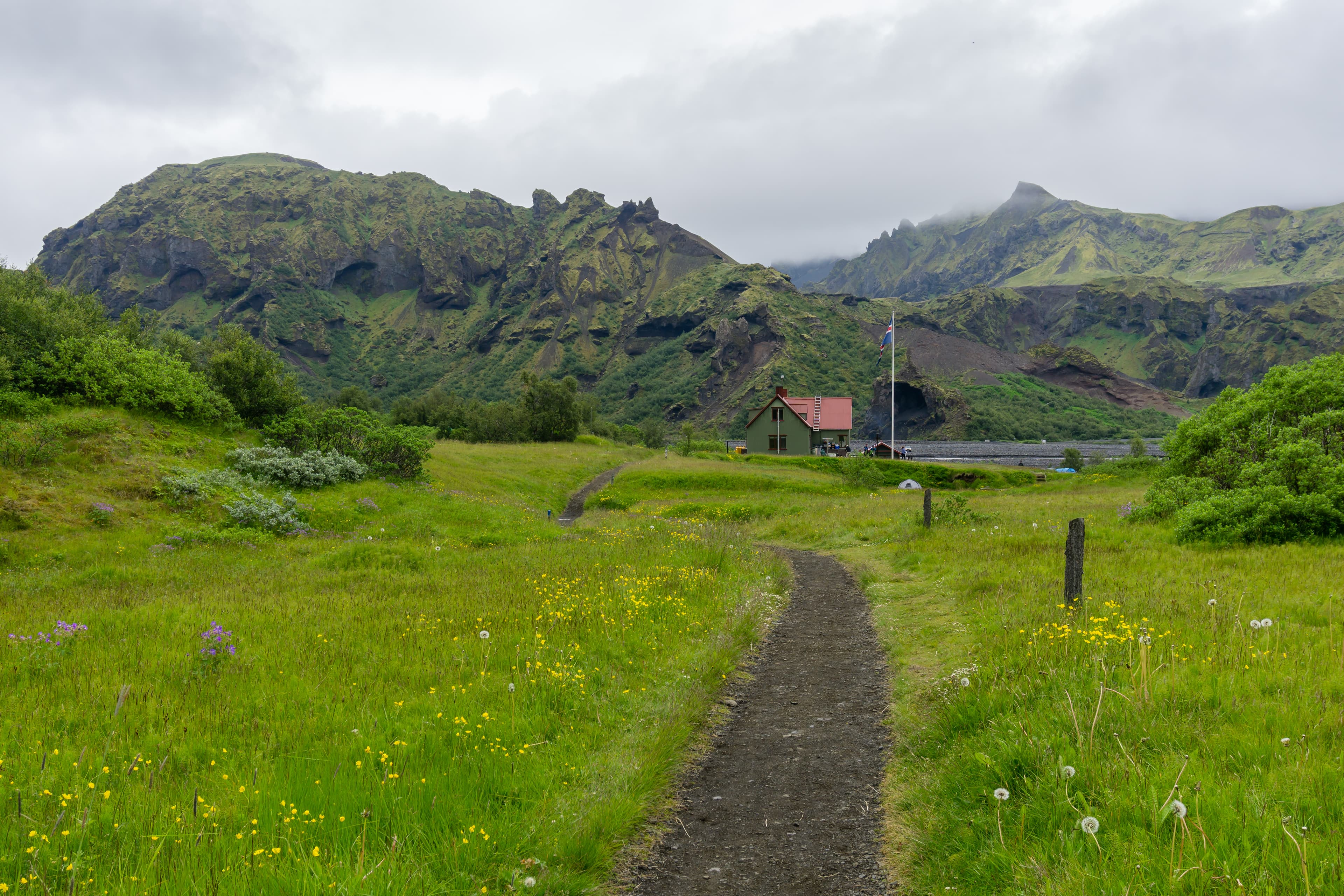
The Highland pair — Kerlingarfjöll and the Þórsmörk valley sites — are the reward for reaching the interior, and both come with a catch: they open only once the mountain roads are cleared, and you need the right car to get there. Check whether you need 4WD and the live status of the F-roads before you point the car inland. In the East, Hallormsstaður is the odd one out in the best way — forest camping by a lake, with an EV charger you would not expect that far from Reykjavík.
How to choose a campsite
Once you drop the idea of a single “best” site, choosing gets easy. Five things decide it, in roughly this order.
#1.Location on your route
position: on the Ring Road, not off itcoverage: 315 sites, unevenly spread
The single biggest factor. A campsite 40 minutes down a side road is worse than an ordinary one on your path, because you pay the detour twice — in and out. Use the finder's region filter and the map to find the sites that fall naturally on the day's driving, then choose among those.
#2.The facilities you actually use
facility: electricity at 131 sitesfacility: pool or hot spring next door
Showers, electricity for a camper hook-up, a washing machine on a long trip, mobile-home waste disposal for a van. These are recorded per site, and the finder filters on them. Electricity is the most common paid extra — 131 sites list it — and a swimming pool next door, which plenty of town sites have, is the closest thing to a hot shower with a view. Filter for what you need rather than trusting a name.
#3.Season — most sites are summer only
season: 27 open all yearseason: Highland sites: snowmelt-gated
Icelandic campsites are overwhelmingly a summer business. Only 27 sites in our data carry an open-all-year flag — the town sites like Reykjavík, Egilsstaðir and Akureyri — and Highland sites open only once the roads are cleared, which shifts every year. Off-season, check the site's own page or call. Our weather-by-month guide covers when camping is realistic at all.
#4.Price, and the extras that hide
price: ~1,650–2,300 kr/adult (2025)price: 400 kr lodging tax per unit
Fees are per adult per night, not per pitch, so a family adds up. In the 2025 price data on tjalda.is, adult fees mostly land between about 1,650 and 2,300 kr, with children usually free. Electricity and the 400 kr per-night lodging tax are added on top. The campervan cost calculator folds all of this into a per-day figure.
#5.Booking — usually unnecessary
booking: only 51 of 315 take bookingstiming: arrive early in July–August
Most Icelandic campsites are turn-up-and-pay: only 51 of the 315 record online booking. Arriving in the early evening beats booking ahead at nearly all of them. The exception is a popular South Coast or Highland site at the July–August peak, where turning up by mid-evening is the real booking strategy.
What a camping trip actually costs
Campsites are the cheap part of an Iceland trip, which is exactly why people camp. A night for two adults with electricity lands around 4,000–5,500 kr on the 2025 tjalda.is figures, once the lodging tax and hook-up are in — a fraction of a hotel room. The cost that moves is the car, not the pitch: a camper van or a 4WD is where the budget goes, so the honest way to plan is to price the vehicle first and treat campsites as a steady daily line. Our whole-trip cost guide puts camping next to the alternatives, and the campervan calculator does the per-day maths.
One thing worth packing for over saving on: the wind. Iceland decides which tents survive, not the temperature, and a cheap site in a gale is no bargain if the poles fold at 03:00. Our packing guide is blunt about which tents last, and the midnight sun is the other thing that catches campers out — a June tent is bright at 02:00, so bring an eye mask.
Frequently
asked questions
What are the best campsites in Iceland?
How much do Iceland campsites cost?
Where are the best campsites in South Iceland?
Is there a campsite map for Iceland?
Which Iceland campsites are open all year?
Do I need to book an Icelandic campsite in advance?
Which campsites are best for a camper van?
Cars & campers
 KEF airport pickup 24/74.8
 Transmission
 Fuel
Fuel Seats
Seats Drive
Drive

 Sleeps
Tours near Iceland's campsites
 Small groups
 Duration
 Highlights
 Type
Type