
The Midnight Sun in Iceland
When it happens, where the nights are brightest, and the honest truth about 24-hour daylight — with a live calculator for any date.
Iceland's midnight sun runs roughly mid-May to late July, peaking around the 20–21 June solstice, when Reykjavík gets about 21–22 hours of daylight and never goes fully dark. The mainland has “white nights” — the sun still dips briefly below the horizon. Only Grímsey, on the Arctic Circle, gets a true 24-hour sun. Use the calculator below for the exact figures for your date.
How much daylight does Iceland have today?
Reykjavík gets 11 h 02 m of daylight on 5 October 2026 — sunrise 07:45, sunset 18:47.
Data verified 5 October 2026, 22:09 · source: computed from NOAA solar equations at Reykjavík's coordinates · recomputed on every page refresh

Point north for the brightest nights
The closer you get to the Arctic Circle, the longer the sun lingers. Grímsey, the island off the north coast, sits right on the line. Open the map to plan a route into the north.
What the midnight sun actually is
Iceland sits just south of the Arctic Circle. In the weeks around the June solstice the country tilts so far toward the sun that it barely goes dark — the sun rolls along the northern horizon instead of setting properly. That is the midnight sun.
Here is the part people get wrong, and it is worth getting right: on the mainland the sun does still set. Around the solstice it dips below the horizon for a short spell in the small hours, but the sky never turns black — a long, low dusk runs straight into a long, low dawn. Locals call these “white nights”. The only place in Iceland that gets a genuine, sun-never-sets 24-hour day is Grímsey, the small island that the Arctic Circle runs across, off the north coast. So “24 hours of daylight” is true for the whole country in the loose sense that it never gets dark — but a literal sun-above-the-horizon-all-day only happens on Grímsey.
Reykjavík gets its longest day at the solstice — around 21 to 22 hours of the sun above the horizon, and no real darkness on either side of that. The exact number shifts every day and climbs the further north you go, which is why the tool below computes it for the date you pick rather than quoting one figure for the whole summer.
Midnight-sun daylight calculator
Sunrise, sunset and total daylight for Reykjavík / south Iceland — the north gets even more. Pick a date or a preset.
These are astronomical sunrise/sunset times (the sun's upper edge at the horizon), computed with the standard sunrise equation for Reykjavík (64.15°N). Twilight adds more usable light on top — near the summer solstice the sun barely dips below the horizon, so the sky stays bright all night (“white nights”). North Iceland gets even longer days. Iceland stays on UTC year-round, so no daylight-saving shift applies.
The window: when to come
White nights run roughly from mid-May to late July. You do not need to hit the exact solstice — the light is close to its maximum for a couple of weeks on either side of 20 to 21 June, so any trip in June or early July lands you in it. May and late July still give you long, bright evenings; they just have a short, dim night bracketing them.
If your trip is about the midnight sun specifically, aim for the second half of June. That is peak brightness, warmest weather, and every road and highland route is usually open — the same window that makes summer driving in Iceland at its easiest. One catch: it is also peak tourist season, so book a car and beds early.

Where to experience it best
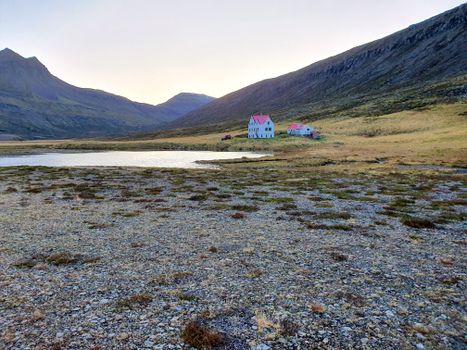
The midnight sun is over the whole country, so any base works. But two things sharpen it: latitude and horizon. The further north you are, the longer and brighter the night; and an open horizon — a coastline, a fjord mouth, a flat plain — beats a valley walled in by mountains that hide the low sun. The north, the Westfjords, and Grímsey on the Arctic Circle are where it is strongest.
| Place | Why go here | Peak window | Getting there |
|---|---|---|---|
| Reykjavík & the south | Easiest base. Long white nights; the low sun skims the horizon for hours before dipping just below it. | Mid-May to late July · peak 20–21 June | 45 min from Keflavík airport |
| Akureyri & the north | Further north than the capital, so the nights stay brighter for longer. Open fjord horizons to the north. | Late May to mid-July | ~5 h drive or a short domestic flight from Reykjavík |
| Grímsey (Arctic Circle) | The only inhabited part of Iceland on the Arctic Circle — the one place that gets a true 24-hour sun at the solstice. | Around 20–21 June | 3 h ferry from Dalvík, or a flight from Akureyri |
| Westfjords (Ísafjörður, Látrabjarg) | Remote and empty, with cliff-and-fjord horizons. The Látrabjarg bird cliffs stay lit through the night. | Late May to mid-July | Gravel-heavy drive; a 4WD is more comfortable |
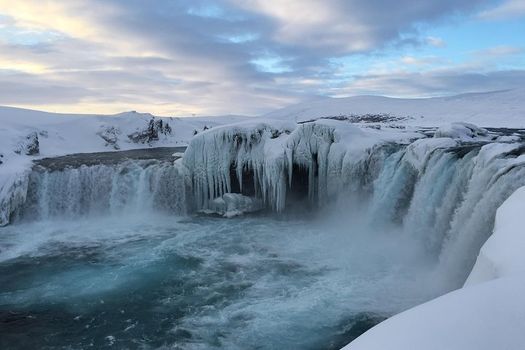
For most first trips, the south and Reykjavík are the easy call — you are already there off the plane, and the nights are still bright. If the midnight sun is the whole point, the drive or flight north pays off: brighter nights, and Goðafoss or the coast near Akureyri give you open horizons to shoot into.
How to make the most of it
The midnight sun rearranges the day. The golden hour that photographers chase for a few minutes at home stretches into a golden few hours in Iceland — the sun stays low and warm from late evening well past midnight. Here is how to use that.
#1.Chase the long golden hour
best light window: Low sun ~10pm–3amaim: North-facing viewswhat to look for: Open horizons
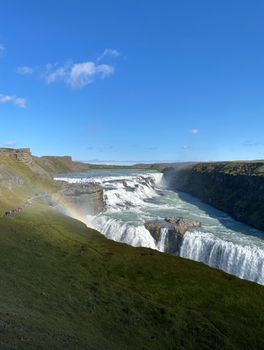
The best light of the day now comes when you would normally be asleep. Plan your headline spots — a coast, a waterfall, a fjord — for after 10pm and shoot into the low northern sun. Waterfalls like Seljalandsfoss, where you can stand behind the falls, are made for it: the sun sits low enough to burn through the spray.
#2.Go north for the brightest nights
regions: Akureyri / WestfjordsArctic Circle: Grímsey = true 24hwhen: Late May–mid July
If you want the extreme version, head north. Akureyri and the Westfjords get noticeably longer, brighter nights than the capital, and a capable car gets you to their empty, wide-open viewpoints. For the real thing — a sun that does not set at all — take the ferry or flight to Grímsey and stand on the Arctic Circle at midnight.
#3.Then actually sleep
pack this: Eye mask essentialhotel reality: Blackout, not totalask for: Room facing away
The flip side of endless light is that your body clock loses its cues. Most hotels and guesthouses fit blackout curtains, but they rarely block everything, so pack a proper eye mask and treat it as essential kit. If you are a light sleeper, ask for a room facing away from the low northern sun, and try to keep roughly normal hours even when 1am looks like early evening.

The practical bit: you'll want a car
You do not need a car to notice the midnight sun — it is simply there, all night. But the spots worth staying up for are coastlines, fjords and empty plains you reach on your own schedule at 1am, not on a tour bus that dropped its last passenger hours ago. A rental is what turns “it stayed light” into “we drove out to an empty beach at midnight and had it to ourselves”.
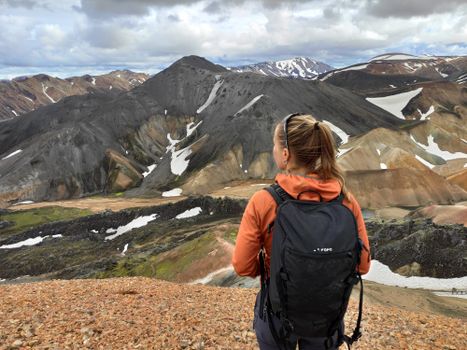
For the paved south and the Golden Circle a 2WD is plenty. If your midnight-sun plans push into the north, the Westfjords or the highlands, read whether you need 4WD first, and check live road and weather alerts before any late drive — bright does not always mean clear.
Frequently
asked questions
When is the midnight sun in Iceland?
Does the sun actually never set in Iceland?
Where is the best place to see the midnight sun?
How many hours of daylight does Iceland get in June?
When is the summer solstice in Iceland in 2026?
Can you see the northern lights and the midnight sun on the same trip?
Is it hard to sleep with 24-hour daylight?
Do you need a car to see the midnight sun?
Cars & campers
 KEF airport pickup 24/74.8
 Transmission
 Fuel
Fuel Seats
Seats Drive
Drive

 Sleeps
Tours near Iceland's midnight sun
 Small groups
 Duration
 Highlights
 Type
Type