Iceland Car Rental FAQ
Every real question about renting a car in Iceland — fuel, deposit, age, F-roads, tyres, tolls and licences — answered straight, in one place.
Rent full-to-full fuel, bring a credit card in the main driver's name for the deposit hold, and match the car to your route: a 2WD for paved roads, a 4WD for F-roads and winter. Off-road driving is illegal, and F-roads need 4WD by law. Everything else — age, drivers, tolls — is below.
Ring Road (R1) slippery in placesHighlands: 16 of 65 monitored roads closed or impassableVegagerðin, updated just now
How to use this page
This is the one place we answer every common Iceland car rental question — the ones people usually have to hunt for across a dozen separate pages. Read the sections below for the context, then use the full, grouped FAQ near the bottom to jump straight to your question.
If you have not booked yet, start with the renting a car in Iceland walkthrough, then come back here for the details. When you are ready, browse the car rental fleet — the code MAP takes 12% off, which is what keeps this site free.
The country your rental has to cover
Iceland is bigger than it looks and the distances between stops are long. Your car, fuel policy and insurance all follow from where on this map you are actually going.
Fuel: full-to-full, prepaid, and which pump
Fuel is the question that catches people out first. Almost every Icelandic rental offers a full-to-full policy — you collect a full tank and return it full — and it is nearly always the cheapest, because you only pay for the fuel you burn. The alternative, a prepaid tank you return empty, sounds convenient but you rarely hand it back truly empty, so you end up paying for fuel you leave behind.
Whichever policy you take, do not guess your fuel type: check the sticker inside the filler flap and your rental agreement — many Icelandic cars are diesel, and misfuelling is on you. Pumps are mostly self-service and want a card with a PIN, and stations thin out in the Highlands, so fill up before you leave the Ring Road.
| Fuel policy | How it works | Best when | Watch out for |
|---|---|---|---|
| Full-to-full | You collect a full tank and return it full. | Almost always the cheapest — the default to ask for. | Return it full or pay a refuelling fee; keep the last receipt. |
| Prepaid (full-to-empty) | You pay for a full tank up front and return it as empty as you dare. | Only if you will genuinely run it near empty before drop-off. | No refund for fuel you do not use — most people overpay. |
A few rules are not negotiable, and breaking them is expensive. Iceland drives on the right, headlights must be on day and night, and the default speed limits are 50 km/h in towns, 80 on gravel and 90 on paved rural roads unless a sign says otherwise.
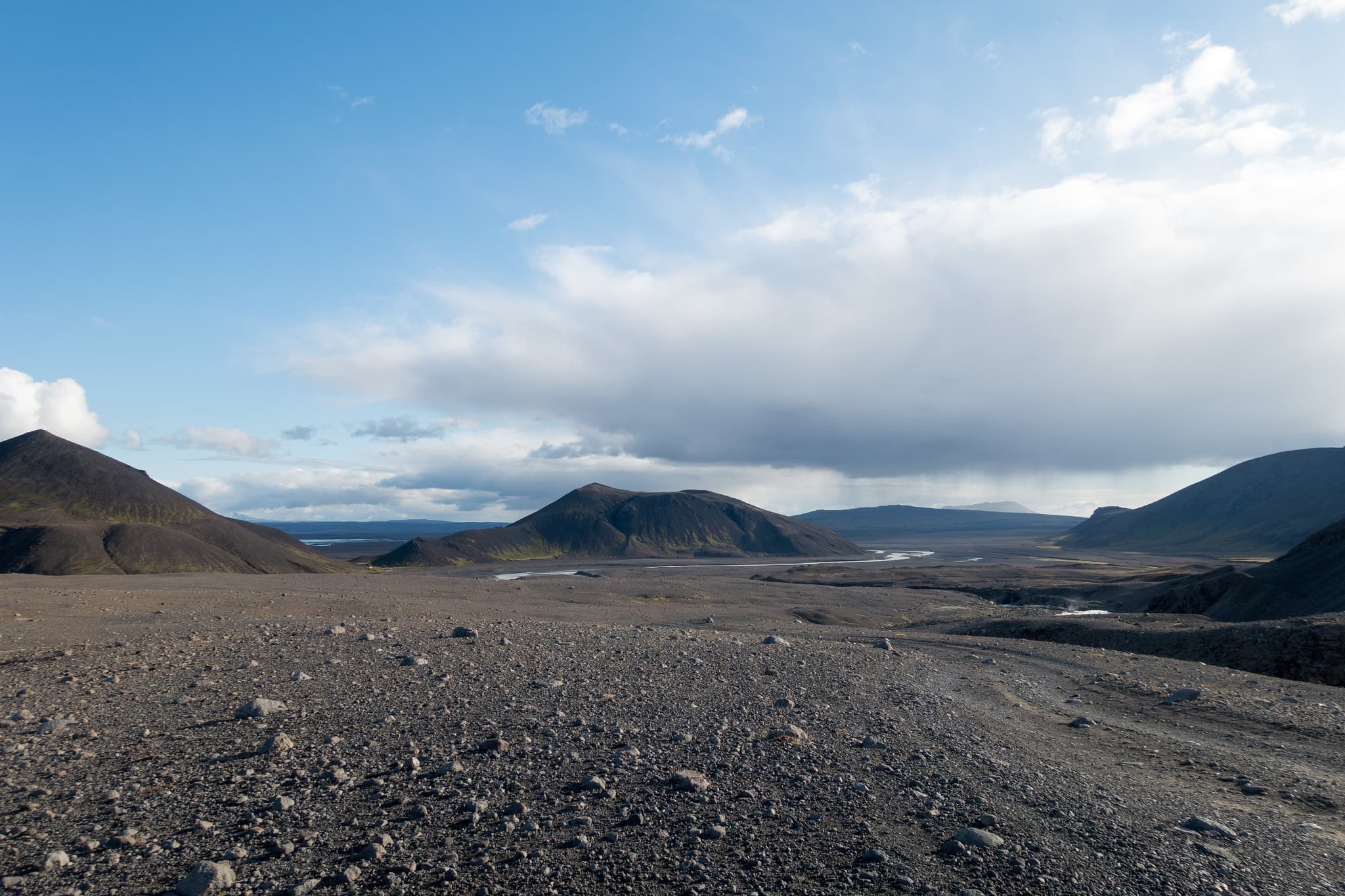
Off-road driving is illegal. Under Iceland's Nature Conservation Act you must stay on marked roads and tracks — never across moss, sand or riverbanks. Fines are steep and the scars on fragile ground last for decades. Read our off-road driving guide for the full picture.
F-roads require a 4WD by law. Taking a 2WD onto one voids your insurance and risks a fine, and you become personally liable for any damage. See what F-roads are, work out whether you need 4WD, and check the F-road network before you commit to an interior route.
Winter tyres are required roughly 1 November to mid-April, and rentals in that window include them at no extra cost (studded tyres are only permitted in that same window). Standard cover usually excludes gravel damage, so add gravel protection the moment your route leaves the tarmac. Before any drive, check live conditions on our alerts page and the can I drive there today verdicts.
The passes, right now
Live frames from the mountain passes that decide whether today is a driving day. A snowed-in pass is a straight answer; pair these with the live status line at the top of the page.
 Live
Live Live
Live Live
LiveEvery question, answered straight
The full FAQ, grouped by theme. Every answer is here on the page — open a question to read it, or scan the whole group. Figures that vary by company (deposit size, minimum age, one-way fees) are called out as “check your agreement” rather than quoted as a number that would go stale.
Fuel
Full-to-full vs prepaid, which pump, and what it costs.
Is Iceland car rental fuel full-to-full or prepaid?
Both exist. Full-to-full is the standard and usually the cheapest: you get a full tank and return it full. Prepaid means you buy a tank up front and return the car empty, but you rarely return it truly empty, so you tend to overpay. Ask for full-to-full unless you have a reason not to.
What fuel does my rental car take — petrol or diesel?
Do not guess. Check the sticker inside the fuel-filler flap and the details on your rental agreement, and if in doubt ask at pickup. Many Icelandic rentals are diesel. Misfuelling is expensive and it is on you, not the insurer, so confirm before your first fill-up.
Where do I fill up in Iceland?
The main chains are N1, Olís, Orkan, OB and Costco. Most pumps are self-service and need a card with a PIN or a prepaid fuel card, so carry one that works at automated pumps. Stations thin out in the Highlands and the east, so fill up before you leave the Ring Road.
How much does fuel cost in Iceland?
Fuel is expensive by European standards and moves with the market, so any single figure goes stale fast. Rather than quote a number, check our live fuel price index for the current average — and budget generously, because distances between stops are long.
Money and who can drive
Deposits, cards, minimum age, extra drivers and the excess.
Is a deposit or security hold required?
Yes. At pickup the company places a pre-authorisation hold on the main driver’s credit card. The amount varies by car and by how much insurance you buy — it is roughly the size of your insurance excess. There is no fixed figure across companies, so check the amount on your agreement.
Do I need a credit card to rent a car in Iceland?
Usually yes — a credit card in the main driver’s name, because the deposit is held on it. Many companies do not accept debit cards or prepaid cards for that hold. Confirm your card is acceptable before you book, especially if you only travel with a debit card.
What is the minimum age to rent a car in Iceland?
It varies by company and vehicle. Typically you can rent a small car from around 20, with a higher minimum (often 23–25) for larger 4x4s and campers, and a young-driver surcharge may apply. Check the exact age and any fee with your rental company before booking.
Can I add an additional driver?
Yes, but every driver must be named on the rental agreement and show their licence at pickup. An unregistered driver behind the wheel voids your insurance if anything happens. A small daily fee per extra driver is common — some deals include one free.
What driving licence do I need to rent in Iceland?
A full, valid licence you have held for the required period. EU/EEA licences are accepted as they are. If your licence is not written in the Latin alphabet, bring an International Driving Permit (IDP) alongside your home licence. Some companies ask for an IDP more broadly, so check yours.
What does the insurance excess mean?
The excess (deductible) is the amount you still pay towards a claim before the insurance covers the rest. It is usually what the deposit hold is sized to. Buying a higher tier of cover lowers the excess. The exact figures are on your rental agreement — read them before you drive.
The car itself
Gearbox, mileage, child seats and add-ons.
Automatic or manual — what is available in Iceland?
Both, but automatics are a smaller share of the fleet and book out first, especially in summer. If you can only drive an automatic, reserve early rather than hoping one is free on the day.
Is mileage unlimited on Iceland rentals?
Most Icelandic rentals include unlimited kilometres, which suits the long distances here. A few cheaper deals cap the daily distance, so confirm "unlimited km" on your agreement before you book a big loop like the Ring Road.
Do I need a child seat, and can I rent one?
Icelandic law requires an approved child restraint for young children, and rental companies rent seats. Stock is limited, so reserve the seat when you book rather than at the desk. Confirm the exact age and height rule with your company, or bring your own seat.
Are extras like wifi, GPS or snow chains included?
Usually not — portable wifi, GPS units and extra drivers are add-ons priced per day, and snow chains are not standard kit. Decide what you actually need and add it when you book; a phone with offline maps often replaces a rented GPS.
The rules that get people fined
The legal essentials — read these before you turn the key.
Which side of the road does Iceland drive on?
The right. Overtake on the left, give way to traffic already in a roundabout, and remember single-lane bridges and blind rises are common on rural roads — slow down and yield early.
Are headlights required during the day?
Yes. Iceland requires headlights on at all times, day and night, all year. Rental cars usually have automatic lights, but check yours are actually on rather than in daytime-running mode.
What are the speed limits in Iceland?
Unless a sign says otherwise: 50 km/h in built-up areas, 80 km/h on gravel rural roads, and 90 km/h on paved rural roads. Speed cameras are common and fines are steep, so watch the surface change — the limit drops the moment tarmac turns to gravel.
Can I drive off-road in Iceland?
No. Off-road driving is illegal in Iceland under the Nature Conservation Act — that means staying on marked roads and tracks, never across moss, sand or riverbanks. Fines are steep and the damage to fragile ground lasts for decades. There is no grey area here.
Can I take a 2WD car on an F-road?
No. F-roads are mountain roads that require a 4WD by law. Taking a 2WD onto one voids your rental insurance and risks a fine, leaving you personally liable for any damage. If your plan includes any F-road, book a 4WD from the start.
Are gravel roads covered by my rental insurance?
Standard collision cover usually does not include gravel damage — chipped windscreens, sandblasted paint, cut tyres. Gravel protection is a separate add-on. If any part of your route leaves the tarmac, add it when you book; it costs far less than one cracked windscreen.
Do I need winter tyres, and when?
Winter tyres are required in Iceland roughly from 1 November to mid-April, and rentals in that window include them at no extra cost. Studded tyres are only permitted inside that same window. You do not arrange this yourself — the rental company fits the legal tyres for the season.
Is crossing a river in a rental allowed?
Only in a vehicle rated for it, such as a proper Highland 4x4, and only after scouting depth and flow. Even then, water damage from a crossing is not covered by any insurance tier — it is entirely on you. Most rentals are never suitable for fords.
Fees, tolls and returns
Tolls, one-way charges, cross-border and late returns.
Are there tolls in Iceland?
Almost none. The main one is the Vaðlaheiði tunnel near Akureyri: 2,216 ISK for a single trip in a car under 3.5 tonnes, paid online within 24 hours before or after your drive at veggjald.is. The older Hvalfjörður tunnel near Reykjavík is now free.
Is there a one-way or drop-off fee?
Often, yes. Picking the car up and dropping it off in different places can carry a fee. Many companies let you return to Keflavík Airport or Reykjavík without charge but bill other splits. If your trip is one-way, check the fee before booking.
Can I take the rental to another country?
No — and you will not need to. Iceland is an island with no road borders, and no passenger ferry you would take a rental car on. Cross-border rules simply do not apply to an Iceland rental.
What happens if I return the car late?
You will usually be charged for an extra day, or part of one, once past the grace period. Weather and closures can delay you, so build in a buffer and tell the company early if you are running behind rather than turning up hours late.
Do I have to return the car with a full tank?
On a full-to-full policy, yes — return it full or pay a refuelling charge, often at a rate above the pump price. Fill up near the drop-off point and keep the receipt in case the fuel level is queried.
Cars & campers
 KEF airport pickup 24/74.8
 Transmission
 Fuel
Fuel Seats
Seats Drive
Drive

 Sleeps
Tours near your Iceland road trip
 Small groups
 Duration
 Highlights
 Type
Type