Icelandic Road Signs & Driving Rules, Explained
The signs and rules visitors misread most — decoded term by term, with the ones that actually matter for safety flagged.
The three signs visitors misread most are Einbreið brú (single-lane bridge — the car nearer the bridge goes first), Blindhæð (blind hill — slow down and keep right), and Malbik endar (pavement ends, gravel begins). The golden rule: on any unfamiliar surface or sign, slow down first and read second.
Ring Road (R1) openHighlands: 56 of 64 monitored roads closed or impassableVegagerðin, updated just now
Where the signs start to matter
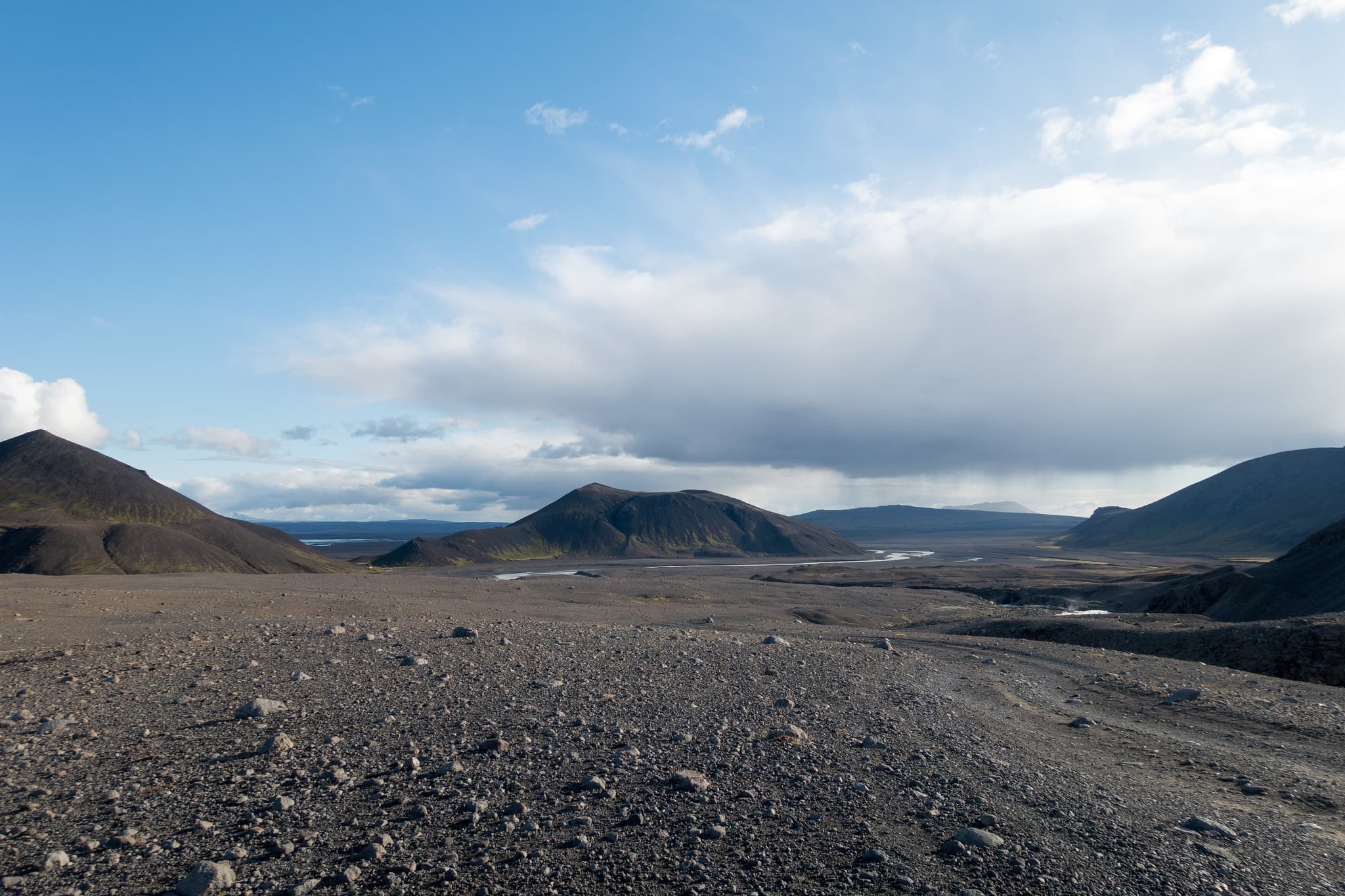
Iceland's south coast runs on Route 1 across long glacial sands — home to the country's most famous single-lane bridges. Open the map to see which stretches are paved and where the gravel spurs branch off.
Start here: Icelandic driving is mostly normal, with a few sharp exceptions
Iceland drives on the right, signs follow the standard European shapes and colours, and most of the Ring Road is a calm, well-kept two-lane highway. If you can drive at home, you can drive here. What catches visitors out isn't the everyday stuff — it's a short list of signs and rules that don't exist, or don't bite, where they come from. Get those wrong and a relaxed road trip turns into a claim form or worse.
This page is that short list. First a term-by-term glossary you can screenshot, then the handful of rules that trip people up, with the genuinely dangerous ones flagged plainly. None of the numbers here are guessed — the speed limits are the Icelandic Transport Authority's (Samgöngustofa) general limits, and the rules come from safetravel.is, Iceland's official travel-safety service.
| Icelandic term | What it means | What you do |
|---|---|---|
| Blindhæð | Blind hill or rise — you cannot see the road beyond the crest, and it may be narrow | Slow down and keep hard right; expect an oncoming car you cannot yet see. Plural: Blindhæðir |
| Einbreið brú | Single-lane bridge — only one car fits at a time | The car closer to the bridge goes first. Slow down, assess, never assume the other driver saw you |
| Malbik endar | Pavement ends — the surface changes from asphalt to gravel just ahead | Brake before the sign. Grip drops on loose gravel; most accidents happen in the first 50 metres |
| Búfé / sheep symbol | Livestock on or beside the road — free-roaming sheep are everywhere in summer | Slow down. If you see one lamb, expect a second to bolt across to reach it |
| Vegur · Vegamót | "Vegur" is road; "Vegamót" is a junction or crossroads ahead | A junction is coming — check for turning and joining traffic |
| F-road (F35, F208…) | The F prefix marks an unpaved mountain road in the Highlands, open only in summer | 4WD required by law. A 2WD here is illegal, uninsured, and risks a fine |
| Öll umferð bönnuð | "All traffic prohibited" — the road is closed to every vehicle | Do not enter. It means closed, not "closed unless you’re careful" |
| Speed limits (unsigned) | 50 km/h built-up areas · 80 km/h gravel rural · 90 km/h paved rural. No motorways exist | These apply unless a sign says otherwise; a posted limit always wins |
The gravel transition is the one that hurts
Of everything on that list, the sign worth tattooing on your steering wheel is Malbik endar — “pavement ends”. It is not decorative. When tarmac becomes gravel, your tyres lose a chunk of their grip in the space of a car length, and stopping distance stretches accordingly. Drivers who carry 90 km/h of paved-road confidence onto loose surface are the ones who end up facing the wrong way in a ditch. Brake before the sign, not after it.
Gravel has a second, quieter cost: stones. Flying chips crack windscreens and scar paintwork, and standard rental cover usually doesn't include gravel damage. If your route has gravel — the Westfjords, Snæfellsnes, most F-road approaches — check whether your rental's gravel protection is included or an add-on before you set off. Our do-you-need-4WD guide covers which routes turn to gravel and what the insurance actually covers.
Single-lane bridges and blind hills: two places to actually slow down
Iceland is full of one-lane infrastructure that assumes drivers will cooperate. Einbreið brú — the single-lane bridge — is the headline example. There are hundreds of them, some of them long, and the country's worst driving accidents happen where two cars reach one from opposite ends and neither yields. The rule is simple: the car nearer the bridge has priority. The habit that keeps you alive is simpler still: lift off, look, and be ready to stop even when it's “your” turn.
Blindhæð — a blind hill — is the same problem stood on its end. You crest a rise and cannot see the road on the far side until you're on it, and on narrow roads the far side sometimes contains a car doing exactly what you're doing. Slow before the crest and keep hard right. Neither of these is a place to make up time.
Iceland's roads, right now
Live frames from Ring Road heaths and passes. Watch how the surface, light and weather shift between them — the same country can be dry tarmac at one camera and horizontal sleet at the next.
 Live
Live Live
Live Live
LiveCameras show you the road type and the weather, not the closures. Before you commit to a route, pair these with the live status line up top and the alerts page, or check a specific drive on can I drive there today. The five-minute pre-drive routine ties it together.
Wind is Iceland's most underrated hazard, and it isn't a sign. Gusts routinely top 25 m/s and can rip a car door clean off its hinges — hold the door with both hands when you open it, or you may be paying for it. Strong crosswinds on exposed stretches and bridges can push a high-sided vehicle across a lane. When the wind is up, slow down, grip the wheel, and check the live forecast before driving; there is no shame in waiting an hour for a gust front to pass.
The rules visitors get wrong
Signs aside, a handful of everyday Icelandic road rules differ from what many visitors are used to. None are obscure — but each one quietly catches people out.
#1.Single-lane bridges — the near car goes first
sign: Einbreið brúlimit at bridge: 50 km/hrule: nearer car has priority
The car closer to the bridge has the right of way. That is the letter of the rule — but treat it as a starting point, not a guarantee. Slow to a crawl, read the far end, and be prepared to stop and wave the other driver through. Getting it “right” at speed is how head-on collisions happen on these bridges.
#2.Blind hills — slow before the crest, keep right
sign: Blindhæð · often single-lanespeed: slow before the crestaction: keep hard right
On a blind hill you cannot see oncoming traffic until you're over the top, and on narrow roads there may be room for only one car at the crest. Ease off before you climb it and hug the right edge. “Blindhæðir” on a sign just means several in a row — same rule, repeated.
#3.Pavement ends — brake before the gravel, not after
sign: Malbik endar · grip dropsrisk: most crashes in first 50 maction: brake before the line
The change from tarmac to gravel is abrupt, and so is the drop in grip. Slow down while you're still on pavement so the transition is uneventful. The soft gravel edge and loose surface are unforgiving of the speed that felt fine a moment earlier.
#4.Sheep have the road (and they know it)
position: often on both sideslivestock: free-roaming in summeraction: slow, expect a second
The sheep have the right of way, mostly because they have no idea the rules exist. In summer they graze loose across the whole country, frequently on both sides of the road. The trap: if you see a single lamb, its mother is usually opposite, and one will sprint across to reach the other exactly as you arrive. Slow right down and give them room — hitting livestock is your bill to pay, and it ruins everyone's day.
#5.Three laws that are always on: lights, belts, no handheld phone
lights: headlights day & nightbelts: seatbelts, every seatphone: no handheld phone
Headlights and taillights must be on at all times, year-round — yes, even in bright summer daylight, and rental cars will flag it if you forget. Every passenger must wear a seatbelt in every seat. And using a handheld phone while driving is illegal; hands-free is fine, but for anything else, pull over. These aren't judgment calls — they're the law, and they're enforced.
#6.Roundabouts — the inner lane wins
rule: inner lane has priorityaction: outer lane gives way
Iceland's two-lane roundabouts — common around Reykjavík and Akureyri — run opposite to many visitors' instincts: the inner lane has the right of way when exiting, so the outer lane must give way as the inner car moves to leave. Don't sit in someone's blind spot on the outside expecting them to wait for you.
#7.The F prefix means 4WD-only, and off-road is banned outright
meaning: F = mountain roadseason: summer-onlylaw: no off-road, ever
An F on a road number (F35, F208) marks an unpaved Highland mountain road: 4WD required by law, open only in summer once cleared. Beyond that, driving off marked roads and tracks anywhere in Iceland is illegal — the fragile terrain doesn't recover, and the fines are steep. See the F-roads listing and our off-road rules guide before you leave the tarmac.
Learn the words, keep the live checks
Read the glossary once and the signs stop being a mystery. But the map only tells you the rules — it can't tell you today's wind, ice or closures, and in Iceland those change by the hour. Before every drive, glance at live alerts, and if a specific route worries you, ask can I drive there today. If you're still deciding on a car, our 4WD guide and the best road trips are the natural next stops — and the full guide library covers the rest.
Frequently
asked questions
What are the speed limits in Iceland?
What does "Einbreið brú" mean?
What does "Malbik endar" mean?
What does "Blindhæð" mean?
Do I have to drive with my headlights on in Iceland?
Is it illegal to use a handheld phone while driving in Iceland?
What does the "F" in F-roads mean?
Who has right of way in an Icelandic roundabout?
Cars & campers
 KEF airport pickup 24/74.8
 Transmission
 Fuel
Fuel Seats
Seats Drive
Drive

 Sleeps
Tours near Iceland's roads
 Small groups
 Duration
 Highlights
 Type
Type