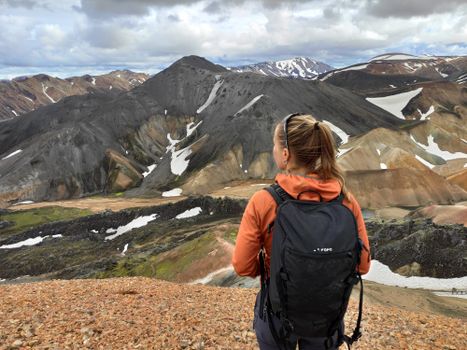
Is It Illegal to Drive Off-Road in Iceland?
Yes — everywhere. Here is exactly what the law prohibits, why, and how to stay on the right side of it.
Yes. Driving a motor vehicle off marked roads and tracks is illegal everywhere in Iceland under Article 31 of the Nature Conservation Act (No. 60/2013) — on sand, gravel, moss and vegetation alike. The tundra can take decades to recover, so penalties are substantial fines and full liability for the damage.
Ring Road (R1) slippery in placesHighlands: 56 of 64 monitored roads closed or impassableVegagerðin, updated just now
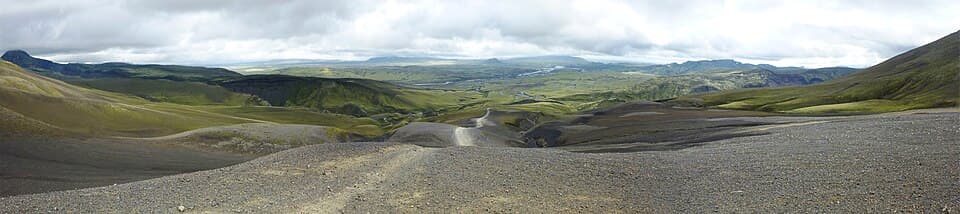
Where the marked roads run
Iceland's road and F-road network is a set of marked lines across the interior. Everything off those lines — moss, gravel plains, river banks — is closed to vehicles. Open the map to see paved roads, gravel roads and F-roads.
The short version
In Iceland, “off-road” does not mean adventurous driving in the countryside. It has a precise legal meaning: driving a motor vehicle anywhere other than a marked road or track. Article 31 of the Nature Conservation Act (No. 60/2013) states the rule plainly — driving motor vehicles off roads is prohibited. That prohibition applies across the whole country, on every surface: sand, gravel, moss, grass and bare highland ground.
The confusion usually comes from the F-roads. F-roads are legal roads — rough, unpaved mountain roads open only in summer — so driving them is allowed in a suitable vehicle. What is illegal is leaving the road: pulling off the track to park, cutting a corner across moss, or detouring around a river. The moment your wheels leave the marked surface, you are driving off-road, whether you are in the interior or beside a paved road near town.
| Where you drive | Legal? | Why |
|---|---|---|
| Marked & numbered roads — paved or gravel | Legal | These are the road network: Route 1, the numbered gravel roads, town streets. |
| An open F-road, staying on the existing track | Legal | F-roads are legal roads. You must keep to the marked track and take no detours. |
| Frozen ground or firm, continuous snow cover — no damage | Legal (conditional) | Article 31 permits this narrow case only where the surface beneath is not damaged. |
| Any driving off the track — sand, gravel flats, moss | Illegal | The Article 31 ban. Even a few metres to park or turn around counts as off-road driving. |
| A closed F-road, or a detour around a river ford | Illegal | Closed means closed; leaving the track to bypass a river is off-road driving. |
| River banks, beaches, dunes, vegetated ground | Illegal | The fragile surfaces the ban exists to protect. Tracks on them can scar for years. |
Why the ban exists
Iceland is a young volcanic island near the Arctic Circle, and its ground cover reflects that. Much of the surface is moss, lichen, low heath and thin soils that grow back over a very long timescale. A single set of tyre tracks through a moss field can stay visible for years, and in the highlands the damage can last decades — the growing season is short, the soil is easily eroded once the vegetation is broken, and wind and meltwater then widen the scar. Once a track is cut, others tend to follow it, and a single detour becomes a permanent feature of the landscape.
That is the reasoning behind Article 31: the point is to confine vehicles to a fixed network of roads and tracks so the rest of the country is left intact. The rule is not aimed at tourists specifically — it applies to residents, farmers and visitors alike — but the growth in visitor traffic is why it is enforced and publicised more than it used to be. The Environment Agency of Iceland and the police both treat off-road tracks as environmental damage, not a minor traffic matter.
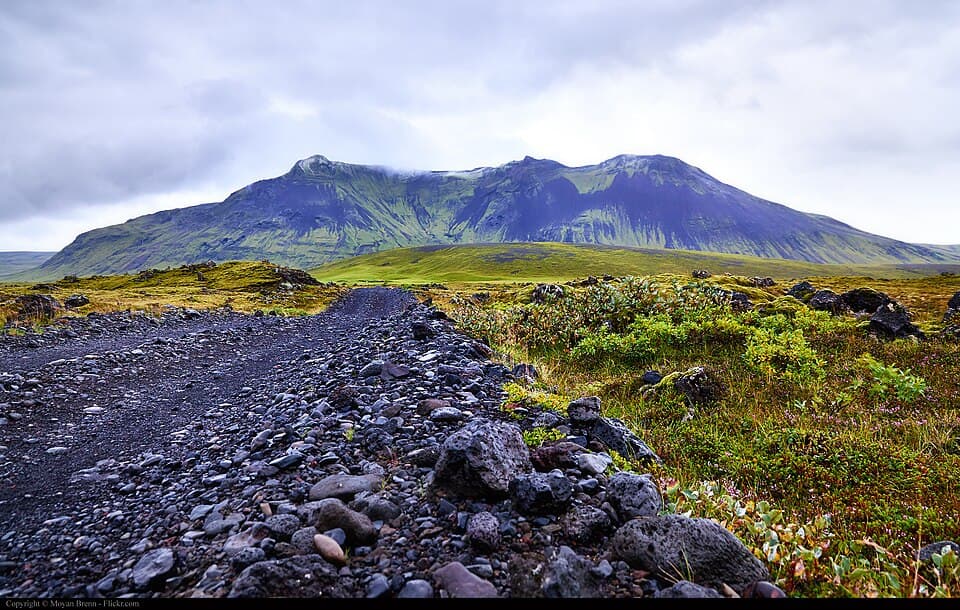
F-roads are legal — but only on the track
Because the F-roads are where most visitors first meet rough terrain, this is where the line gets crossed most often. Two things are worth being clear about. First, an F-road is a legal road: driving it in a suitable vehicle is allowed, and you do not need a permit to use the public F-road network. Second, that permission ends at the edge of the track. Driving around a rough patch, widening a braided section, or leaving the road to reach a viewpoint or camp spot is off-road driving and is prohibited, even though you are on an F-road.
River crossings are the classic trap. Where an F-road fords a river, the crossing point is part of the road; driving up or down the bank to find an easier line is not. If a ford looks too deep or too fast to cross on the marked line, the correct response is to turn back, not to improvise a route across the bank. If you are planning any F-road, read do I need 4WD in Iceland and check the F-roads overview for which routes are open and how hard they are.
Glaciers, snow and the one conditional exception
Article 31 is not a blanket ban on every surface. It allows driving on frozen ground or a firm, continuous snow cover outside roads, but only where doing so leaves no damage to the ground beneath. This is a narrow, conditional exception — the moment the snow is thin enough that wheels touch moss or soft ground, it is off-road driving again. In practice it is what lets equipped operators run snowmobile and modified-vehicle trips on glaciers and winter snowfields; it is not an invitation to take a rental car onto a snowfield. Glacier travel of any kind is for licensed operators with the right equipment and training, never a self-drive activity.
Guided tours versus self-drive
Some experiences that look like off-road driving — glacier trips, super-jeep tours across snowfields, certain highland excursions — are run legally by operators working within the exceptions in the law and, where required, with permits for activity in protected areas. That a licensed operator can take a modified vehicle somewhere does not mean a rental car may follow. The exceptions are tied to specific conditions, equipment and authorisation. As a self-driving visitor, the simple version holds: stay on marked roads and tracks, and leave the off-track terrain to the operators who are cleared for it.
How to report off-road driving
If you see a vehicle being driven off-road, note the location, the vehicle and the time, and photograph it if you can do so safely. Report it to the police on 112, or to the Environment Agency of Iceland. Fresh tracks are hard to trace back to a driver later, so a prompt report with a precise location is what makes enforcement possible. Reporting is not about catching tourists out — it is how the damage gets documented and, where possible, the ground restored.
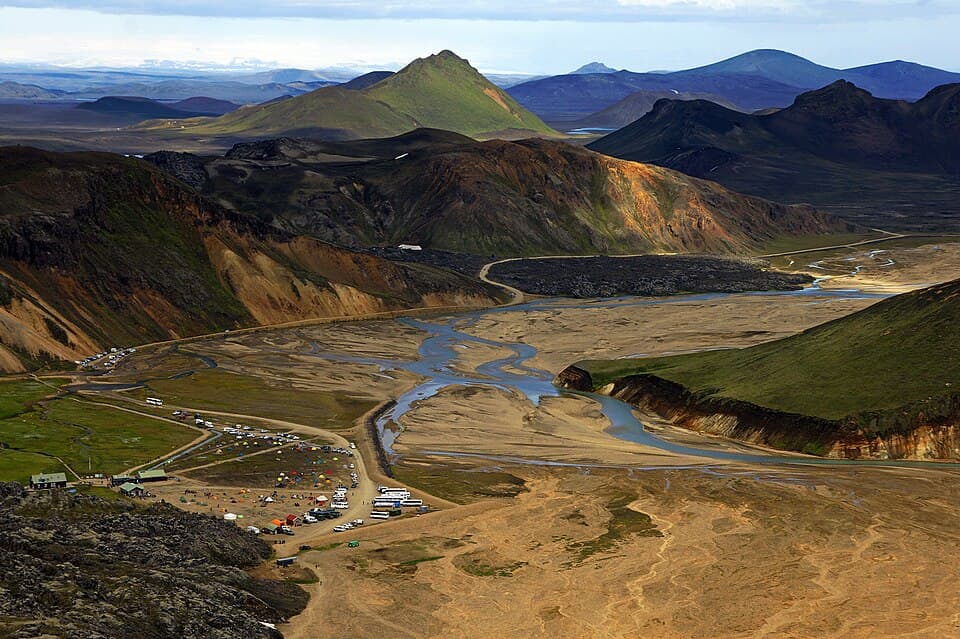
Conditions on the way in, right now
Live frames from the passes and highland-edge crossings on the routes toward F-road country. Use them, and the live status line at the top, to judge conditions before you commit — a road that is snowed in or washed out is one to stay off, not to drive around.
 Live
Live Live
Live Live
Live Live
LiveChecking conditions is part of staying legal, not just staying safe. When a road is closed or a ford is impassable, the temptation is to find a way around it — and that way around is off-road driving. See live closures and warnings on the alerts page, and route-by-route verdicts on can I drive there today, before you set out.
Staying on the right side of the law
Five practical rules cover almost every case a self-driving visitor will meet. None of them needs interpretation: when a surface is not a marked road or track, it is off-limits.
#1.Off-road means off the track — not just "the wilderness"
law: Act 60/2013, Art. 31rule: no detoursscope: even a few metres
The law is about the surface under your wheels, not how remote you are. Leaving a marked road or track — to park on the verge, to turn around, to reach a better photo spot — is off-road driving. It counts the same on a gravel plain beside the road as it does deep in the interior.
#2.F-roads are legal roads — stay on the existing track
status: F-roads are roadsrule: single track onlylimit: no widening
An F-road is a legal mountain road, so driving one is not off-road driving. But you must keep to the existing track. Driving around a puddle, a rough section, or a river to avoid it — that is leaving the road, and it is illegal. Where a track has braided into several lines, take one; do not carve a new one.
#3.Cross rivers at the ford, never around it
rule: ford = the tracklimit: no bank drivingsafety: scout first
Where an F-road meets a river, the crossing point is part of the road. Driving up or down the bank to find an easier line is off-road driving and it damages fragile riverbanks. If the ford looks too deep or too fast, turn back — do not improvise a route around it.
#4.Snow and frozen ground: the one conditional exception
surface: frozen / firm snowcondition: no damagenote: glaciers = operators
Article 31 allows driving on frozen ground or a firm, continuous snow cover outside roads only where it leaves no damage to the surface beneath. This is a narrow exception, not a free pass — as soon as wheels touch bare ground, moss or soft ground, it is off-road driving again. Glacier driving is for equipped, licensed operators, not rental cars.
#5.If you are not sure, do not — check first
default: stay on the trackcheck: live conditionsoption: ask locally
The safe default is simple: if a surface is not a marked road or track, do not drive on it. Check live road status and closures before an interior route, and if a road looks closed or washed out, treat it as closed. When in doubt, ask at a ranger station, campsite or guesthouse rather than guessing.
Frequently
asked questions
Is off-road driving illegal in Iceland?
What counts as off-road driving?
Is driving an F-road off-road driving?
Can I drive on a beach, a river bank or dunes?
What is the fine for off-road driving?
Can I drive on snow or on a glacier?
I need to pull over — is stopping on the verge off-road driving?
How do I report someone driving off-road?
Cars & campers
 KEF airport pickup 24/74.8
 Transmission
 Fuel
Fuel Seats
Seats Drive
Drive

 Sleeps
Tours near Iceland's highlands
 Small groups
 Duration
 Highlights
 Type
Type