
Best Time to Visit Iceland?
There isn't one. There are trades — and once you name the thing you'd be most annoyed to miss, the month picks itself.
There isn't a best month — there's a trade. Northern lights need darkness, so September to March, and you accept 5 h 19 m of daylight in January. F-roads and the midnight sun need summer, and you accept the year's busiest, priciest weeks. Name your priority first; the month follows.

Most guides to this question answer a different one. They walk you through what each month is like and leave you to work out which you actually want. But the real question isn't “what is October like” — it's “I want the northern lights and open F-roads, can I have both?”
You can't, and that's the whole page in one line. At 64°N the light does something extreme: computed for Reykjavík, mid-June gives 21 h 01 m between sunrise and sunset, mid-December 4 h 15 m. The aurora needs darkness; the highlands need the snow gone. Those conditions never overlap. So instead of a month-by-month tour, here's a decision — stop at the first thing you'd genuinely regret missing, and read the cost written next to it.
Pick your priority, get your month
Stop at the first line you'd be most annoyed to miss — that's the one your dates should serve. Everything below it is what you're trading away.
Northern lights are the reason you’re going.
September – MarchThe aurora needs darkness, solar activity and a clear sky at the same time. Only darkness follows a calendar, and from late May to mid-July Iceland has none — so the dark half of the year is the whole window. You accept short days (5 h 19 m in January), closed highlands and winter driving. Check the live aurora forecast and give yourself several nights, not one.
You want to drive the F-roads and see the highlands.
Summer only — dates varyMountain roads open when the snowmelt lets them, and Vegagerðin doesn't publish a fixed calendar for many of them. In practice the first open in June and the network shuts through September and October. You accept peak crowds, peak prices and no aurora. Never plan around a date — check live F-road status, and read why there's no calendar.
You want the midnight sun — light that never really quits.
Late May – mid JulyComputed for Reykjavík, mid-June runs 21 h 01 m between sunrise and sunset, and the twilight either side keeps the sky bright through what's left of the night. You accept that the aurora is off the table entirely, and that you're travelling in the busiest weeks. More in the midnight sun guide.
You want the big waterfalls at their biggest.
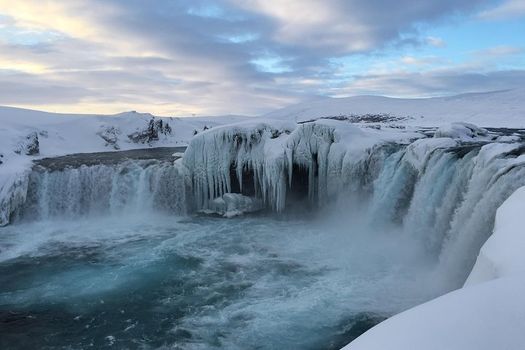
Summer — not springThis one surprises people. The falls that carry the most water are glacier-fed — Dettifoss runs on Jökulsá á Fjöllum, which rises at Vatnajökull — and Náttúrufræðistofnun puts it plainly: glacier-fed rivers “are vastly larger in the summer than in the winter”. Melt tracks air temperature, so the peak is warm-season, not the spring thaw of folklore. You accept peak season. See the waterfalls guide.
You want the country as empty as it gets.
January, December, NovemberOn Statistics Iceland's 2025 accommodation figures, January was the quietest month nationwide — about 404,000 overnight stays, 4.1% of the year — with December and November next. July ran about 4.1× January. You accept 5 h 19 m of daylight and winter driving.
You want to spend as little as possible.
The quiet monthsWe won't print a cheapest-month price, because any number we wrote today would be wrong by the time you read it. What we can point at is demand, which is what rates follow — and demand bottoms out in the same January–December–November window above. Fewer people, fewer bidders. Check live rates, and see what Iceland actually costs.
None of those is a dealbreaker — you just want a good trip.
May or SeptemberThen take the shoulder, and take it deliberately. Mid-May computes to 18 h 17 m of daylight — 92% of what mid-July gives — while May 2025 saw 43% of July's overnight stays. Roughly the light, roughly half the people. September flips it: 13 h 11 m, the aurora back on the table, and the highlands closing behind you. The catch in May is the interior — F-roads are generally still shut.
The variable is light, not temperature
People plan Iceland around temperature out of habit, and it's the wrong dial. On the Met Office's Reykjavík normals the mean daily high moves from 1.9 °C in January to 13.3 °C in July — about eleven degrees across the whole year. The ocean flattens it. You will not be warm in July and you will not be frozen in January; you'll be somewhere around a British spring either way, with better wind.
Daylight is the dial that actually moves. Computed for Reykjavík, it runs from 4 h 15 m in mid-December to 21 h 01 m in mid-June. That's not a seasonal nudge; it's a different country. In December the sun comes up around 11:15 and is gone by 15:30 — you get one, maybe two sights done, and the drive between them happens in the dark. In June you can leave Reykjavík after dinner and still be photographing a waterfall at eleven at night. Which is why “how many days do I need” has a seasonal answer: a December day buys you about a third of what a June day does.
The half of Iceland that has a season
The coast road runs year-round. The interior — the F-roads, the highlands, the routes with no tarmac — is only there for part of the summer, and the dates move every year. That's what the calendar is really deciding.
What “busy” actually means, in numbers
“Avoid the crowds” is advice you can measure, so let's measure it. Statistics Iceland publishes overnight stays in every registered accommodation in the country, by month. Here is 2025 — the most recent complete year — and the shape is not subtle.
#1.July is the wall
daylight: 19 h 51 movernight stays: 1.67 million staysshare of year: 17.0% of the year
Roughly one in six of the year's overnight stays lands in July alone, and July plus August together take about 32.2% of the whole year. Everything is open and everyone knows it. If your priority is on the summer side of the tree, this is the price — book the car and the rooms early and stop pretending you'll find a deal.
#2.January is the floor
daylight: 5 h 19 movernight stays: 404,000 staysshare of year: 4.1% of the year
About 4.1 times fewer stays than July. That's the emptiness people say they want, and it's real — but read the first metric again. Five hours of daylight is the deal you're signing, along with ice, wind and a genuine chance that the road you planned is shut. Check live alerts daily and whether you can drive it today before you commit to a leg.
#3.May is the arbitrage
daylight: 18 h 17 movernight stays: 727,000 staysprecipitation: 43.8 mm rain
Here's the number worth carrying away: mid-May computes to 92% of mid-July's daylight, and May 2025 drew 43% of July's overnight stays. Nearly the light, half the people. It's also the driest month on the Reykjavík normals at 43.8 mm. The reason it isn't the automatic answer: the F-roads are generally still shut, so the interior is off the table — which matters only if the interior was your priority in the first place.
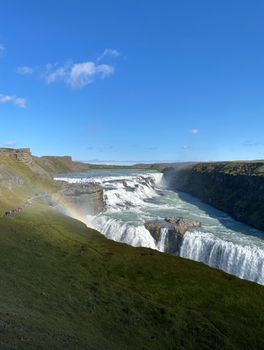
One caveat, stated rather than buried: overnight stays are a proxy. They count nights booked in registered accommodation — not people at a waterfall — and they include Icelanders travelling at home, while a day-tripper off a cruise ship never shows up. As a measure of competition for the car and the room, it's the best public number there is. It isn't a headcount at Gullfoss.
The honest bit about the northern lights
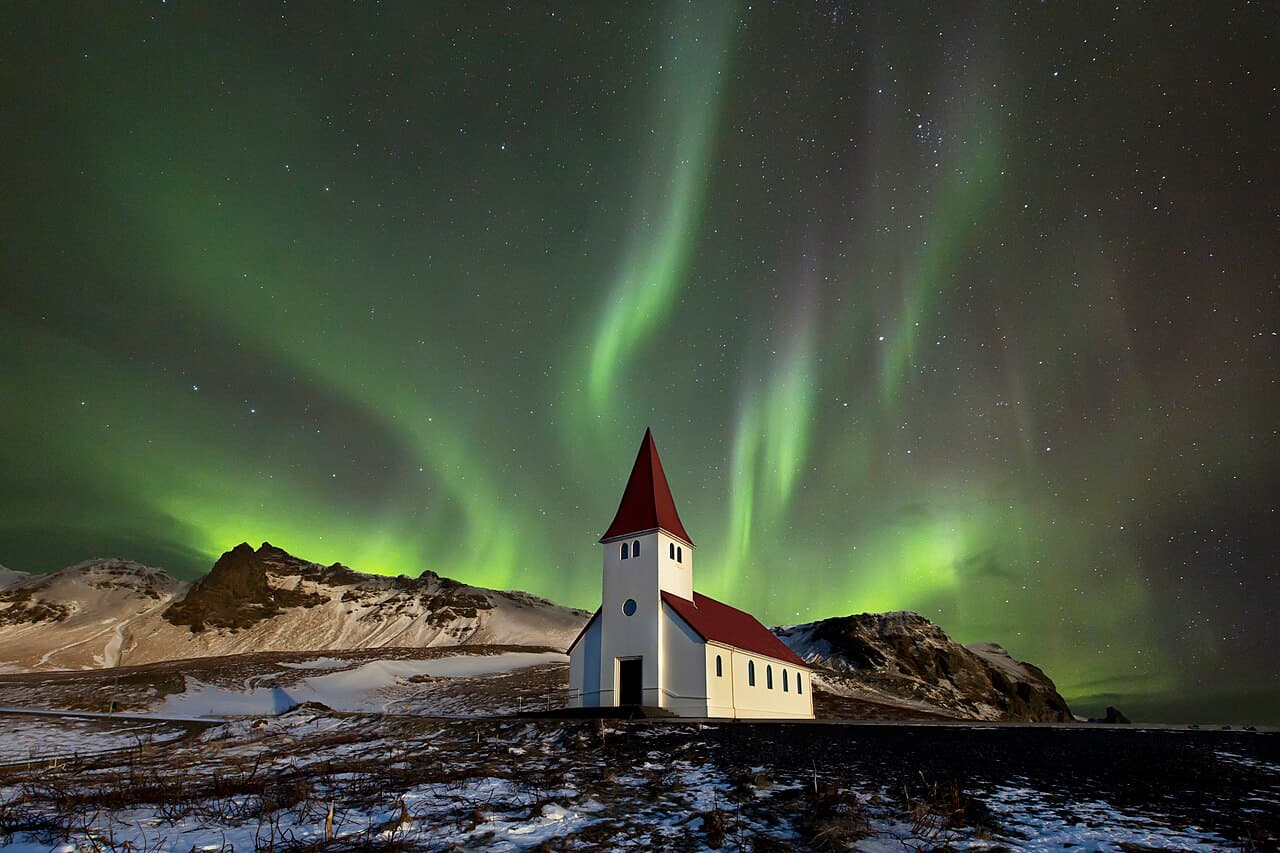
The aurora is the single biggest reason people ask this question, so it deserves a straight answer rather than a percentage. Of the three things that must line up — darkness, solar activity, clear sky — only darkness is a calendar problem, and it's the one this page can solve. The other two are weather and space weather. Nobody can promise them in advance, and any month-by-month table quoting you an aurora probability is inventing it.
Practically: pick the dark half, give yourself as many nights as you can afford, be willing to drive away from town lights, and watch the live forecast rather than the calendar. Three clear nights in October beat a fortnight of cloud in January.
| Month | Daylight (computed) | Avg high / low | Rain | Share of year's stays | What's open |
|---|---|---|---|---|---|
| January | 5 h 19 m | 1.9 / -3 °C | 75.6 mm | 4.1% | Aurora season · highlands shut · quietest month of the year |
| February | 8 h 31 m | 2.8 / -2.1 °C | 71.8 mm | 5.5% | Aurora season · highlands shut · light returning fast |
| March | 11 h 35 m | 3.2 / -2 °C | 81.8 mm | 6.4% | Aurora season ends · highlands shut · day and night level up |
| April | 14 h 58 m | 5.7 / 0.4 °C | 58.3 mm | 6.0% | Lowlands open · highlands shut · too light for reliable aurora |
| May | 18 h 17 m | 9.4 / 3.6 °C | 43.8 mm | 7.4% | Lowlands open · highlands still shut · driest month on the normal |
| June | 21 h 01 m | 11.7 / 6.7 °C | 50 mm | 11.1% | Midnight sun · first F-roads open late in the month · no darkness |
| July | 19 h 51 m | 13.3 / 8.3 °C | 51.8 mm | 17.0% | Everything open · warmest month · busiest month of the year |
| August | 16 h 33 m | 13 / 7.9 °C | 61.8 mm | 15.2% | Everything open · aurora possible again from late in the month |
| September | 13 h 11 m | 10.1 / 5 °C | 66.5 mm | 10.0% | Aurora returns · highlands start closing · crowds ease |
| October | 9 h 57 m | 6.8 / 2.2 °C | 85.6 mm | 7.8% | Aurora season · highlands closing · wettest month on the normal |
| November | 6 h 37 m | 3.4 / -1.3 °C | 72.5 mm | 5.2% | Aurora season · highlands shut · winter driving begins |
| December | 4 h 15 m | 2.2 / -2.8 °C | 78.7 mm | 4.4% | Aurora season · highlands shut · shortest days of the year |
A note on where these come from, because it matters. Daylight is computed, not copied — the standard sunrise equation for Reykjavík on the 15th of each month. Temperature and rain are Icelandic Met Office (Veðurstofa Íslands) Reykjavík station normals for 1961–1990. That's the period the Met Office publishes as a downloadable per-station file, so it's the one we cite rather than inventing a newer set; recent decades run a little milder. Share of stays is Statistics Iceland (Hagstofa Íslands) table SAM01601 — overnight stays in all registered accommodation, 2025, whole country, CC BY 4.0. The river-flow line comes from Náttúrufræðistofnun (Icelandic Institute of Natural History).
This table is a backstop for the decision above, not the reference itself. If you want the weather properly — what each month feels like, rain days, an interactive picker — that lives on Iceland weather month by month. This page exists to make you choose; that one exists to tell you what you chose.
So — the best time of year to visit Iceland?
If you made us answer with one month, we'd say September — and then immediately tell you why that's a bad way to decide. September gives 13 h 11 m of daylight, the aurora is back, the highlands are only starting to close, and it drew 10.0% of 2025's stays against July's 17.0%. It's the closest thing to having it both ways.
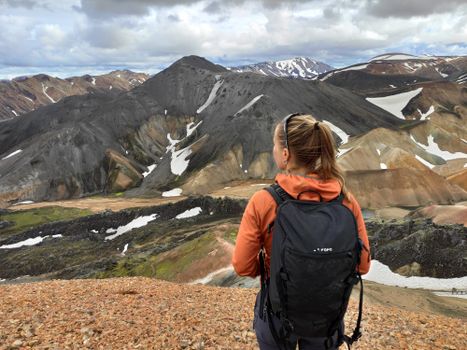
But “both ways” is a compromise, and compromises are only good if you had no strong preference. If the aurora is why you're going, September's short nights are a worse bet than February's long ones. If you came for Landmannalaugar, a September F-road is a coin flip and July isn't. The traveller who goes in the “best” month and misses the one thing they came for had a worse trip than the one who went in the “wrong” month and got it. So: go back to the tree, be honest about the first line, and book the month that serves it. Then check live conditions before you drive anything, because Iceland reserves the right to ignore your plan regardless of when you turn up.
The honest summary: there is no single best time to travel to Iceland — September is the compromise pick, deep winter is the aurora pick, July is the highlands pick. Any month is a good time to visit if it matches the first line of your list; the only bad time to go is the month that serves someone else's.
Frequently
asked questions
What is the best time to visit Iceland?
What is the cheapest time to visit Iceland?
What is the least crowded month in Iceland?
When can you see the northern lights in Iceland?
When are the F-roads open in Iceland?
Which month has the most daylight in Iceland?
Is May a good time to visit Iceland?
What is the warmest month in Iceland?
Cars & campers
 KEF airport pickup 24/74.8
 Transmission
 Fuel
Fuel Seats
Seats Drive
Drive

 Sleeps
Tours near Iceland
 Small groups
 Duration
 Highlights
 Type
Type