How to Travel Iceland Without a Car
Where car-free Iceland genuinely works, and where it stops working. Checked against the real bus timetable.
Yes, for some of it. Reykjavík, the airport run and the Ring Road towns are all served by scheduled buses, and tours cover the famous day trips. But there is no bus within 15 km of the Golden Circle or the Highlands. Car-free Iceland works if you stay on the network and accept tours for everything else.
Ring Road (R1) openHighlands: 56 of 64 monitored roads closed or impassableVegagerðin, updated just now

What the bus network actually covers
Scheduled buses trace the coast: the capital, the south to Höfn, the west and north to Akureyri and beyond. The middle of the map — the whole interior — has no scheduled service at all.
Every “Iceland without a car” article eventually says the same thing: it's possible, but harder. That's true and useless. The question you actually have is narrower — does a bus go to the specific place I want to see? So we answered it with the timetable rather than an opinion.
The tool below is built from Strætó's own open data feed — 68 routes and 1,284 stops — joined against our own coordinates for the places people search for. For each one it finds the nearest scheduled stop, how far away it really is, and how often a bus actually turns up. We did this because bus coverage in Iceland has been cut over the years and travel blogs have not kept up. The operator's timetable is the only source worth trusting.
Can I get there by bus?
12 of 24 places below are within 5 km of a scheduled Strætó stop. Pick one to see which routes serve it and how often they actually run.
Bus stops here
The nearest scheduled stop (Heilsuverndarstöðin) is 0.2 km away in a straight line.
- Route 5417 scheduled departures a week from Heilsuverndarstöðin
- Route 15354 scheduled departures a week from Heilsuverndarstöðin
Straight-line distance to the nearest stop · Strætó summer timetable · feed published 30 June 2026 · Strætó bs · Open data
A note on the numbers: the lookup runs on a snapshot of Strætó's summer timetable — the open data feed published on 30 June 2026, valid through 19 August 2026. It is a scheduled timetable, not a live departure board. When the summer window closes on 19 August the winter timetable takes over and these frequencies change, so confirm any date past then with Strætó directly.
Where car-free Iceland genuinely works
More than you would guess from the internet's general pessimism. 12 of the 24 destinations in the lookup sit within 5 km of a scheduled stop, and several are close enough that the bus door is effectively the attraction's car park.
Reykjavík needs no car at all. The city centre has buses passing within 200 m at a rate of several hundred a week, and the city is small enough to walk regardless. Nobody should rent a car to spend three days in Reykjavík. Getting in from the airport is a solved problem too — Strætó's own route 55 runs it, and the other options are compared on that page.
The south-coast bus is the backbone. One route runs from Reykjavík along Route 1 to Höfn, stopping at Hveragerði, Selfoss, Hvolsvöllur, Skógar, Vík, Kirkjubæjarklaustur, Skaftafell and Jökulsárlón on the way. That single line puts a genuinely good trip within reach: Skógafoss (800 m from the Skógar stop), Svartifoss and the Skaftafell trails (1.4 km), and Jökulsárlón — where the stop is at the lagoon itself. It is not frequent. It is real.
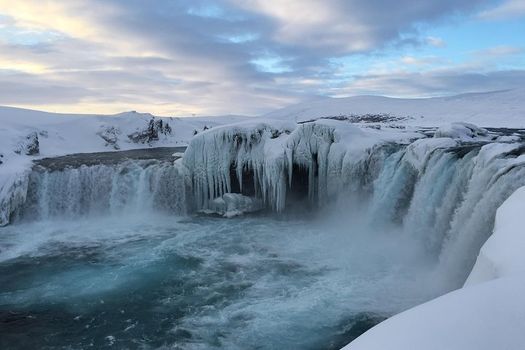
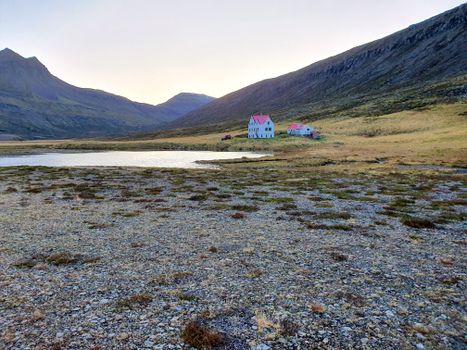
The north works around Akureyri. Buses reach Goðafoss (700 m from the Fosshóll stop) and Mývatn, and Akureyri itself has a town network. And in the Westfjords — the last place you would expect it — Dynjandi has a stop 600 m away.

The catch on all of it is frequency. “There is a bus” and “there is a bus when you want one” are different claims. Jökulsárlón gets 8 scheduled departures a week; Skógar gets 16. That is a timetable you plan a trip around, not one you improvise against. Miss the bus at Skaftafell and the next one is not in an hour.
The best car-free day trip in the country is probably Reykjadalur: take the bus to Hveragerði — 190 departures a week, so you can actually be spontaneous — and walk up the valley to bathe in a hot river. The full hike is here. The trailhead is 3 km from the stop, which is the walk you signed up for anyway.
Where it stops working
12 of the 24 destinations we checked have no scheduled stop within 5 km. Some of them are not close to close.
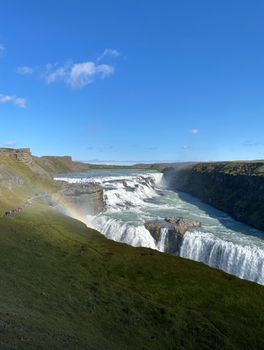
The Golden Circle has no buses. This surprises people, because it is the most-visited route in Iceland and it is 90 minutes from the capital. But there is no Strætó stop at Þingvellir, none at Geysir, none at Gullfoss. The nearest scheduled stops are Laugarvatn, 19 km from Þingvellir, and Reykholt — 17 km from Geysir and 23 km from Gullfoss. There is no version of that you walk. If you want the Golden Circle without a car, you take a tour; that is not us selling you one, it is just the only remaining option.
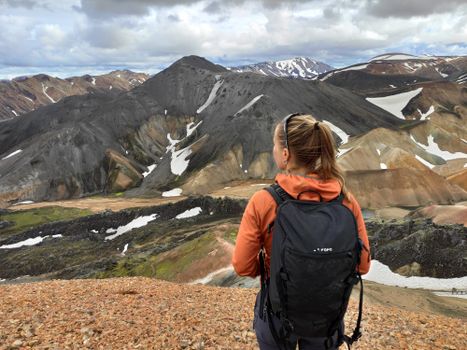
The Highlands are not a bus proposition at all. Landmannalaugar's nearest Strætó stop is Kirkjubæjarklaustur, 54 km away across terrain with no road a normal vehicle should be on. Askja is 61 km from the nearest stop. Seasonal highland buses run to Landmannalaugar and Þórsmörk in summer, operated privately on their own timetables — that is the standard way in for hikers, and you should check the operator directly rather than trust anything we could paraphrase here.
Individual waterfalls are hit-and-miss in a way that has nothing to do with fame. Seljalandsfoss — one of the most photographed places in the country, right beside Route 1 — has no stop; the nearest is 11 km away. Dettifoss, Europe's most powerful waterfall, is 23 km from its nearest stop. Glymur is 29 km. Whether a bus stops somewhere in Iceland is a fact about the road network, not about how good the place is.

What it costs
In the capital a single adult fare is 690 ISK. Under-12s travel free, and 12–17s and over-67s pay half (Strætó's price list). Outside the capital the fare is by zone at 600 ISK a zone, so the price scales with distance. These are the operator's published 2026 numbers, one way, per adult:
| To | Route | Zones | Adult fare |
|---|---|---|---|
| Hveragerði | 51 | 3 | 1,800 ISK |
| Selfoss | 51 | 4 | 2,400 ISK |
| Skógar (for Skógafoss) | 52 | 12 | 7,200 ISK |
| Vík | 52 | 14 | 8,400 ISK |
| Kirkjubæjarklaustur | 52 | 17 | 10,200 ISK |
| Skaftafell | 52 | 22 | 13,200 ISK |
| Jökulsárlón | 52 | 25 | 15,000 ISK |
| Höfn | 52 | 29 | 17,400 ISK |
| Akureyri | 57 | 22 | 13,200 ISK |
| Borgarnes | 50 | 4 | 2,400 ISK |
| Keflavík Airport | 55 | 4 | 2,400 ISK |
Source: Strætó's own 2026 single-fare tables for south Iceland, west and north and the southern peninsula. Children under 12 are free on every one of these.
Two things fall out of that table. Distance is expensive: Reykjavík to Jökulsárlón is 15,000 ISK each way, so a return for two people is 60,000 ISK. And children being free changes the shape of it — a family of four with two under-12s pays the same as two adults, which is not how any vehicle works. Tickets are bought through Klapp, Strætó's app; our travel-apps guide covers it with the rest of what is worth installing.
What we are not going to give you is a journey time. The feed contains scheduled times, but we have not verified them route-by-route and direction-by-direction, so any number we printed would be a guess dressed up as data. Check the timetable for the leg you care about.

How to build a car-free trip — sample itineraries
Three shapes work. They are not equally good, and which one fits depends on how much of the country you are trying to see.
#1.Reykjavík base, tours for the rest
transport: city buses + day toursreach: Golden Circle, south coastlimit: no highlands
The default, and the one most first-timers should take. Stay in the city, use it properly, and buy day tours for the Golden Circle and south coast — the exact places the bus network does not reach. You give up spontaneity and you see the sights on someone else's clock, but you never wait for a rural bus in the rain. Best for short trips and winter, when daylight is short and the weather makes its own plans.
#2.The south-coast bus, town to town
transport: route 52reach: Skógar → Vík → Skaftafell → Jökulsárlónfrequency: 8–16 departures a week
The genuinely rewarding car-free trip. Ride the south-coast service in hops, staying a night or two in each town, and you get Skógafoss, Vík, Skaftafell and Jökulsárlón without ever driving. The constraint is the timetable — at 8 to 16 departures a week you are planning around the bus, not the other way round. Book beds before you go; these are small towns and you cannot simply drive to the next one.
#3.Buses plus a hiking objective
transport: bus + private highland servicereach: Landmannalaugar, Þórsmörkseason: summer only
If your trip is a hike rather than a sightseeing loop, car-free is not a compromise — it is how most people do it. Hikers on Laugavegur have always arrived by bus, because you do not want a car sitting at a trailhead you are walking away from. The highland services are private and seasonal; check the operator, and check live conditions before you commit to a date.
The honest summary
Car-free Iceland is not a lesser version of the trip — it is a different trip. If your plan is Reykjavík plus a couple of famous day trips, you do not need a car and renting one would mostly buy you a parking problem. If your plan is the south coast at your own pace, the bus does it, slowly, and the slowness is part of it.
Where it genuinely fails is the middle of the map. The Highlands, the F-roads and the remote Westfjords have no scheduled service and no realistic workaround, because there is no road network to run buses on. If those are the reason you are coming, the honest answer is that public transport will not get you there — and you can check what will on our live route verdicts or the map.
One last thing worth saying out loud: buses use the same roads as everything else. When Route 1 closes for wind or snow, the intercity service does not run either. Car-free does not mean weather-free.
Frequently
asked questions
Can you actually travel Iceland without a car?
Does a bus go to the Golden Circle?
How much does a bus ticket cost in Iceland?
Is there a bus around the whole Ring Road?
Can I get to Landmannalaugar or the Highlands by bus?
Is the bus cheaper than renting a car?
Cars & campers
 KEF airport pickup 24/74.8
 Transmission
 Fuel
Fuel Seats
Seats Drive
Drive

 Sleeps
Tours near Iceland
 Small groups
 Duration
 Highlights
 Type
Type