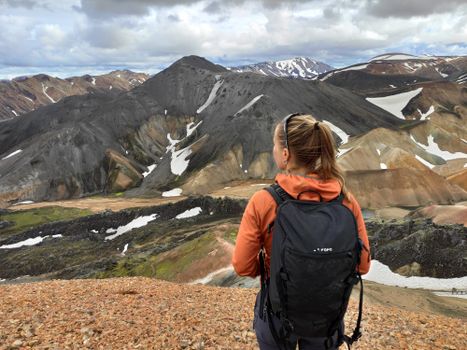
Driving in Iceland
What you actually need to know before you take the wheel — the rules, the roads, and how to read the weather that runs them.
Driving in Iceland is straightforward on paved roads and rewarding everywhere else, as long as you respect the weather. Keep headlights on always, stay under the limits (50 in towns, 80 on gravel, 90 on paved roads), never drive off-road, and check live conditions before each leg — the hazards here are weather and terrain, not traffic.
How many F-roads are open in Iceland right now?
1 of 40 F-roads tracked by umferdin.is are open right now and 27 are closed (12 not currently reporting). Per-road status is in the table below — always check conditions on the day you drive.
Data verified 26 October 2026, 19:41 · source: umferdin.is (Vegagerðin, the Icelandic Road Administration) · refreshes every 10 minutes
Ring Road (R1) slippery in placesHighlands: 16 of 66 monitored roads closed or impassableVegagerðin, updated just now
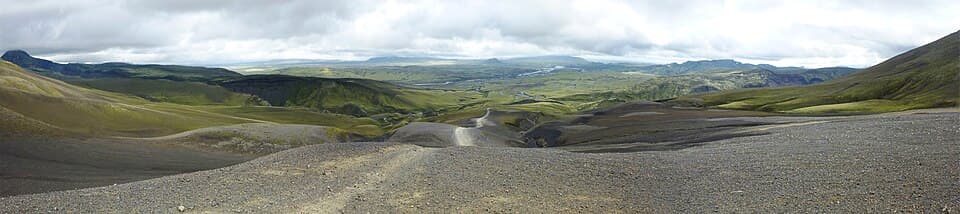
Plan the route before you turn the key
Open the interactive map to plot your route, see where tarmac turns to gravel, and check the terrain around each stop. Pair it with the live status line above.
The short version
Iceland is one of the easier countries to road-trip. There is almost no traffic, one main road loops the whole island, and the sights sit close to it. What makes driving here different from home is the weather and the surface, not the driving itself. A calm morning can turn to sideways rain by lunch, tarmac gives way to gravel without much warning, and a river you crossed yesterday can be running higher today.
So the skill that matters most in Iceland is not car control — it is reading conditions and adjusting your plan. That is why this page leads with a live road-status line and live cameras rather than a list of tips. Everything below is the practical detail, and it links out to the deep guides when you want to go further on any one topic.
If you are still deciding on a car, start with renting a car in Iceland for the age, licence, deposit and insurance rules, and do you need 4WD in Iceland for which drivetrain your route requires.
A first-time visitor sticking to Route 1 and the Golden Circle in summer will find the driving genuinely relaxed: wide, quiet, paved roads with room to pull over for photos. The learning curve appears when you add gravel, leave the south for the east or Westfjords, or travel outside summer — and that curve is entirely about conditions and surfaces, which the rest of this page walks through in the order you'll meet them.
The rules that catch tourists out
Iceland drives on the right, with the steering wheel on the left — the same as mainland Europe and North America. The traffic rules are conventional; the ones visitors get wrong are the local specifics below. Read these before you drive.
Headlights stay on at all times, day and night, all year. This is the law even under the midnight sun, when it never gets dark. Rental cars usually default to automatic headlights — confirm yours does before you set off.
Speed limits are low and enforced. Built-up areas are 50 km/h, gravel and unpaved rural roads are 80 km/h, and paved rural roads — including most of the Ring Road — are 90 km/h. Some residential streets drop to 30. Speed cameras are common and fines are steep; rather than quote a number that changes, check the current amounts at road.is before you risk it.
Seatbelts are mandatory for everyone, front and back. The blood-alcohol limit is 0.05%, which in practice means do not drink and drive. Penalties include licence loss and heavy fines.
Off-road driving is illegal everywhere in Iceland. That includes sand, moss, gravel flats and riverbeds — anywhere off a marked road or track. The volcanic soil and moss take decades to recover from a single set of tyre marks, so the ban is strictly enforced with large fines. Stay on the road, always.
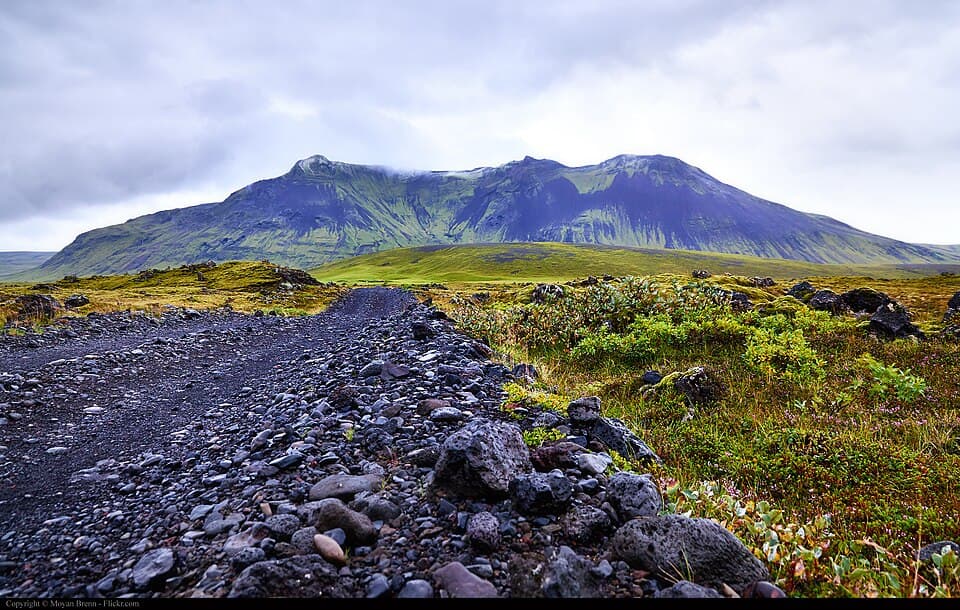
Know which road you are on
Iceland's roads come in three broad types, and the number tells you which one you're on. Getting this right decides what car you need and how fast you can safely go. The full breakdown is in Iceland road types explained; here is the short version.
- Route 1, the Ring Road. The paved main loop around the country. A 2WD car handles it fine in summer. This is the backbone of most trips.
- Two- and three-digit roads. Regional routes. Many are paved, but plenty turn to gravel — especially in the Westfjords and on the way to smaller sights. Drop your speed and watch for loose surfaces.
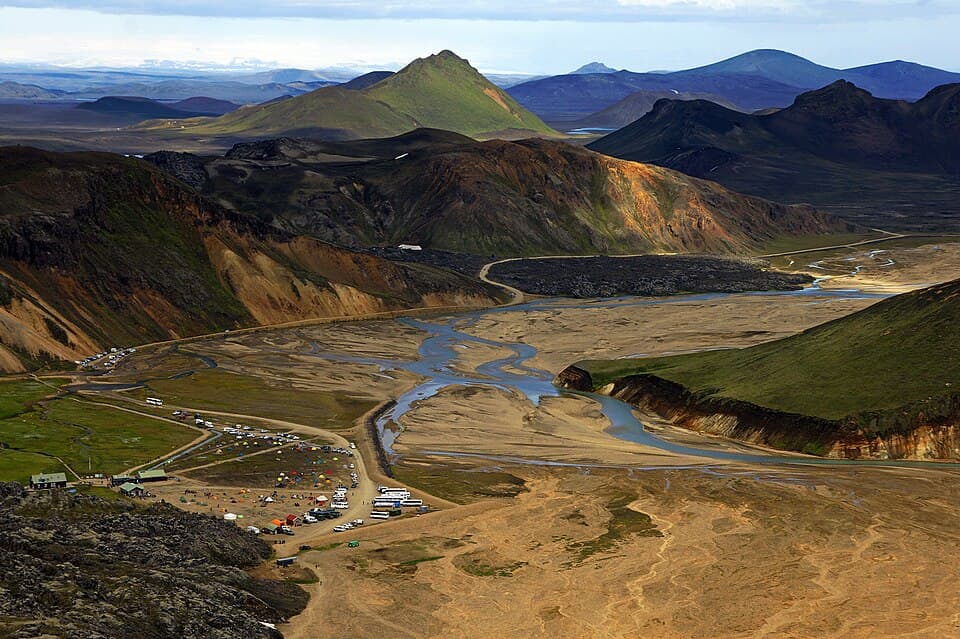
- F-roads. Mountain roads into the interior, marked with an “F” prefix. They are open only in summer, require a 4WD by law, and often involve gravel, steep grades and unbridged river crossings. See the F-roads network for what each one demands.
The practical rule: match the car to the roughest road on your plan, not the smoothest. If a single F-road is on your route, you need a 4WD for the whole trip. Work out which class fits with the 4WD decision guide.
The passes, right now
Live frames from the mountain passes that gate travel between regions. If a pass looks white or wet on camera, that is your answer before you commit to the leg beyond it.
 Live
Live Live
Live Live
Live Live
LiveThese cameras and the status line up top are the same feeds locals check. A clear pass is a green light; a snowed-in or storm-lashed one is a straight no. Whatever they show, run your route past the live alerts page before a long leg — closures and wind warnings land there first.
Weather is the real variable
More Iceland trips are shaped by weather than by anything mechanical. The four things that catch drivers out, in rough order of how often:
- Wind. Crosswinds can shove a high-sided car across a lane, and a sudden gust can rip a door out of your hand — a common, expensive rental claim. Open doors slowly, and on a severe-wind day, park facing into the wind and consider sitting the worst of it out.
- Sudden weather changes. Sun to sleet inside an hour is normal. Never plan a day around the weather you can see out the window in the morning.
- Single-lane bridges and blind summits. Route 1 has many. The car that reaches a single-lane bridge first has priority; slow early and be ready to wait.
- Gravel transitions. The change from tarmac to gravel is where cars slide. Ease off before the surface changes, not after.
None of this is a reason not to drive here — it is a reason to keep the live feeds open and stay flexible. A trip that bends around the weather goes smoothly; a trip locked to a rigid schedule is the one that goes wrong.
Two more everyday things worth knowing. First, animals on the road: sheep roam freely in summer and stand in the carriageway without warning, often with lambs on the far side, so slow right down when you see one. Second, where you stop: pulling onto the verge for a photo is a frequent cause of crashes and stuck cars — use the marked pull-offs and car parks, never stop on the carriageway itself, and never drive onto the moss or gravel beside the road to park, which is the off-road ban again.
Fuel, charging and paying at the pump
Most rentals run on unleaded petrol or diesel — check which before your first fill, as putting the wrong fuel in is an expensive mistake. Many stations are unmanned pumps that take a chip-and-PIN card only, and some pre-authorise a hold on your card, so travel with a card that has a PIN and some headroom. Electric and hybrid rentals are increasingly common; the charging network covers the Ring Road and towns well but thins out in the highlands and Westfjords, so plan charging stops the same way you plan fuel stops — early and often.
Before you set off
A driving day in Iceland works best as a loose plan you refine each morning against the conditions. Here is the routine that keeps trips smooth.
#1.Fuel early, fuel often
refuel rule: fill at ½ tankcoverage: long gaps in the east + highlands
Stations are frequent around the Ring Road but sparse in the east, the Westfjords and the highlands, and some are unmanned card-only pumps. Fill up when you hit half a tank rather than waiting for the light. Our fuel-station map shows locations and live prices so you can plan the next stop.
#2.Check conditions the morning of, not the night before
why: road + weather change fastcadence: recheck each leg
Conditions change overnight. Read the live status line and cameras at the top of this page, then the alerts page for closures and wind warnings, before you drive each leg — not once for the whole trip. In summer, F-road opening also shifts with the snowmelt; see summer driving in Iceland.
#3.Budget the drive honestly
pace: roads are slowcost: per-km road fee applies
Distances look short but 90 km/h paved and 80 km/h gravel add up, and you will stop constantly. Plan fewer kilometres than you think, and factor the new road charge — the Iceland kilometre fee — into your budget alongside fuel and rental.
#4.Match the car — and its insurance — to the route
drivetrain: 4WD for gravel + F-roadsinsurance: add gravel protection
Standard cover does not include gravel damage, and F-road driving in the wrong car voids insurance entirely. Book the right class from the start — car rental in Iceland carries a 12% discount with code MAP, and our Key Car review covers what the add-ons actually get you.
Where all this leads
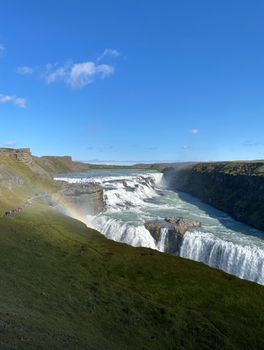
Get the basics right and the whole island opens up. The famous stops — Iceland's waterfalls among them — are mostly roadside, reachable in a normal car on paved roads, so a first trip on Route 1 needs nothing more than the rules above and a habit of checking conditions. When you're ready to leave the tarmac, the deep guides and the live feeds are here to keep it safe.
Frequently
asked questions
Is it safe to drive in Iceland?
Which side of the road do you drive on in Iceland?
What are the speed limits in Iceland?
Do I need to keep my headlights on during the day?
Can I drive off-road in Iceland?
Do I need winter tyres, and when?
What is the drink-driving limit in Iceland?
Cars & campers
 KEF airport pickup 24/74.8
 Transmission
 Fuel
Fuel Seats
Seats Drive
Drive

 Sleeps
Tours near Iceland
 Small groups
 Duration
 Highlights
 Type
Type