
Historic Sites · Iceland
Iceland Historic Sites
6 mapped · 5 regions · Saga age to modern · Some on private land
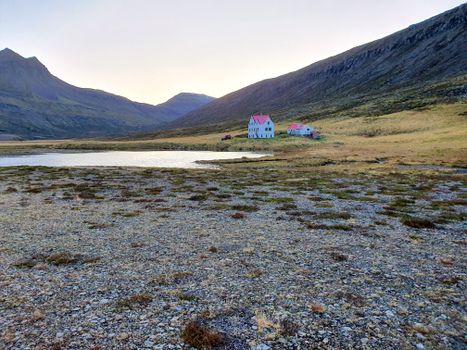
 Wolfgang Sauber · Wikimedia Commons · CC BY-SA 3.0
 Joaoleitao · Wikimedia Commons · CC BY-SA 3.0
Iceland's recorded history starts with the settlement around 870 AD, and its historic sites run from then to the last century. This page maps a mix — the Gásir medieval trading post near Akureyri, the reconstructed Eiríksstaðir farm of Erik the Red, the saga-age homestead at Þjóðveldisbærinn Stöng, the excavated Skriðuklaustur monastery, and two wrecks: the Sólheimasandur DC-3 and the beached Garðar BA 64 trawler. Some are staffed sites with opening hours; others are bare ruins or wrecks you reach on foot.

Planning around weather or roads? Live conditions across Iceland →
Sites worth a page
The sites with real background and photos — a medieval trading post and a reconstructed saga farm. Distances on the cards are straight-line from Reykjavík.


 Directions
 Save
Save Share
ShareCars & campers
 KEF airport pickup 24/74.8
 Transmission
 Fuel
Fuel Seats
Seats Drive
Drive

 Sleeps
Tours near Iceland's historic sites
 Small groups
 Duration
 Highlights
 Type
Type
When & how to visit Iceland's historic sites
Most of these sit on or near the Ring Road, so they slot into a wider drive rather than a trip of their own. In the west, Eiríksstaðir — the reconstructed farm linked to Erik the Red — is a staffed summer site with admission and set hours. Near Akureyri, Gásir is an open archaeological area where a medieval trading post once stood. On the South Coast, the Sólheimasandur DC-3 wreck is free but a roughly 4 km walk each way across an exposed black-sand plain — there is no shelter, so check the weather and bring layers. In the east, the excavated Skriðuklaustur monastery pairs with the neighbouring cultural centre, and in the Westfjords the rusting Garðar BA 64 trawler sits beached on the shore. Keep off fragile turf and stonework, respect private-farmland closures, and check live road conditions before remote drives.


The historic sites of Iceland, compared
All 6 mapped sites, ranked — our best-documented picks first. Tap any name for the full guide. Background and location details come from Wikidata, Wikipedia and OpenStreetMap where they exist.
| Site | Region | Known for | |
|---|---|---|---|
 | Eiríksstaðir | West Iceland | Worth discovering |
| Gásir | North Iceland | Worth discovering |
 | accident of a Douglas DC-3 at Sólheimasandur | South Coast | Historic site in South Coast |
 | Excavations in Skriðuklaustur | East Iceland | Historic site in East Iceland |
 | Garðar BA 64 | Westfjords | Historic site in Westfjords |
 | Þjóðveldisbærinn Stöng | South Coast | Historic site in South Coast |


